Category
 Brands
 Style
Style Material
 Collection
 Recently Viewed
 Popular Items


I'm Kosuge, making my debut on the ApparelX trend blog. Recently, Yamamoto has been focusing on suit outer textiles. As the range of textile offerings continues to grow, I think there may be questions like, "There are too many textile types, so which one should I choose...?" and "What is different about each maker?" So this time, we'll give you a quick introduction to the suit outer textile makers listed on ApparelX!
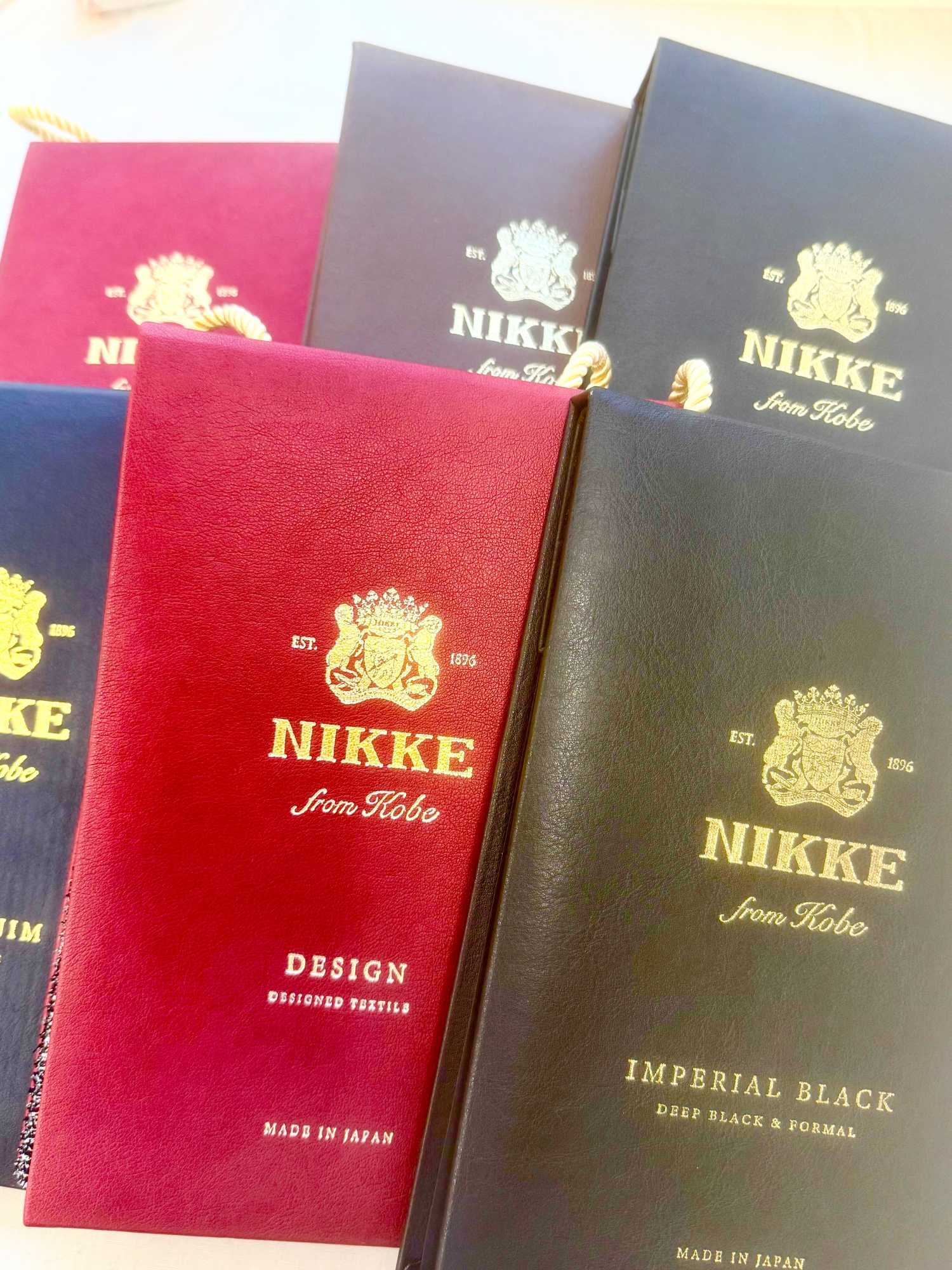
Nikke Textile Co., Ltd. was established in 2014 as a planning, manufacturing, and sales company for fashion textiles, as a subsidiary of Nippon Wool Textile Co., Ltd. Based on factories that carry out integrated production from spinning, weaving, dyeing, and finishing, the company constantly develops with a spirit of exploration, including its heritage series, which newly revives archives accumulated over more than 120 years through the filter of the present day, and its wool denim and functional material series, created from the latest weaving and processing technologies, and continues to share its collections with fashion professionals around the world. (Quoted from the Nikke Textile Co., Ltd. website)
The swatch book lineup started a few years ago, but now these Nikke textiles are steadily gaining popularity, starting with custom-order shops. With the goal of creating wool products that feel Japanese and feel like Nikke, textile planning is carried out in Ichinomiya, where the planning and development department (Nikke Creative Workshop) is located. Nikke currently offers 6 types of swatch books (available year-round). (Imperial Black, MAF, Design, Wool Denim, Cuba Beach, Travel) Their strength is the ability to meet a wide range of needs, from formal textiles to denim. Another appealing point is that they also offer textiles with pop designs, making them perfect for anyone looking for something a little different. Also, Nikke's official character, Urun, is cute, so be sure to check it out.


Miyuki Keori Co., Ltd., founded in 1905, is one of Japan's leading textile makers with a very long history. Its main factory, the Yokkaichi Factory, aims to be an ecologically friendly company that is kind to the global environment, and it works to preserve the environment through various initiatives. Its efforts are wide-ranging, from using natural soap in the raw wool itself and in the washing process, to pumping up and using subterranean water (groundwater) rather than tap water, in order to make use of the blessings of nature as they are. Miyuki Keori's vision of the future is to be a company that is kind to the Earth. It will continue to work to further reduce its environmental impact through ongoing improvements.
The defining feature of Miyuki Keori's textile production is reducing environmental impact. For example, all water used is subterranean water (groundwater) from the Suzuka mountain range, not chemically disinfected ordinary tap water. Of course, the water used is purified through several wastewater treatment tanks and discharged through underground pipes. This is recommended for anyone who cares about whether both the textile and its manufacturing process are ethical.


Kunishima Co., Ltd. is a long-established textile maker based in Ichinomiya City, Aichi Prefecture. Its history dates back to 1850, when founder Bueemon Kunishima, a samurai from Owari, launched the company with the aim of contributing to Japan's industrial development through the textile industry. Rooted in Owari and having grown with the times, Kunishima Co., Ltd. continues to send high-quality textile products to the world today. The Bishu region, where Kunishima Co., Ltd. is located, is one of Japan's leading textile-producing areas. In particular, this region, rich in soft water, gives textiles a soft, rich texture in the finishing stage, and its unique division-of-labor system makes it possible to produce a wide variety of textiles with a high level of specialization. Taking advantage of this environment, Kunishima Co., Ltd. produces high-spec materials for menswear and a diverse range of textiles that meet the needs of the times.
Kunishima's swatches update their seasonal swatch books, "BESTSERECTION" and "HERDREX," every year. "BESTSERECTION" brings together textiles designed for business settings, so they can be used regardless of age or gender. "HERDREX" is positioned as a higher-tier line than BESTSERECTION, and is a textile swatch book focused on natural fibers and careful weaving. Also, this year the luxury-line swatch book "KUNISHIMA 1850 Exclusive" has newly debuted on ApparelX. The textile prices also vary widely, and since there are textiles with gorgeous colors as well, there are textiles that suit various needs.


Founded in February 1885 as a wholesale company for wool textiles. Began importing textiles from England, the home of wool textiles. Started selling to domestic tailors and others. It is one of the oldest wholesale companies in Japan to begin full-scale imports of wool textiles from Europe. It consistently focuses on product quality and offers a wide selection of first-class luxury materials. In particular, it began doing business in 1968 with "Ermenegildo Zegna," known worldwide as a top-class menswear maker.
The VBC textiles sold on APX are from Takaoka's original swatch book, from a company with 140 years of history as a wholesale company for wool textiles. Vitale Barberis Canonico also has a history of 360 years, and all processes are carried out at its factory in the Biellese region, famous as a production area for luxury wool textiles in northern Italy. Although the price is relatively affordable among long-established European textile makers, the textiles are still infused with exceptional dedication and technology. In particular, the 21-micron wool textiles are of high quality, with excellent stretch and wrinkle resistance, allowing for beautiful silhouettes.
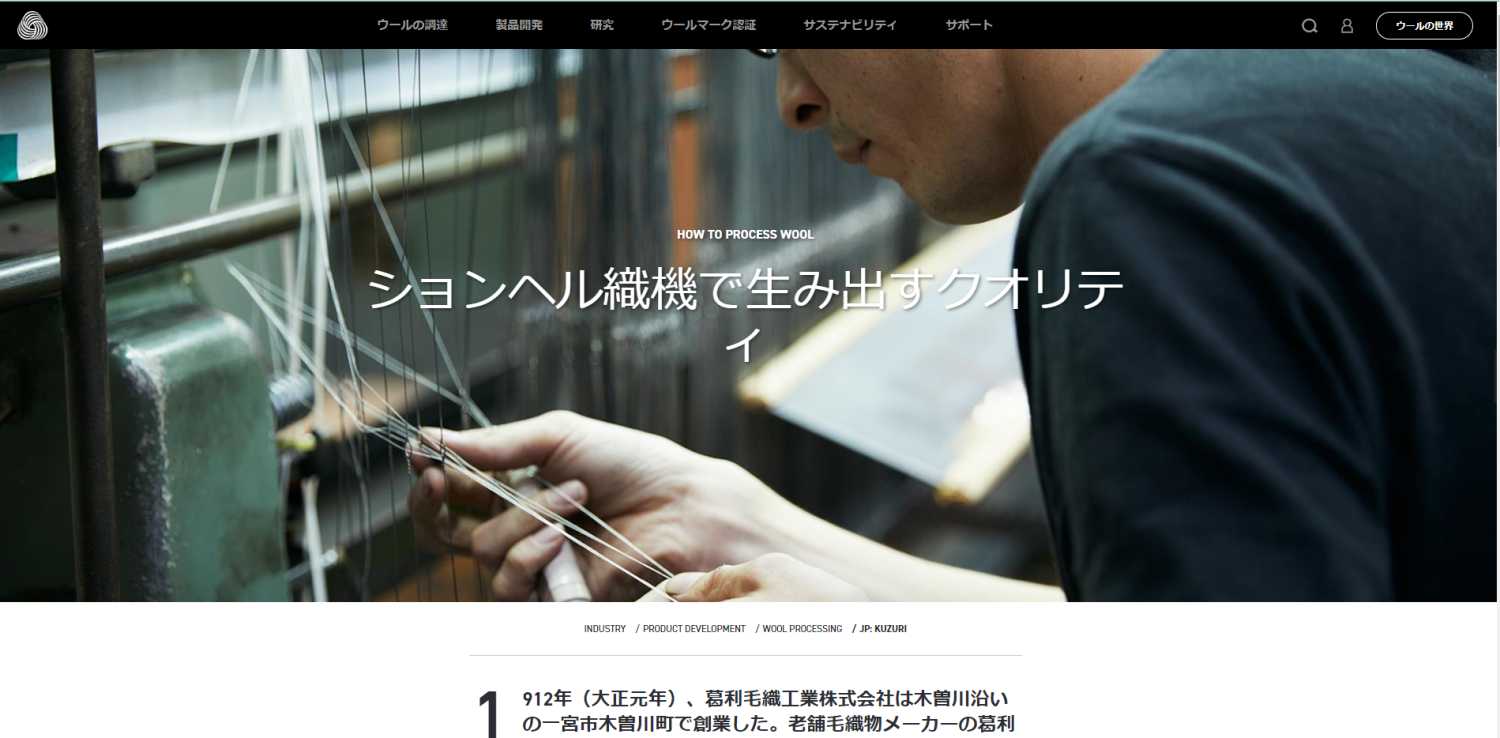
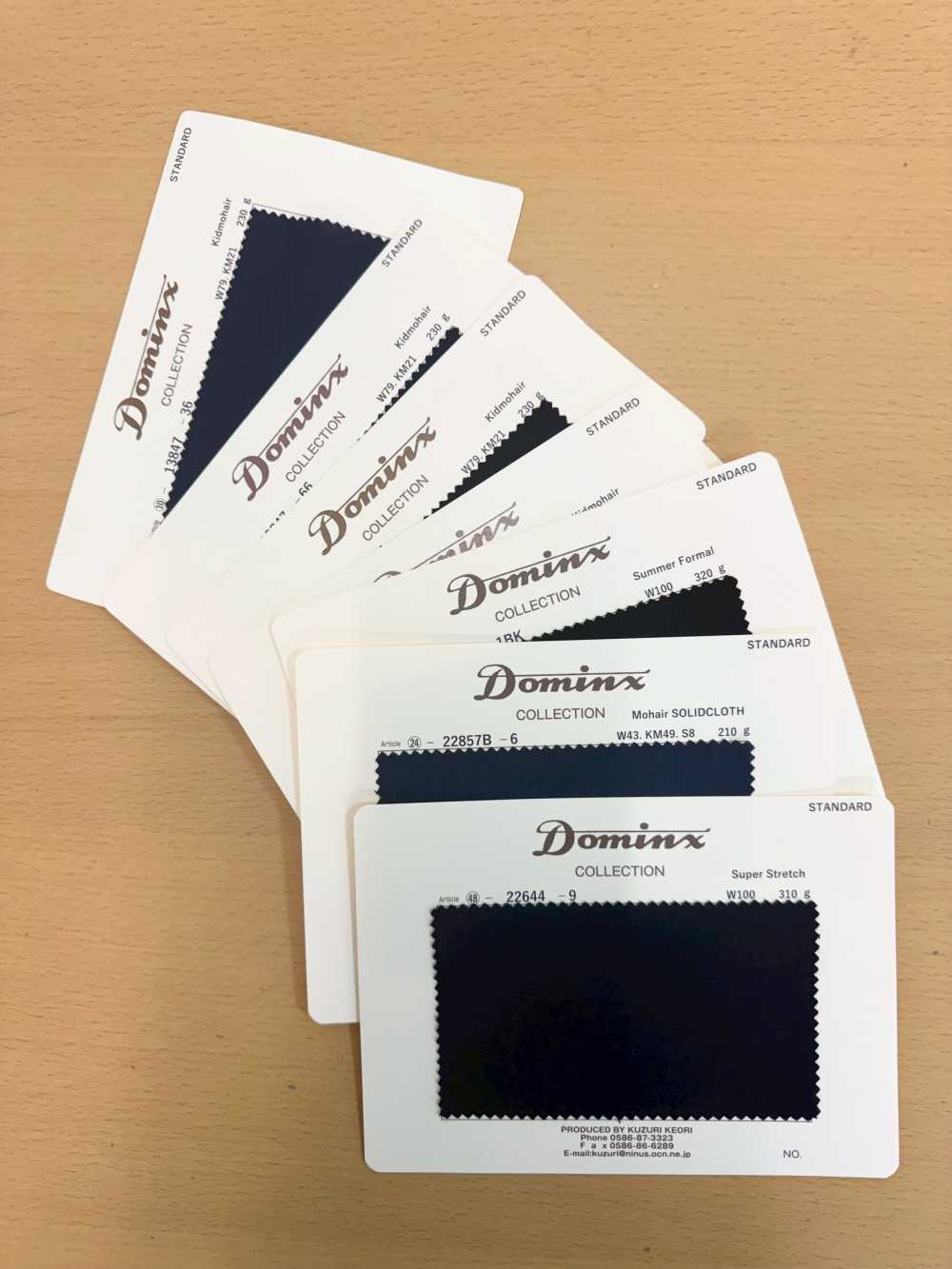
Owari Ichinomiya is a town that flourished as a textile-producing area from as far back as the Nara period. The company was founded there in the first year of the Taisho era. In 1931, it switched from linen and cotton to wool textiles, and in 2012 it celebrated its 100th anniversary. Today it continues to pass on low-tech techniques from its predecessors to future generations and to create valuable Bishu traditional products. Since the early Showa period, it has introduced and continued to use Schuette looms. Schuette looms are Japanese shuttle looms manufactured based on looms from Germany's Schuette company, and they became widespread about 50 years ago. However, with high-speed looms such as air-jet looms now becoming common, they have been discontinued and only a small number are still in operation, making them a rare item once said to be a famous machine. While many textile factories are introducing innovative looms and pushing ahead with lowering production costs, the reason Kuzuri Keori remains committed to Schuette looms is "to preserve the feel of handwoven fabric." The Schuette looms, now classified as ultra-low-speed automatic looms, have a simple structure that mechanizes the principles of handlooms. Clattering away, each part performs its assigned role like the hands of a skilled craftsman, gently, slowly, and carefully weaving one roll of textile without damaging the fibers. Because the warp tension is loose and there is some play, the fabric feels soft to the touch, with fullness and resilience, flexibility, and excellent elastic recovery, and its excellent texture makes it ideal for suit textiles, earning high praise from customers.
It is characterized by the gentle texture and color tone woven on Schuette looms. Looking at textiles with pinhead patterns, for example, you can feel that they are not perfectly uniform and have a hand-crafted feel. The textiles come in many standard colors and patterns, making them recommended for everyday suits. There are also textiles for call trousers, so they can be used for formal wear as well. The swatches are not sold on APX, but you can order a card sample for each color, so if there is a textile that interests you, please take a look at it in person.
It has been about 5 years since Yamamoto began handling suit outer textiles. We hope this will be helpful not only for tailors, but for everyone involved in making products using suit textiles.
Our textile lineup is continuing to grow, so if you have any questions, please contact us.
*Textiles may be added or discontinued. Thank you for your understanding.
If you're looking for apparel materials, go to ApparelX, the B2B site for apparel materials!