Corded Elastic
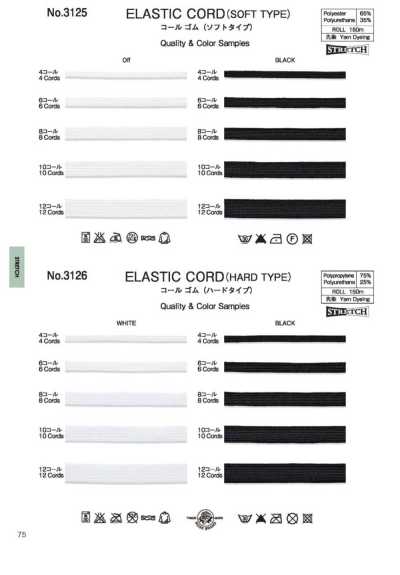
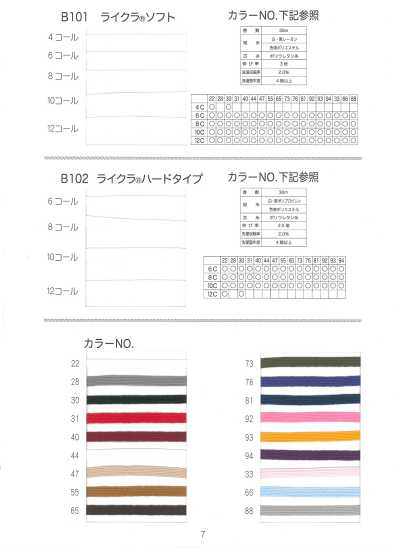
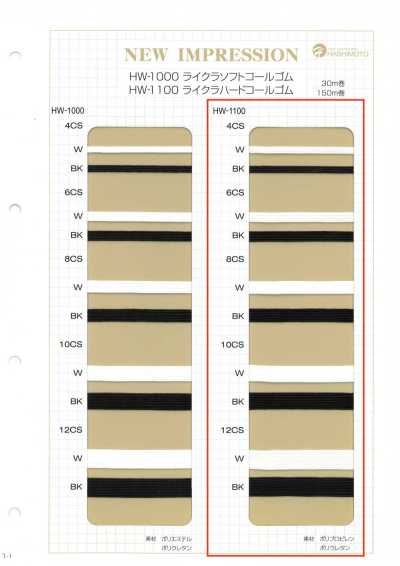
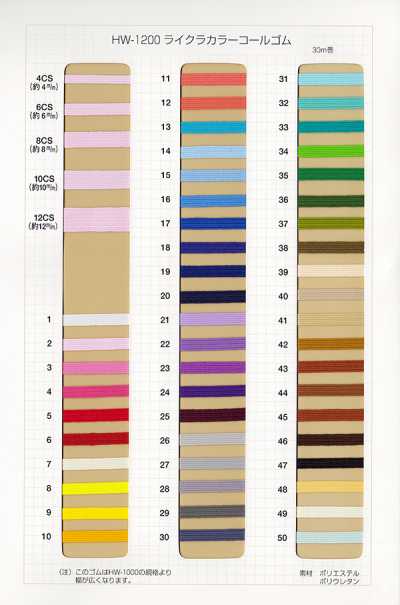
Corded elastic is a stretchable elastic material finished in a narrow width by covering elastic yarn with fibers, and it is used for garment cuffs, waistbands, and gathered sections of accessories.
Contents6 sections
Definition and Overview
Corded elastic is a type of elastic material finished in a narrow width. It combines fiber yarn with a core elastic yarn and uses the properties of stretching when pulled and shrinking when released. It is used to adjust the fit of clothing and to create gathers.
“Cord” is sometimes used to refer to narrow elastic. However, the name alone does not specify the width, structure, fiber used, or degree of stretch. When placing an order, it is important to check the specifications for each product number.
Materials and Structure
In general, an elastic yarn such as polyurethane is used as the core, and it is covered with yarn such as polyester, nylon, or cotton. The yarn covering the surface affects skin feel, abrasion resistance, appearance, and ease of handling during sewing.
Corded elastic is often made as braided elastic, in which yarns are interlaced to hold the elastic yarn. However, narrow woven elastic and knitted elastic are also available, so the braiding method cannot be determined from the term corded elastic alone.
- Woven elastic: made with a woven structure; some have a relatively firm texture.
- Knitted elastic: made with a knitted structure; some are soft and easy to stretch.
- Braided elastic: made with a braided structure; used for narrow-width products and cord-like shapes.
How to Check Width and Stretch
Width is usually indicated as the finished width in the unretched state. Even with the same width, the feel of tension and tightness differs depending on thickness, surface yarn, and structure, so check the actual product under conditions close to the intended use.
Stretch is expressed by the elongation rate, indicating how far a certain length can be extended. However, the maximum stretched value alone cannot determine the actual feeling of tightness in use. It is important to test the stretch rate and recovery according to the required finished dimension and the load during wear.
Main Applications and How to Choose
It is used for cuffs, hems, waistbands, underwear, children's clothing, masks, and gathered sections of pouches. For uses that touch the skin directly, consider surface smoothness, stiffness, and the position where seams contact the skin.
When selecting, check the required width, stretch strength, recovery, thickness, color, and sewing method. If the textile is thin, the thickness and tension of the elastic may show through the surface. For thick materials or areas with heavy load, durability and sewing strength are important.
- Specify the stretching rate during sewing in the specification sheet according to the amount of gathering.
- When attaching to stretch fabric, check the stretch direction and amount of both the textile and the elastic.
- For prototypes, check the feeling of tightness after wear and the recovery after repeated stretching.
Handling and Differences from Similar Terms
Elastics containing polyurethane can be affected by heat, ultraviolet light, moisture, sweat and sebum, detergent components, and other factors, and over time may lose recovery from stretching or become hardened or sticky. Confirm these under the product's washing and storage conditions.
Elastic webbing is a shape-based term for all flat, wide elastic materials, and includes items wider than corded elastic. Round elastic is cord-shaped elastic with a circular cross section. Woven elastic, knitted elastic, and braided elastic are classifications based on manufacturing method, and they are classified differently from the shape or application terms for corded elastic.
Frequently Asked Questions
How should corded elastic and elastic webbing be used differently?
Corded elastic is narrow and easy to use for cuffs and small gathers. Elastic webbing broadly refers to flat elastic with width, and is also used in areas such as waistbands where support is needed across a surface. Choose by comparing the required width, tension, thickness, and skin feel for the application.
What causes corded elastic to lose its recovery?
In addition to fatigue from repeated stretching, high temperatures, ultraviolet light, moisture, sweat and sebum, and washing and drying conditions may also have an effect. Durability differs depending on the material and manufacturing method, so before mass production, conduct washing tests and repeated stretching checks as a product.