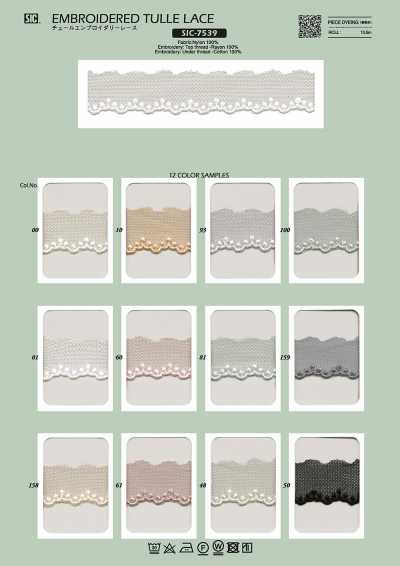
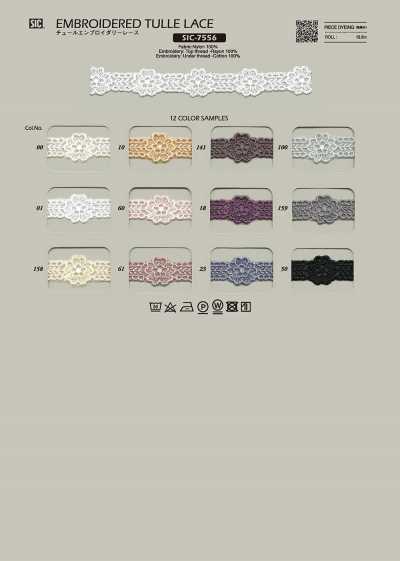
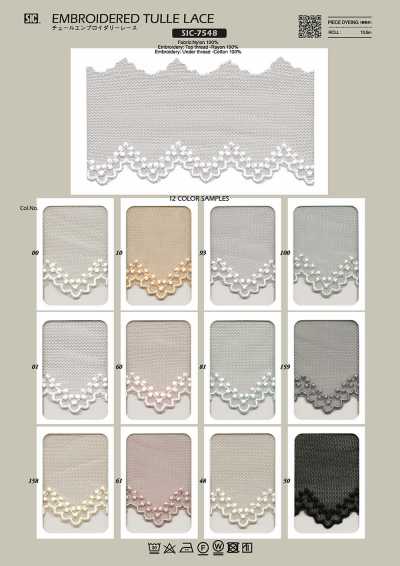
Embroidery Lace
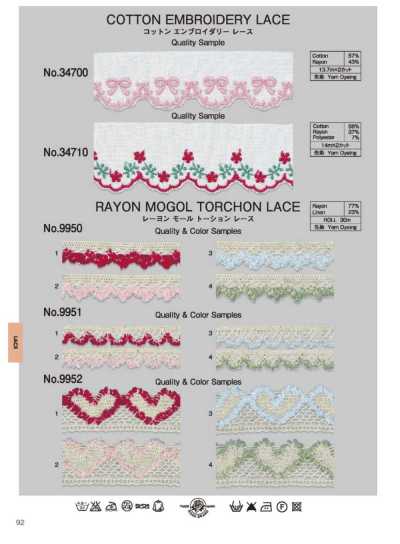
Embroidery lace is a general term for lace that uses a tulle or other base fabric with embroidered patterns to create decorative sheerness and three-dimensional texture.
Contents6 sections
Definition and Overview
Embroidery lace is a lace made by embroidering patterns with yarn on a fabric or mesh base fabric. It can express flowers, plants, geometric patterns, and more through embroidery, and its defining features are the contrast between the sheerness of the base fabric and the texture of the embroidered sections.
One typical construction is embroidery applied to tulle fabric. However, the term can also refer to lace in general that uses embroidery, and its appearance and ease of handling vary greatly depending on the type of base fabric, embroidery density, and embroidery yarn.
Construction and Materials
In general, it is made by applying patterns with an embroidery machine to a base fabric such as tulle, net, or woven fabric. By making the outline of the embroidery thicker or layering yarn over the same area, the pattern can be made to look raised.
Cotton, polyester, nylon, rayon, and other materials are used for both the base fabric and the embroidery yarn. Stretchability cannot be determined by the material name alone; it depends on the structure of the base fabric and whether polyurethane yarn is included, so it is necessary to check the actual product and specifications.
Visual Features and Main Applications
Because the embroidery yarn makes the pattern stand out clearly, it creates a sense of shadow and presence that differs from printed patterns. There are styles ranging from light, using the sheerness of the base fabric, to luxurious styles with dense embroidery, and the size of the pattern and the sheen of the embroidery yarn also affect the impression.
It is used for dresses, blouses, skirts, one-piece dresses, formalwear, lingerie, and more. In addition to full-piece use, it is also suitable for partial use on yokes, sleeves, hems, and collars. When a lining is added, consider both the sheerness and how the embroidery pattern will appear.
How to Choose and Handling Precautions
When selecting, check the openness of the base fabric, the thickness of the embroidered sections, the pattern width, the selvedge-side pattern, and the cutting direction. With large patterns, the material consumption needed for matching the pattern left and right or front and back may increase, so consider placement while laying it over the pattern pieces.
When a stretchable tulle or net is used as the base fabric, it can easily stretch during cutting and sewing, causing the seams to wave. Use stretch prevention tape or interfacing as needed, and on open base fabrics, check the seam position and the stability of the seam allowance.
The ends of the embroidery yarn and the mesh of the base fabric can fray or snag due to friction or catching. Washability varies depending on the material and processing, so follow the care label, and for home washing, use a laundry net and avoid contact with other items.
- Before cutting, check the pattern direction and whether symmetry is required.
- For areas where the seam allowance is thin and unstable, test the finishing method in advance.
- Since seam allowances where embroidered sections overlap tend to become thick, check the sewing specifications.
Differences from Similar Terms
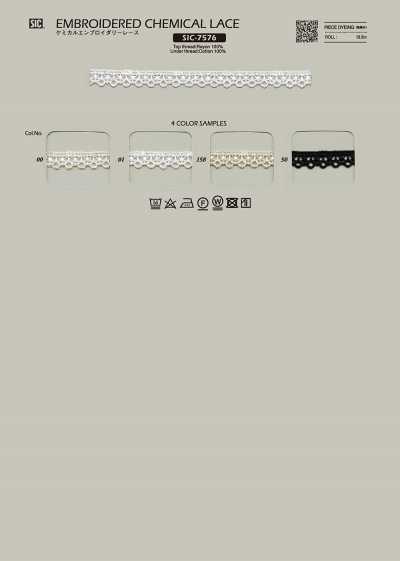
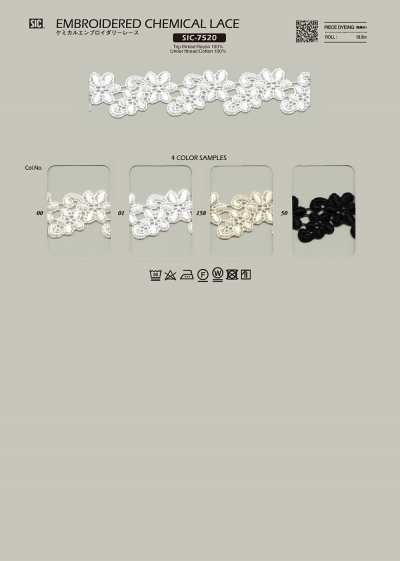
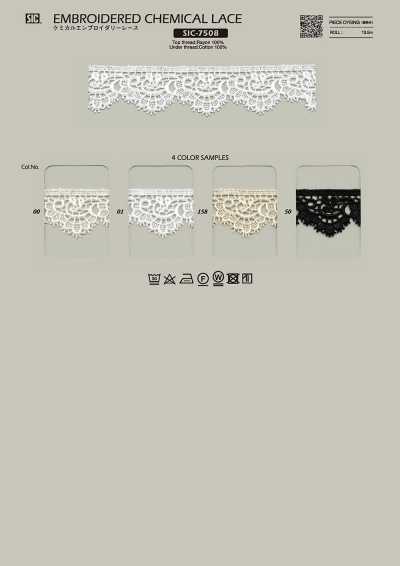
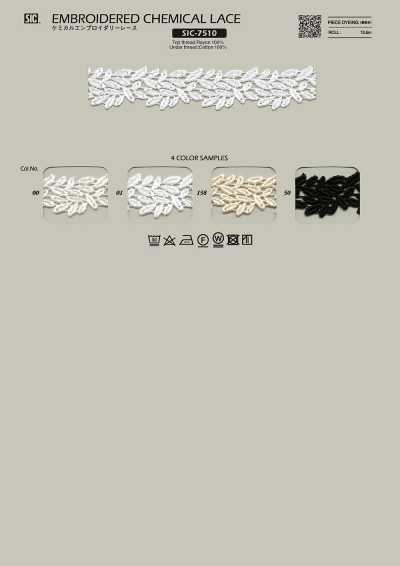
Chemical lace is lace in which the base fabric is dissolved after embroidery so that only the embroidered pattern remains. Embroidery lace generally has the base fabric remaining, but the terms may overlap in sales settings, so check whether a base fabric is present.
Raschel lace is lace knitted on a warp knitting machine, and Leavers lace is lace made with a dedicated machine to create delicate patterns. These are mainly classifications based on the method of making lace, whereas embroidery lace is a term that focuses on decoration by embroidery.
Frequently Asked Questions
Does embroidery lace stretch?
Stretchability is not uniform. Items made with stretchable base fabrics such as tulle or net, or those containing polyurethane yarn, may stretch. On the other hand, items with woven base fabric or high embroidery density may not stretch easily. Check the stretch in both the width and length directions on the actual product.
What is the difference between embroidery lace and chemical lace?
Embroidery lace is lace that expresses a pattern by embroidering on a base fabric. Chemical lace refers to lace made by removing the base fabric after embroidery to leave the embroidered pattern. Since they can be difficult to distinguish by appearance alone, check whether the base fabric remains in the product specifications.
How can fraying be prevented during sewing?
For base fabrics that fray easily at the cut edge, secure enough seam allowance and choose an edge-finishing method suitable for the fabric, such as an overlock machine or a narrow zigzag stitch. When using the edge of the pattern, test stitch first to confirm whether the embroidery yarn will come loose. To avoid snagging, also be careful with accessories when handling the material.