Mesh
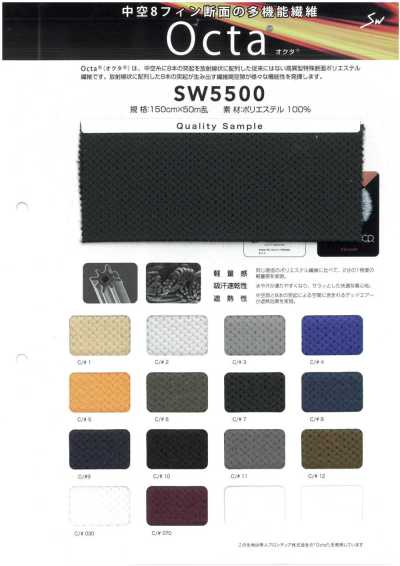
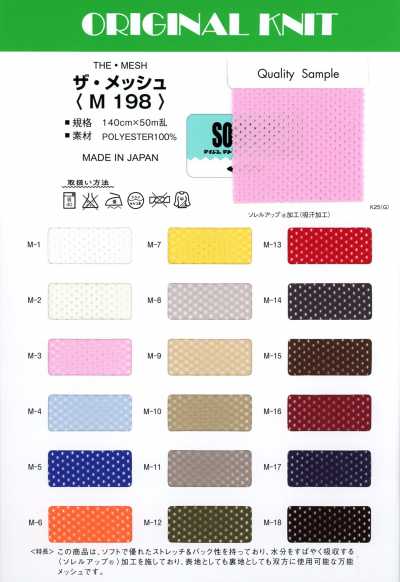
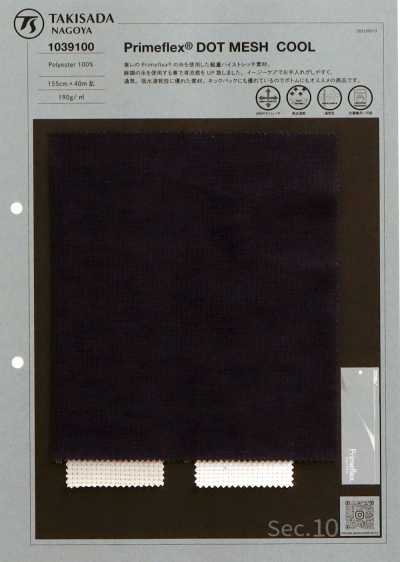
Mesh is a mesh-like textile with regular openings between threads, making it a material whose breathability, lightness, and sheerness can be used depending on the application.
Contents6 sections
Definition and Overview
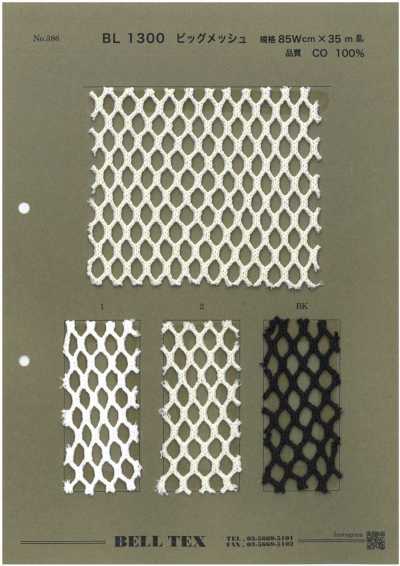
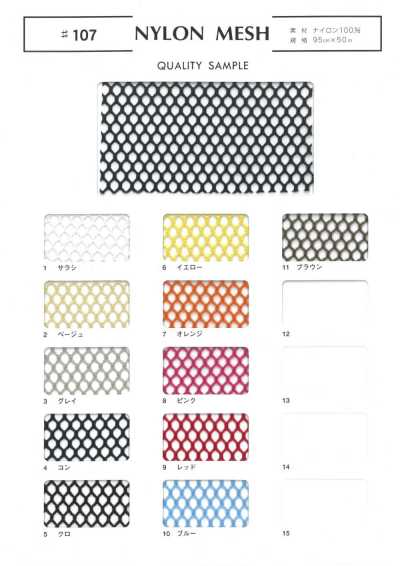
Mesh is a general term for textiles with a net-like appearance, with spaces between knitted or woven intersections. It is not a specific fiber name or weave/knit structure name, but includes a wide variety of textiles that differ in hole size, shape, density, stretch, and other properties.
In knits, mesh is often made with circular knits or warp knits, and in wovens, the net-like effect can also be created with leno weave and similar structures. Even when the name is simply mesh, performance and suitable applications vary greatly depending on the material, knit or weave structure, and finishing.
Features
Because the spaces allow air to pass through, mesh is generally breathable and lightweight, with less stuffiness. Types with larger holes have stronger sheerness and are also used for layered looks and design accents at seam or switching areas.
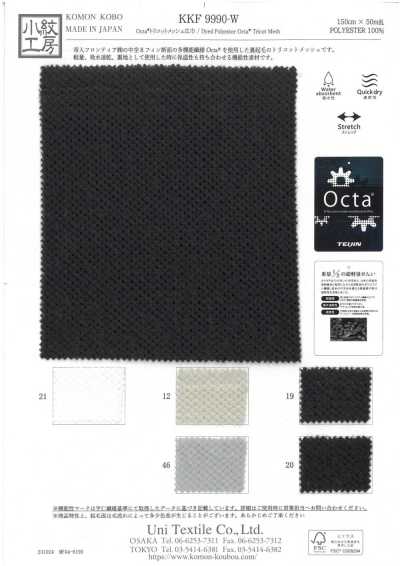
Those made with polyester or nylon filament yarn tend to have a smooth hand and dry quickly. On the other hand, depending on the knit structure, yarn thickness, and density of the openings, some can also have firm body, cushioning, and stretch.
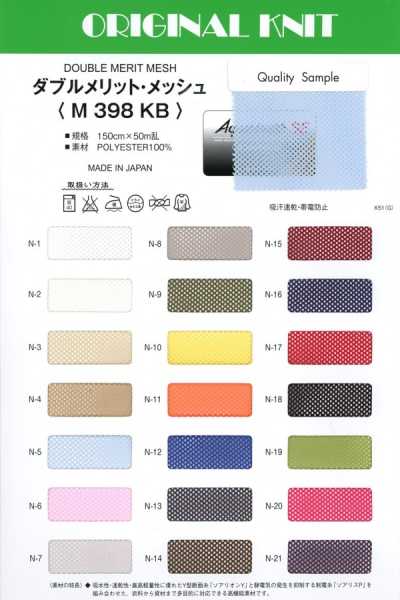
- Types with fine holes make it easier to keep the skin or inner layers from being seen while maintaining breathability.
- Types with large holes create a light look, but snagging and sheerness are more noticeable.
- Whether or not it has stretch cannot be determined from the mesh name alone. It is necessary to check the blend ratio and textile specification.
Main Applications
In sportswear, uniforms, and outdoor clothing, it is used in areas where heat and moisture should be released, such as underarms, backs, pocket bags, and ventilation sections. It is also used in spring and summer tops and innerwear, hats, bags, and more.
Fine mesh may be used as a substitute for lining, pocket bags, or interlining. In fashion applications, it is used for tops, skirts, dresses layered together, and switching at sleeves and yokes, making use of sheerness as a design feature.
Selection and Handling Notes
When selecting, check not only the hole size but also fabric weight, stretch, rebound, sheerness, tensile and burst strength, and resistance to snagging according to the application. For close-to-skin uses, also check the stiffness of the edges and how it feels against the skin through prototyping.
With mesh, the cut edges may become unstable due to the openings, and the seams may ripple. Stretch fabrics should be cut along the grain, and stabilization should be used as needed. Choose a fine needle and a thread suitable for the textile, and check for seam puckering and skipped stitches.
The degree of shrinkage, distortion, and fraying caused by washing varies depending on the fiber type, knit or weave structure, and finishing. Follow the care label, and consider handling according to product specifications, such as using a laundry net to avoid snagging.
Differences from Similar Terms
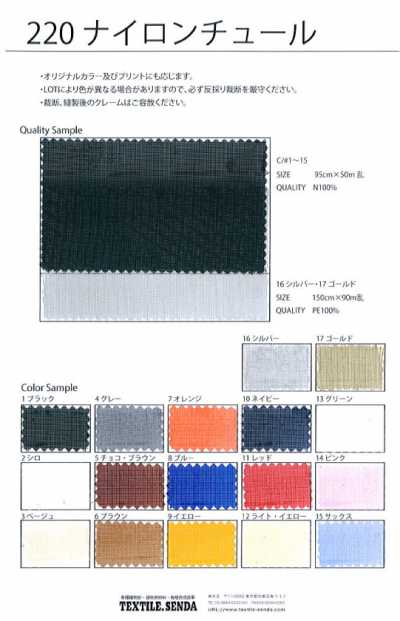
Tulle is often treated as a warp knit textile with fine hexagonal openings, and is suited to uses that make the most of its thinness and sheerness. Mesh is a broader term that can include tulle, and also includes thicker types with a stronger focus on functionality.
Power net is a mesh-type knit textile made with polyurethane or similar materials to provide high stretch, compression, and shaping performance. Compared with mesh used simply for breathability, it differs in emphasizing stretch recovery and compression. Raschel knit refers to the warp-knit technique or structure, and some mesh is made using raschel knitting.
Frequently Asked Questions
Can mesh textile be used outside of summer?
Yes. While spring and summer apparel that takes advantage of breathability is typical, it is used year-round in ventilation areas of sportswear and outdoor clothing, bag pockets, linings, and more. The usage season is determined not only by hole size, but also by the layered materials and garment design.
What should be noted when sewing mesh textile?
Mesh knits tend to stretch, and types with large holes can make seams unstable, so caution is needed. Check for shifting during cutting, seam shrinkage, and seam rippling, and determine the right needle, thread, and feed conditions for the textile through test sewing.
Are mesh and tulle the same?
No, they are not the same. Mesh is a broad term for net-like textiles in general. Tulle generally refers to a textile characterized by thin, fine openings, but the term used may differ depending on the supplier or product category, so confirming the actual specification is important.