Needle Detector Compatible
Needle detector compatible refers to the specifications of press fasteners, eyelets, and similar components that are designed with the materials and structure in mind so that the accessory itself is less likely to trigger as a foreign object during needle detection processes for apparel and similar products.
Contents6 sections
Definition and Overview
Needle detector compatible refers to accessory specifications designed with consideration for materials and structure so that they are less likely to react as foreign matter in the needle detection process used during sewing to check for ferrous foreign matter such as broken needles that may be mixed in.
Needle detector compatible does not mean that the product eliminates the need for a needle detection process. It is also not an indication that it will not react under all needle detectors or settings, nor does it guarantee that the entire product will pass needle detection. It is important to confirm under actual needle detection conditions before adoption.
Materials and Structure
Press fasteners and eyelets are used by combining the front part, back part, functional parts such as springs and studs, and washers. In needle detector compatible products, these are considered as a whole combination rather than as individual parts when taking into account their effect on needle detectors.
With general metal accessories, ferrous materials may react to needle detectors. Needle detector compatible products may use nonferrous metals or resin, but whether they are compatible cannot be determined from the material name alone. Check the specifications of each part, including plating and spring sections.
Size Indications and Installation Method
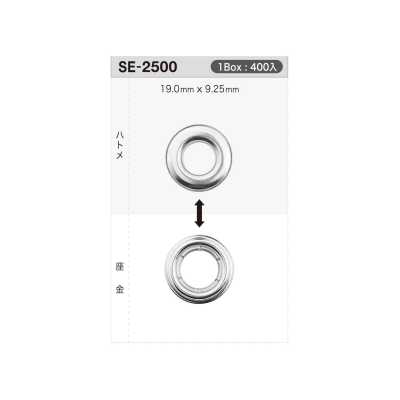
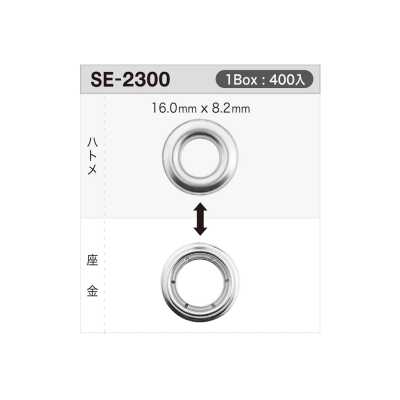
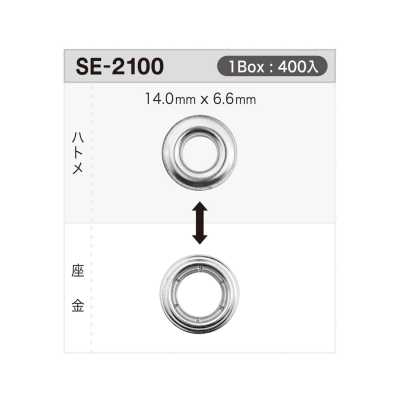
The size of press fasteners and eyelets is indicated by the outer diameter of the head, hole diameter, leg length, and so on. Since the naming and standard dimensions differ by product type and manufacturer, check the parts configuration, compatible textile thickness, and finished outer diameter using drawings or actual samples.
Installation uses a die matched to the part shape and a hand press or automatic press. If the die does not fit or the pressing force is inappropriate, it can cause deformation, insufficient holding force, or textile tearing. Before mass production, carry out pressing tests on the actual textile.
- For lightweight textiles, make sure the leg length is not excessive relative to the textile thickness.
- For heavy textiles and brushed textiles, confirm the length and pressing force needed for sufficient setting.
- For highly stretchable textiles or loosely woven textiles, also consider reinforcement with interfacing or a pressing cloth.
Main Applications and Notes
Needle detector compatible accessories are considered for apparel products that include a needle detection process, kids' products, uniforms, and similar items. Based on the strength, frequency of opening and closing, design, and compatibility with the textile at the application area, select the type such as press fasteners, eyelets, or cap and close posts.
Rust and discoloration of metal accessories are affected by sweat, moisture, detergents, storage conditions, and contact with textiles or other metals. For applications requiring corrosion resistance, conduct tests assuming product washing, laundering, and damp conditions, and check the appearance and function.
Needle detector compatible and nickel-free are different specifications with different purposes. Needle detector compatible mainly refers to consideration for the needle detection process, while nickel-free refers to consideration regarding nickel. When both are required, confirm the applicable conditions and target parts for each.
Differences from Similar Terms
Needle detection is the process of inspecting for needles and similar items mixed into a product. Needle detector compatible, on the other hand, refers to the accessory-side specifications that make the accessory less likely to interfere with that inspection process. Even when using needle detector compatible products, needle management during sewing and final inspection are still necessary.
Nickel-free is treated as a specification for reducing the use or elution of nickel in consideration of human contact. The reactivity to needle detectors, resistance to rust, and whether nickel-free is possible must each be confirmed separately.
Frequently Asked Questions
If the press fastener is needle detector compatible, do we not need needle detection?
No. Needle detector compatible is a specification designed so the accessory itself is less likely to affect the needle detection process, and it does not replace the process of preventing or finding foreign matter such as needles. Needle management during sewing and needle detection in accordance with product and factory standards are still carried out.
Are needle detector compatible and nickel-free the same?
No, they are not the same. Needle detector compatible is a specification related to inspection with a needle detector, while nickel-free is a specification related to nickel. Since the conditions differ depending on the accessory materials, plating, springs, and other parts, specify and confirm the required performance individually.
What should be confirmed when selecting a needle detector compatible product?
Confirm the type and settings of the needle detector to be used, all accessory components, the thickness of the textile, the compatible die, and the required holding force. In addition, if laundering or product washing will be performed, confirm whether there is rust, discoloration, or detachment through prototypes and testing using the actual textile.