Slider
A slider is the component that moves to engage or separate the left and right zipper teeth, and it is a metal or resin part with a pull tab attached for opening and closing operation.
Contents6 sections
Definition and Overview
A slider is a component that guides the left and right zipper teeth aligned on the zipper tape through an internal passage and moves them to join and separate the teeth. It is the core mechanism for opening and closing openings in clothing, bags, and similar items.
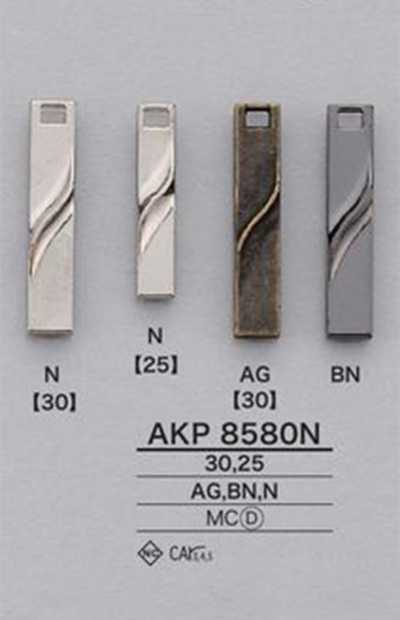
In general, the slider body has a mounting part for attaching a pull tab, and the user operates it by pinching the pull tab. The pull tab is the operating part, while the slider is the body that engages the zipper teeth; the two are distinguished as separate parts.
Structure and Related Parts
A zipper is mainly made up of zipper teeth, the zipper tape that holds the teeth, the slider, top stops and bottom stops, and the insertion pin and box. As the slider passes between the teeth, the left and right teeth are joined or separated at the specified position.
The top stop prevents the slider from coming off the top end, and the bottom stop is the part that stops the teeth from opening at the lower end. In an open zipper, an insertion pin and box are provided at the lower end, creating a structure that allows the left and right sides to separate.
- Zipper teeth: The connecting part that interlocks the left and right sides to close the opening.
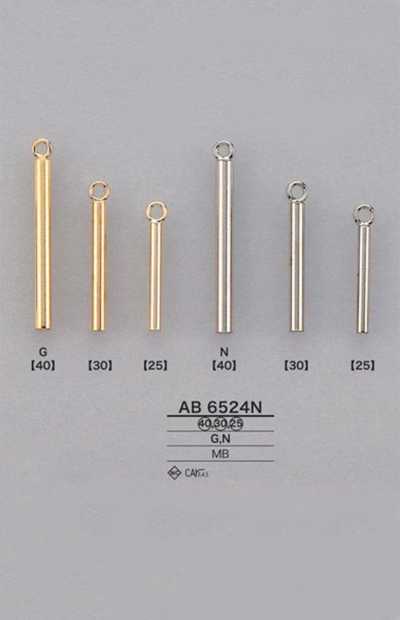
- Pull tab: The part that is pinched to operate the slider.
- Top stop and bottom stop: Stopping parts that restrict the slider's range of movement.
- Insertion pin and box: Parts that attach and detach the left and right sides at the lower end of an open zipper.
Types and Specifications
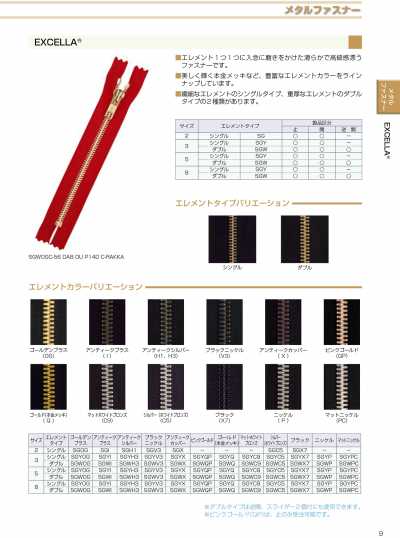
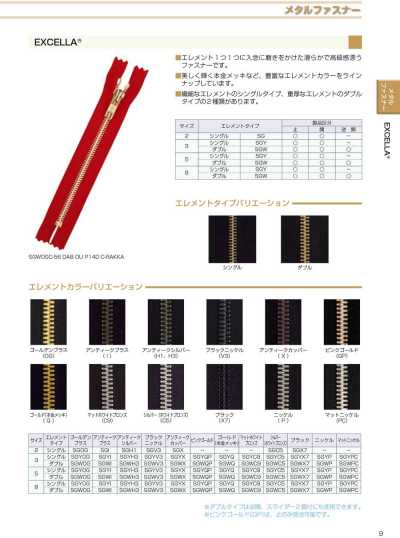
Choose the slider according to the type of teeth and the tooth size of the zipper it is intended for. Because the tooth shape and dimensions differ among coil, resin, and metal zippers, items that look similar may not be compatible. As a rule, confirm that it matches the same zipper specification.
There are lock-type sliders that are likely to stay fixed on the teeth when the pull tab is released, sliders without a locking mechanism, and double sliders that can be opened and closed from both directions. The opening style should be considered together with the overall zipper specification, such as closed-end, open-end, and two way separator.
Main Applications
In garments, they are used for front openings of pants and skirts, back openings of dresses, front openings of jackets and coats, pockets, and more. For bags, pouches, bedding covers, and similar items, the zipper and slider are selected according to the size of the opening and frequency of use.
Lock-type sliders are considered for front openings and pockets where you want to reduce the chance of opening during use. On the other hand, for applications that require repeated rapid opening and closing, operability, pull tab shape, thickness, and interference with surrounding textile are also important.
Selection and Handling Precautions
When selecting, check that the zipper tooth size, tooth type, opening specification, and pull tab shape and finish all match. Even when replacing only the slider, a prototype or actual sample check is necessary because the zipper chain standard and wear condition can affect compatibility.
The zipper length is often confirmed as the effective length of the teeth from the top stop to the bottom stop. However, because the reference point may differ for open-end specifications or on product/specification documents, clearly state the measurement starting point and required finished dimensions when placing an order.
In sewing, confirm the seam allowance at the tape ends, interference with facings or lining, and the clearance needed to move the slider. If washing or garment washing is performed, also consider in advance changes in the slider surface finish, snagging on other products, and how to protect it when closed.
Frequently Asked Questions
What is the difference between a slider and a pull tab?
The slider is the main body part that engages or separates the teeth. The pull tab is the operating part attached to the slider and pinched by hand to move it. Some structures allow only the pull tab to be replaced, but you need to confirm that the mounting part's shape and dimensions match.
Can only the slider be replaced?
Replacement may be possible if the corresponding zipper type, tooth size, and left and right tooth shapes match. However, if the teeth are worn or deformed, or the tape is damaged, opening and closing problems may remain, so replacing the entire zipper may be more appropriate.
Where do you measure zipper length?
In general, it is confirmed based on the functional portion of the teeth between the top stop and bottom stop. For open-end specifications, the stated overall length may include the insertion pin and box, so it is important to separate the finished product dimensions from the material specification basis when checking.