Nut Button
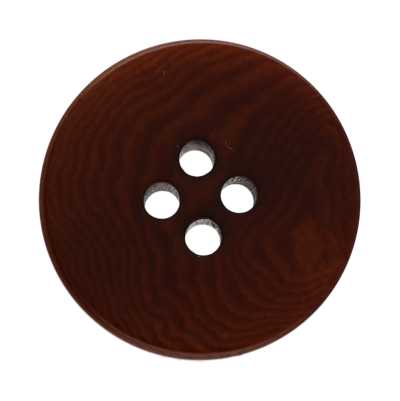
A nut button is a button made by carving the endosperm of the tagua palm seed, with a dense texture similar to ivory and the distinctive appearance of a natural material.
Contents6 sections
Definition and Material Characteristics
Nut buttons are natural-material buttons made from the hard endosperm inside the seeds of the tagua palm, which is native mainly to Central and South America. In English, they are called corozo nut buttons, and are also sold under the names corozo and tagua.
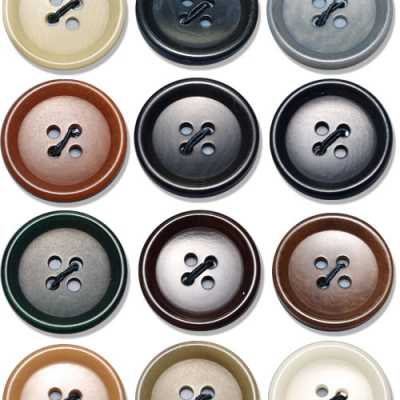
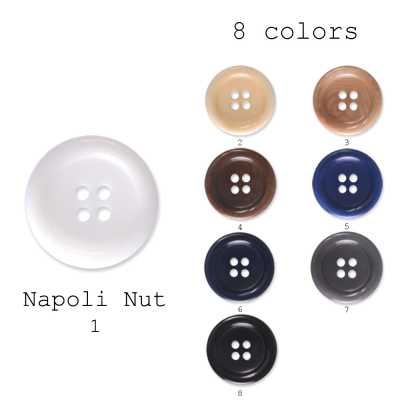
They have a dense, hard material feel, and the surface shows natural variations from the raw material, such as wood-grain-like patterns and uneven coloration. Even dyed products may not become perfectly uniform, and these characteristics are often used in design as part of the natural look.
Shapes and Size Notation
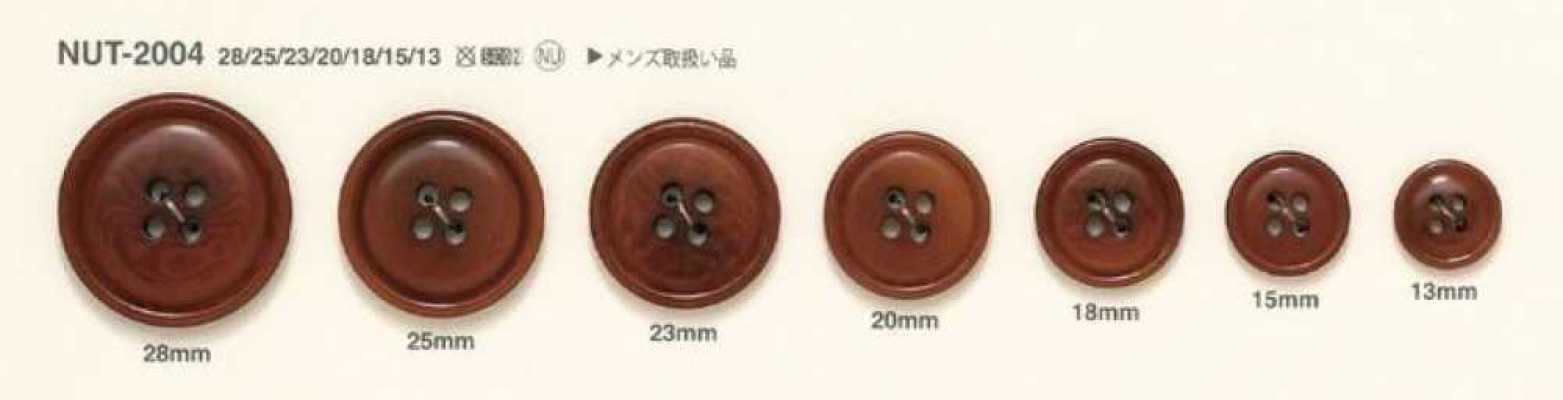
Nut buttons include two-hole and four-hole types that are sewn on through holes in the surface, as well as shank buttons with a loop on the back for threading the yarn through. Hole buttons are used for shirt and jacket front openings, while shank buttons are used for heavier textiles or areas where a raised look is desired.
Button diameter is indicated not only in mm but also in lignes. One ligne is approx. 0.635 mm, and multiplying the number of lignes by 0.635 gives the approximate mm size. The actual finished dimensions, thickness, and hole diameter should be checked for each product number.
- Two-hole / four-hole: a shape sewn on by threading yarn through the holes.
- Shank: a shape that lets yarn pass through the loop on the back, making the sewing thread less visible on the surface.
- Ligne: a traditional unit used for button diameter.
Main Applications and Selection
Used for jackets, suits, coats, shirts, blouses, cardigans, and more. With a calm luster and warmth from the natural material, it suits classic, natural, and workwear-inspired designs.
When selecting, check not only the apparent diameter but also the thickness, number of holes or type of shank, hole diameter, and compatibility with the buttonhole. Even the same color number may vary in tone or pattern by lot or by piece, so combinations within the product also need to be checked.
Attachment and Handling Notes
For hole buttons, use thread wrapping based on the thickness of the textile so there is proper space between the button and the textile. If sewn on tightly against a thick textile, extra load can be placed on the button when passing through the buttonhole.
Because it is a natural material, strong impact or excessive force may cause cracking or chipping. For washing, dry cleaning, and ironing, check the product's care label and the button specifications, and do not apply a hot iron directly. Prolonged contact with water, detergent, or chemicals may cause discoloration or changes in texture.
Differences from Similar Terms
Real buffalo horn buttons are natural-material buttons made from buffalo horn or bone, and the raw material differs from nut buttons. Real buffalo horn is characterized by layered patterns and deep coloration, while nut buttons are characterized by a dense plant-based texture and a light wood-grain-like appearance.
Urea buttons and polyester buttons are resin products. Compared with nut buttons, which are natural-material buttons, these are easier to make uniform in color, pattern, and dimensions, but their material-based variation and texture are different.
Frequently Asked Questions
Should the size of a nut button be checked in mm or in lignes?
Check it according to the specification sheet or the supplier's notation. Ligne is the unit used for button diameter, and one ligne is approx. 0.635 mm. Use the converted value as a reference, but for buttonhole design and preproduction checks, it is important to measure the actual diameter, thickness, and hole diameter.
Can nut buttons be used for home laundry or dry cleaning?
Whether they can be used depends on the button's processing specifications and the care label for the overall product. Because they are a natural material, the tone and surface texture may change depending on washing, drying, and chemical conditions. It is reassuring to carry out wash and dry tests under the actual product conditions before adoption.
![KN36 [Real Nut] Button Glossy](/img/item/thumb/OKURA/1017851_t2.jpg)

![KN1915 [Real Nut] Cat-eye Button, Glossy](/img/item/thumb/OKURA/1017845_t2.jpg)