Chinese Button
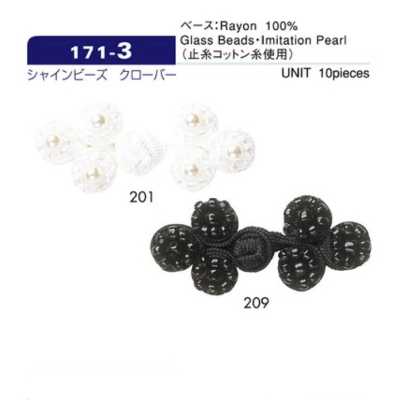
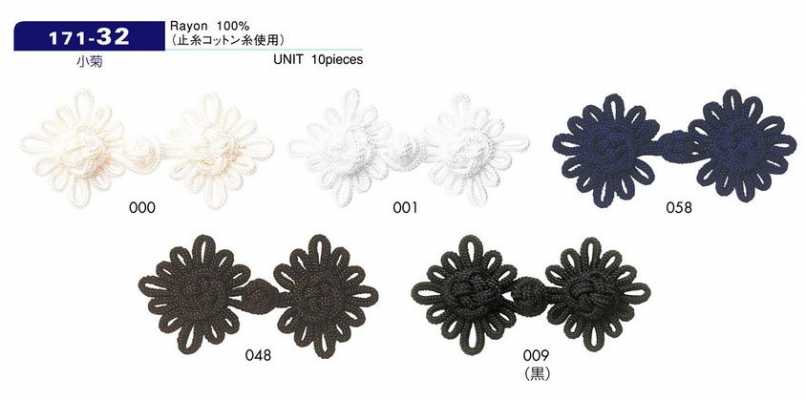
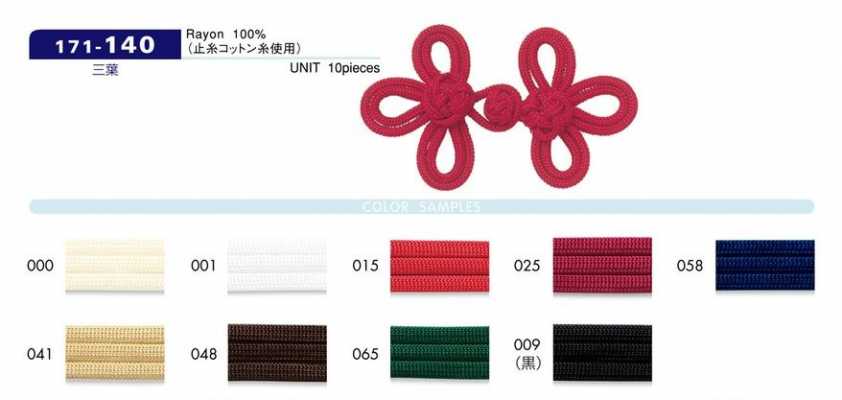
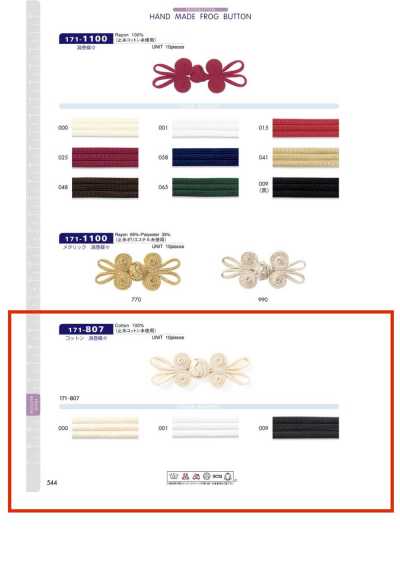
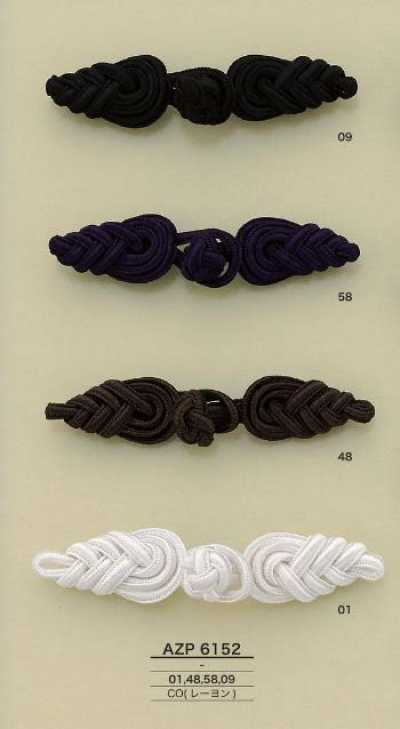
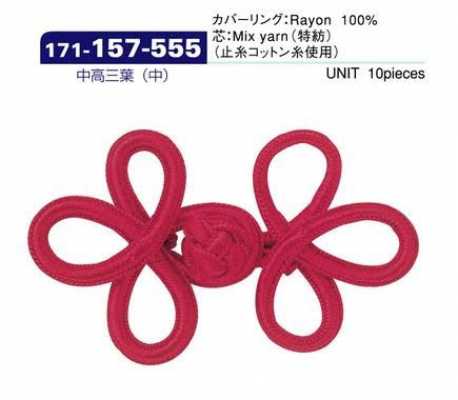
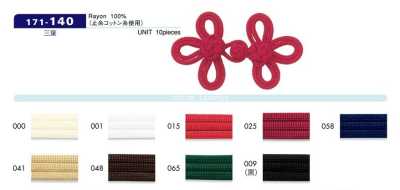
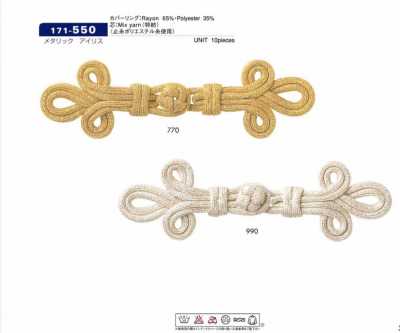
A Chinese button is a decorative fastening with a Chinese-style design, combining a knot-like loop made from braid or cord with a ring-shaped receiver.
Contents7 sections
Definition and overview
China buttons are accessories used to fasten the front opening by tying braid, cord, or similar materials. They use decorative elements such as knot shapes or flower shapes as the fastening part, and are closed by hooking them onto a loop on the opposite side. As a decorative detail reminiscent of Chinese clothing, they are used at front openings and necklines.
Unlike the method of passing through a buttonhole like a typical shirt button, they are used as a pair of a fastening part and a loop. They are highly decorative, and in addition to serving a closing function, they are also used as trim sewn to the front opening.
Materials and structure
Many are made from textile cord or braid such as rayon, polyester, or silk. Because the appearance and stiffness vary depending on gloss, thickness, and braid pattern, they are selected to match the texture of the outer fabric and the application. Their material feel and structure differ from metal or resin buttons.
The basic structure consists of a knot ornament visible on the front side, a ball-shaped or bar-shaped fastening part for hooking, a receiving loop, and the sewn attachment section. They usually do not have thread-through holes or molded shanks, and the end of the cord or the base section is sewn to the fabric.
- Ball-shaped fastening part: the part that is passed through the loop and secured.
- Loop-shaped receiving part: the part made to match the size of the fastening part.
- Knot ornament: the part that provides the design, such as flower shapes or continuous patterns.
- Sewn attachment part: the cord end or base section sewn to the front opening or facing.
How size is expressed
Typical round buttons are described by diameter in millimeters or lignes. A ligne is a unit used for button dimensions, and 1 ligne is approx. 0.635 mm. China buttons, on the other hand, are not round, so lignes alone may not clearly indicate the shape.
When selecting one, confirm the overall length and width including the knot ornament, the thickness or diameter of the fastening part, and the inner dimensions of the receiving loop in mm. It is important to check how well it fastens using the actual item or a prototype, including the overlap width at the front opening, the thickness of the outer fabric, and the clearance needed for opening and closing.
Main applications
They are used at the front opening and neckline of China-collar blouses, dresses, jackets, coats, and similar items. In stage costumes and formalwear, their decorative quality is easy to make use of, and in cardigan-like light garments they are used as an accent closure.
For decorative use, the actual opening and closing may be handled by a zipper, snap button, hook, or similar closure, with the China button placed on the front side. Consider the number of times it will be opened and closed, the required holding force, and the stretch of the outer fabric, and clearly specify in the specification sheet whether it is for function or decoration.
How to attach and handling precautions
The stitching position is determined with the left and right front edges actually overlapped. If the center of the fastening part and receiving loop are misaligned, the front opening may twist or become difficult to open and close. Sew the cord ends down several times, and reinforce the back side with pressing cloth or similar material if needed.
Resistance to washing, dry cleaning, and ironing varies depending on the cord material, dyeing, core material, and whether adhesive is used. Strong snagging or friction can cause fuzzing, unraveling, and loss of shape. Check the care instructions attached to the product and the handling conditions from the accessory maker.
High-temperature ironing may cause changes in fiber gloss, deformation, or discoloration. If ironing is necessary, use a pressing cloth and do not apply the iron directly; check on an inconspicuous area first. For specifications that include a hard core or decorative parts, also verify that pressure will not cause cracks or chipping.
Differences from similar terms
A toggle button is a button with a bar-shaped fastener that passes through a loop, and is used on duffle coats and similar items. China buttons are similar in that they hook a fastening part onto a loop, but they are characterized by knot ornaments made from braid and have a more delicate, decorative appearance.
A shank button is a molded button sewn on by passing thread through a shank on the back. In contrast, China buttons are generally sewn on by the cord itself. Also, a covered button is a button body wrapped in fabric, and differs from a structure that fastens with a knot and loop.
FAQ
Do China buttons need buttonholes?
In general, they do not use ordinary buttonholes; instead, the ball-shaped or bar-shaped fastening part is hooked onto the paired receiving loop. However, there are also specifications that use decorative China buttons together with a snap button, hook, or zipper at another position.
How do you choose the size of a China button?
Choose it not only by overall length and width, but also by the combination of the thickness of the fastening part and the inner dimensions of the receiving loop. If the loop is too small, it is hard to hook; if it is too large, it comes undone easily. Include the thickness of the outer fabric and the overlap at the front opening, and confirm the ease of opening and closing with a prototype.
Can China buttons be machine washed at home?
It depends on the material and structure, so it cannot be judged uniformly. Assuming fuzzing of the cord, color bleeding, peeling of bonded parts, and deformation of the core material, carry out washing tests both on the accessory alone and on the product as a finished item. Ultimately, follow the care label on the product.