Cotton Lace
Cotton lace is lace with openwork patterns made from yarn whose main raw material is cotton, and it is used for apparel and decoration while taking advantage of the soft feel characteristic of natural materials.
Contents6 sections
Definition and Overview
Cotton lace is a general term for lace made primarily with cotton yarn. Lace refers to openwork fabric or tape-like decorative material, and cotton lace is a material-based name, not a term that indicates only a specific structure or manufacturing method.
For apparel use, there are wide types made into fabric as well as narrow tape-like types used for edging. The composition is not always 100% cotton; some blend other fibers for strength, shape retention, elasticity, and other purposes.
Construction and Materials
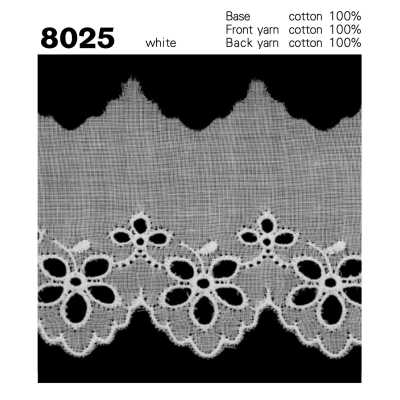
Methods include twisting yarns together to create patterns, using a knitting machine to form the ground structure and pattern, and applying embroidery to a base fabric. Even when the cotton material is the same, sheerness, thickness, pattern definition, and edge stability after cutting differ depending on the method.
Cotton absorbs moisture and is relatively gentle against the skin. On the other hand, it tends to change dimensions when it absorbs water and is also prone to wrinkling. The feel and ease of handling change depending on yarn thickness, twist, processing, and the blending of other fibers.
Visual Characteristics and Main Applications
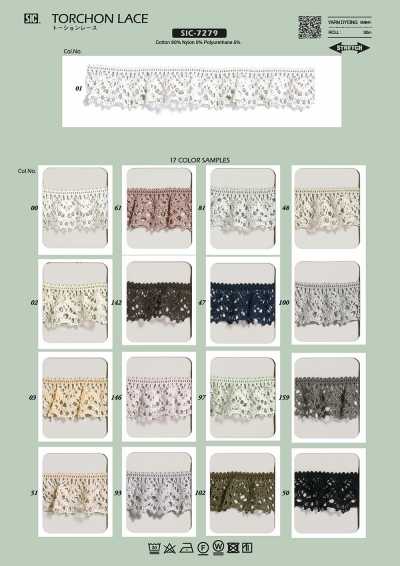
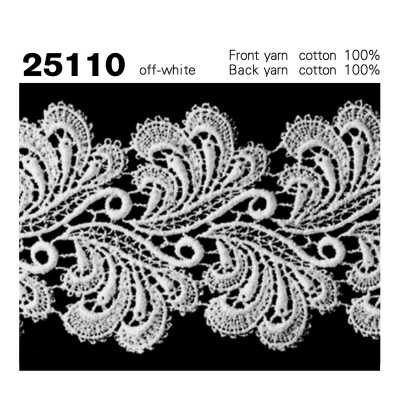
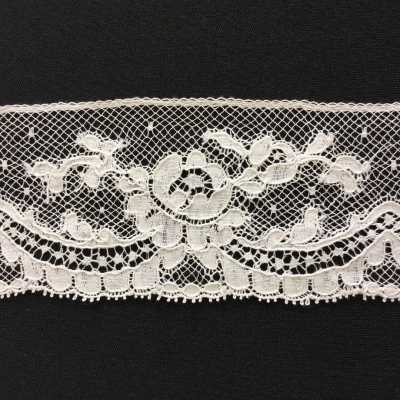
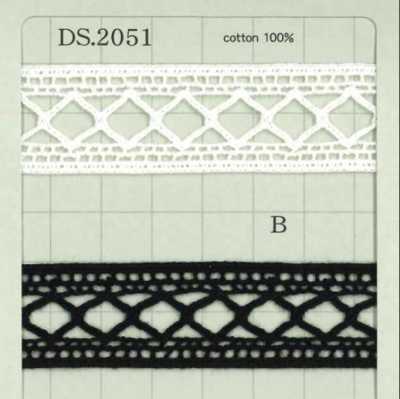
White and ecru make it easy to express a clean, natural impression, and the pattern types are varied, including floral patterns, geometric patterns, and ladder-like openwork. Compared with lace made mainly from synthetic fibers, it has less sheen and tends to have a simple, soft appearance.
It is used for blouses, dresses, skirts, children's clothing, and partial use in innerwear and nightwear. When used for collar, cuff, and hem trimming, yoke transitions, or front placket decoration, the sheerness and pattern can become a design highlight.
- Fabric types are used for bodices, transitions, and layered use.
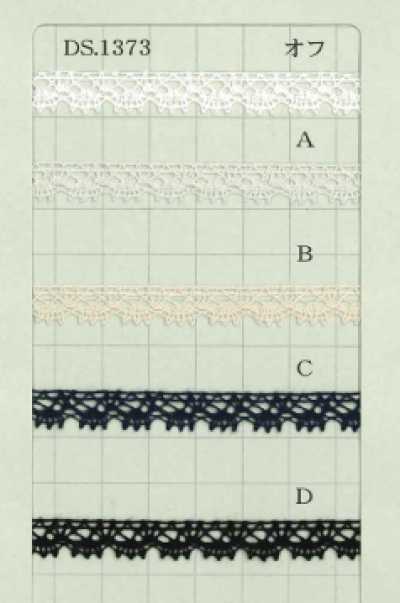
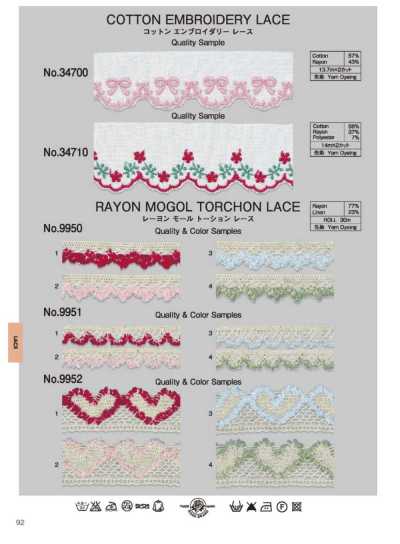
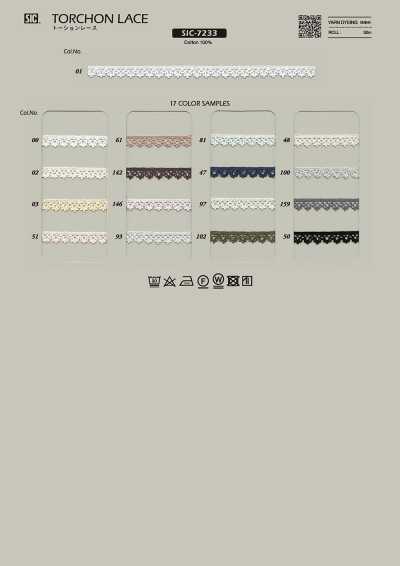
- Narrow types are used for edging around collars, cuffs, hems, and pocket openings.
- For sheer sections, consider in advance how to layer them with lining or another fabric.
Selection and Sewing Notes
Choose according to the application by checking the width, pattern size, sheerness, thickness, and edge specification. When using it for a bodice, check how much the skin shows through and what lining is needed. For edging, it is important to check whether there is a decorative edge such as a scallop on one side and whether there is a stable edge suitable for stitching in.
In general, lace made mainly from cotton and without elastic yarn does not stretch much. However, some stretch may be felt depending on the knit structure or the bias direction. Before cutting, align the grain and pattern direction, and if necessary reinforce seam allowances and transition areas with stay tape to prevent stretching.
Openwork sections and pattern edges can snag easily, and raw cut edges may fray. Use fine needles and thread, and on visible areas do test stitching to check for puckering and thread gathering. Finish seam allowances according to the pattern and thickness.
Washing and Differences from Similar Terms
Washing methods vary depending on the product, fiber blend ratio, and processing, so follow the care label. Because washing may cause shrinkage, wrinkling, or loss of shape, it is important to perform a washing test on the actual fabric before mass production and confirm the shrinkage rate and appearance changes. In some cases, using a laundry net is suitable to avoid snagging.
Lace is a general term that does not specify a material, while cotton lace is lace whose main raw material is cotton. In addition, torsion lace, raschel lace, and chemical lace are mainly classifications based on manufacturing method and structure. Cotton lace may overlap with these manufacturing classifications.
Frequently Asked Questions
Does cotton lace stretch?
Do the cut edges of cotton lace fray?
It depends on the manufacturing method and pattern, but yarn may come loose or fray from the cut edge. Leave enough seam allowance on edges that will be sewn in, and choose a finish such as an overlock stitch or French seam that suits the thickness and sheerness of the material. It is important not to cut decorative edges carelessly.
Does cotton lace shrink when washed?
Cotton may shrink when washed, and in lace the shape of the pattern and openwork sections may also change. Behavior varies depending on blended fibers, dyeing, and finishing, so check the care label. Before productization, confirm the shrinkage rate and appearance under actual washing conditions.