Cross Stitch
Cross stitch is an embroidery technique in which embroidery thread is repeatedly crossed diagonally to form X-shaped stitches, counting the weave of the fabric or grid-like squares to create patterns and lettering.
Contents6 sections
Definition and Overview
Cross stitch is a type of counted stitch in which X-shaped stitches are arranged based on a fixed number of fabric threads. By reading pattern symbols and grid squares and stitching one stitch at a time with thread in the specified colors, it can express geometric patterns, letters, and images.
In general, a special fabric with visible weave or a plain-weave fabric with a coarse count is used. Matching the size and direction of the stitches helps make the design easier to read and creates a more even finish.
How to Use and Basic Steps
Align the center of the pattern with the center of the fabric, and start stitching near the center to help prevent the pattern from shifting out of place. Divide the embroidery thread into the required number of strands, pass it diagonally along the weave of the fabric, and overlap the other stitch to form an X.
In many cases, the stitching direction is kept consistent, and the diagonal stroke that lies on top is unified across all Xs. If long floats are made on the back, they may show through to the front or snag easily, so proceed while also considering how to secure the thread when changing colors.
- Check the pattern at regular intervals so you do not miscount the fabric threads.
- Do not pull the thread too tightly; keep the tension just enough that the fabric does not pucker.
- For large designs or sheer fabrics, using an embroidery hoop to stretch the fabric moderately makes the work easier.
Types and How to Choose
Cross stitch includes the basic method of continuously stitching the same X shape, as well as half cross stitch and expressions that combine stitches of different sizes. Depending on the design, straight stitches may also be used together to fill backgrounds or supplement outlines.
Choose a fabric with an easy-to-read weave and a count that suits the fineness of the design. Check the number of embroidery thread colors needed, as well as the sheen and thickness. Changing the number of strands alters the stitch density and sheerness, so it is important to test stitch and confirm the balance with the fabric.
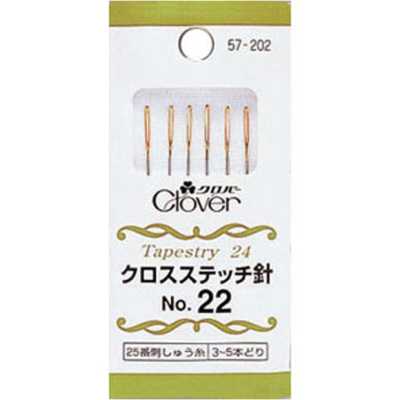
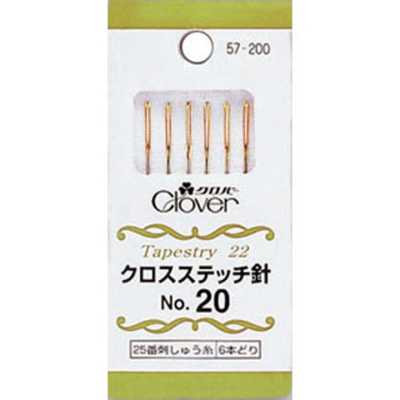
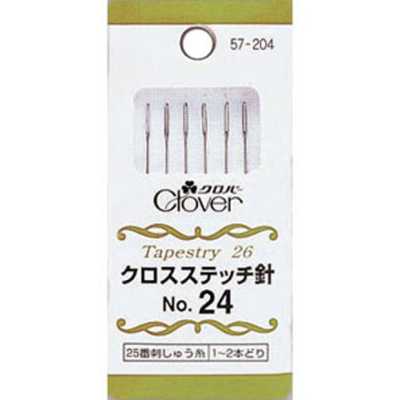
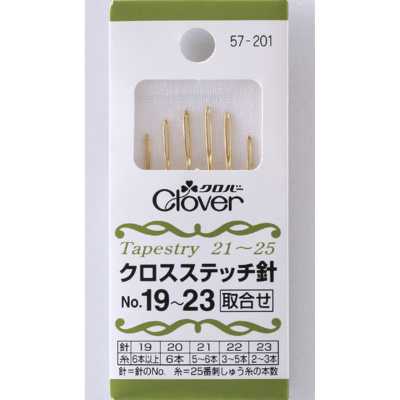
Needles suitable for cross stitch have a round point that does not easily split the fabric fibers and an eye that makes threading easy. Choose the needle thickness and length to suit the fabric count and the amount of thread used, and select one that passes through the fabric without strain.
Care and Safety Precautions
When washing a finished item, check the care instructions for the fabric and embroidery thread, as well as the possibility of color bleeding, in advance. Dark-colored thread in particular is safer to handle after testing on an inconspicuous area. After washing, do not wring it hard; reshape it and let it dry, then press from the back side of the embroidered area with a pressing cloth at low temperature.
Return needles used during work to a pincushion or case, and do not leave them stuck in the fabric or clothing. In places with small children, store needles, scissors, and thread separately. If a metal needle breaks or goes missing, check the surroundings to prevent it from being mixed into the product.
Differences from Similar Terms
Embroidery refers broadly to techniques that use thread and needles to create patterns on fabric. Cross stitch is a technique within that category in which X-shaped stitches are placed while counting the fabric threads. It differs from French embroidery, which is stitched as if drawing freehand lines, in how the pattern is read and how the stitches are constructed.
Kogin stitching is also an embroidery technique that counts the fabric threads to form patterns, but it is characterized by creating geometric designs by carrying thread across the weave of the fabric. Cross stitch basically crosses diagonal threads and expresses patterns with a collection of X shapes.
Frequently Asked Questions
What kind of needle is used for cross stitch?
In general, a cross stitch needle with a round point and a larger eye is used. Compared with a needle with a sharp tip, it is less likely to split the fabric fibers and makes it easier to pass through the holes in the weave. Choose the needle thickness according to the fabric count and the number of strands of embroidery thread.
What is the difference between cross stitch and French embroidery?
Cross stitch counts the fabric threads and creates designs by arranging X-shaped stitches in a regular pattern. French embroidery is a general term for embroidery that uses a variety of stitches such as outline stitch and satin stitch to freely express lines and surfaces.