Tracing Wheel
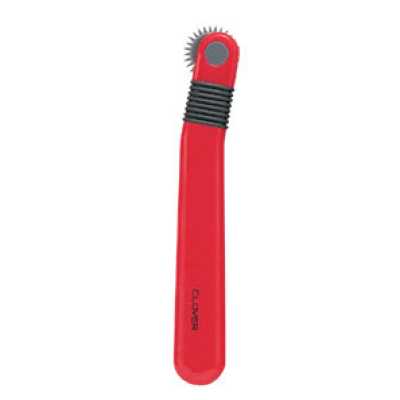
A tracing wheel is a sewing and craft tool used to transfer markings such as seam lines and dart positions by rolling a gear-shaped tip over tracing paper placed between the pattern and the textile.
Contents6 sections
Definition and Overview
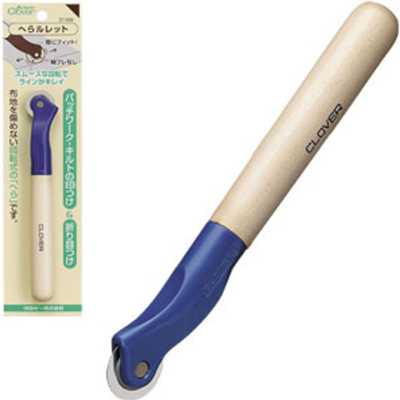
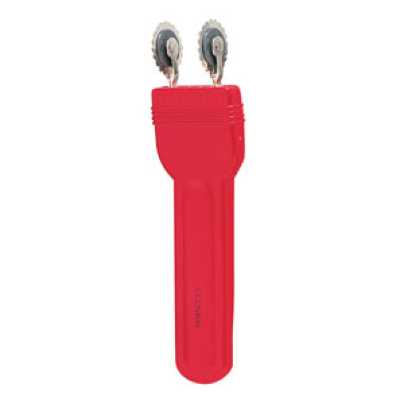
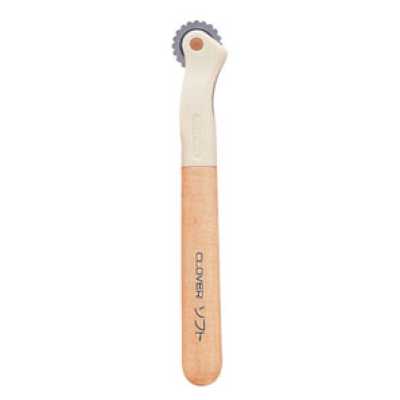
A roulette is a marking tool with a rotating wheel at the end of the handle. By tracing lines over a pattern and rolling it, it transfers marks such as seam lines, notches, darts, and pocket positions to fabric through copying paper placed underneath.
It is used in the process of accurately transferring a drafted pattern to a toile or fabric. It can also be used to transfer lines to paper only, but in garment production it is necessary to confirm that it will not damage the fabric surface and that the marks will not remain in later processes.
How to Use It
Basically, place the fabric on a flat worktable, then layer copying paper on top, followed by the pattern. After securing the pattern so it will not shift, slowly roll the roulette along the necessary lines with steady pressure.
If you press too hard, holes, fuzzing, or changes in sheen may occur in the fabric. First test the visibility of the mark and how easily it removes on a scrap piece, and for the actual work it is important to use the minimum necessary pressure and number of passes.
Use different directions and colors of copying paper depending on the right and wrong sides of the fabric and the number of cut pieces. Making marks in places that will be hidden after completion, such as inside the seam allowance, helps reduce the effect on the surface.
- Secure the pattern and fabric with pins or weights.
- Check on a scrap piece whether the color of the copying paper suits the fabric.
- For straight lines, use a ruler; for curves, roll along the pattern line.
- After work, check the position of the marks and whether there are any scratches or color transfer on the surface.
Types and How to Choose
Roulettes include ones with a sharp, gear-shaped tip and ones with relatively rounded tooth tips. Sharp types transfer lines well on paper and firm fabrics, but they may damage lightweight fabrics, brushed fabrics, or coated fabrics, so caution is needed.
Fine-toothed types tend to follow curves and detailed pattern lines more easily. Coarse-toothed types leave dot-like marks and can be used differently when you do not want to leave a strong continuous line. Toothless types with smooth tips are suitable for use with pressure applied over copying paper.
When selecting one, check the fabric thickness, surface delicacy, the clarity required for the mark, and compatibility with the copying paper. Knit and stretch materials are prone to stretching, so do not trace strongly with a roulette; consider other marking methods such as tailor's chalk or basting thread as well.
Care and Safety Precautions
After use, wipe off copying-paper powder, fabric fibers, and oil stuck to the wheel and shaft with a dry cloth. If you use it while the wheel does not rotate well, the line may become broken or it may snag the fabric, so do not force it; inspect its condition first.
The tooth tips may be sharp, so do not press them against your fingers or leave them exposed on a desk. When storing it, use a cap or case so that it will not damage other sewing tools or fabric.
Metal parts may rust in hot or humid places. If moisture gets on it, wipe it thoroughly, and if abnormal rust, deformation, or looseness is seen, avoid using it on fabric.
Differences from Similar Terms
Chalk is a marking material or tool used to draw lines or dots directly on the fabric surface. A roulette does not color by itself; instead, it is usually used together with copying paper to transfer the pattern line by pressure.
An awl is a pointed tool used for opening seam allowances, shaping corners, or indicating hole positions. A roulette also has a tip, but its main purpose is to roll a wheel and make continuous marks, so its use differs from an awl, which makes marks by puncturing.
Frequently Asked Questions
Can you mark fabric with only a roulette?
Depending on the shape of the tooth tip, an indentation or dot-like trace may remain, but generally copying paper is used together to transfer a clear colored line. When using it directly on fabric, there is a possibility of scratches or marks remaining, so always test on a scrap of the same fabric before deciding.
Can a roulette be used on lightweight fabrics or knits?
On lightweight fabrics, brushed fabrics, surface-finished fabrics, and highly stretchy knits, the tooth tip may cause scratches, color transfer, or stretching. If you use a roulette, test it with a rounded tip and light pressure, and switch to tailor's chalk, basting thread, or another method if it is not suitable.