Dressmaker's Pin
A dressmaker's pin is a thin, needle-like sewing tool used to temporarily hold textile or patterns before or after cutting, keeping the stitching position and shape from shifting.
Contents5 sections
Definition and Overview
A dressmaker's pin is a temporary holding pin made of a sharp metal shaft with a head. Before sewing, it holds fabric layers together and keeps them stable while checking seam allowance, notches, pattern matching, and other positions.
A sewing needle is a tool used to make stitches by passing thread through it, whereas a dressmaker's pin is used to temporarily secure fabric before and after the sewing process. It is faster than basting with basting thread, but it is not suitable for long-term holding or areas under strong force.
How to Use
Align the fabric edges and notches, and insert the dressmaker's pin as close to perpendicular to the sewing line as possible so it is easier to remove just before sewing. Keeping the pin within the seam allowance reduces the risk of leaving unnecessary needle holes on the right side. For lightweight fabrics or fabrics where damage is noticeable, test on an inconspicuous area first.
When sewing with a sewing machine, in principle remove the dressmaker's pins as you go, before the needle or presser foot reaches them. Sewing over pins may cause needle breakage, uneven stitches, or injury.
- For curved areas, use closer spacing to reduce fabric lifting and shifting.
- For thick fabrics or areas with many layers, use them separately from basting thread as needed.
- For patterned fabrics, first align the key pattern points, then secure the middle.
Types and How to Choose
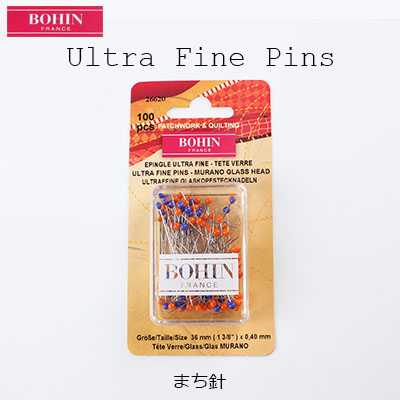
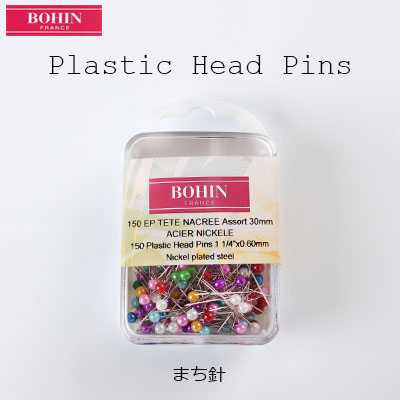
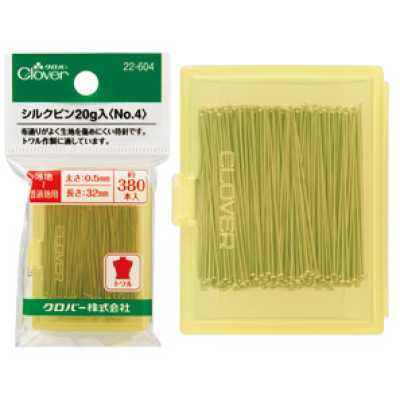
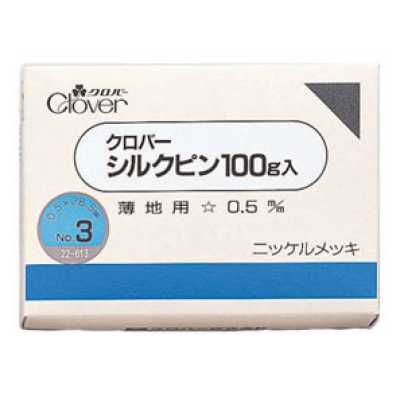
Dressmaker's pins differ in length, thickness, sharpness of the tip, and head shape or material. In general, thin, sharp pins are easier to use for lightweight or delicate materials, while longer pins tend to be easier to handle for thick fabrics or materials with many layers. Pins that are too thick for the fabric can cause holes or thread snags.
Heads are made of glass, resin, metal, and other materials. When ironing is involved, check whether the head is heat resistant and less likely to deform. Visibility, size, and ease of grip are also selection factors. For products that go through needle detection, manage the number used and make sure they can be recovered easily.
- Ultra-lightweight fabrics and silk-like materials: choose thin pins with sharp tips.
- General woven fabrics: choose a length that penetrates the fabric sufficiently and is easy to handle.
- Thick fabrics and quilted materials: consider longer, stronger pins.
- Using with an iron: check the heat resistance of the head and how easy it is to handle during work.
Care and Safety Notes
After use, count the pins and store them together in a pincushion or a covered container. It is important to make a habit of checking whether any are left on the worktable, floor, or inside the product. In particular, sample-making before mass production and sewing-site operations often keep records of the number brought in and the number recovered.
If left with moisture or water on them, pins may rust and stain the fabric. Do not use dressmaker's pins that are dirty, rusted, bent, or have a damaged tip. Avoid holding pins in your mouth or carrying them with them still stuck in clothing, as this can lead to accidental swallowing or injury.
Frequently Asked Questions
Should dressmaker's pins be removed just before sewing with a sewing machine?
As a rule, remove them before the sewing machine needle reaches them. Sewing over a pin can cause the machine needle to break or shards to fly. Pinning perpendicular makes removal easier, but you still need to be very careful when removing them while sewing.
What if pin holes remain in thin fabric?
Choose thinner pins and insert them in less noticeable positions such as within the seam allowance. Since some fabrics do not recover from holes easily, it is important to test on a scrap piece first. As a temporary holding method, you can also consider basting thread or a clip suitable for the fabric.
What is the difference between a dressmaker's pin and a sewing needle?
A dressmaker's pin is a pin used to temporarily secure fabric or patterns, and it usually has no eye for thread. A sewing needle is a needle used to pass thread through and create stitches by hand. Because their uses and structures differ, use them according to the task.