Trouser Hook and Bar
A hook and eye closure is a metal fastening made by combining a hook-shaped hook and a receiving bar, mainly used to fasten the upper end of the front opening of pants and skirts.
Contents6 sections
Definition and Overview
A hook and eye closure is a hook fastener attached near the top of a front-opening zipper to close the waistband edge. The hook side is fastened to the bar on the receiving side. It supplements the lateral force on the zipper and helps keep the front opening from gaping.
Although it is known as a material for pants, it is also used on tight skirts and some jackets. Because it is attached in a position that is not easily visible from the front, it is characterized by helping create a neat appearance.
Materials and Structure
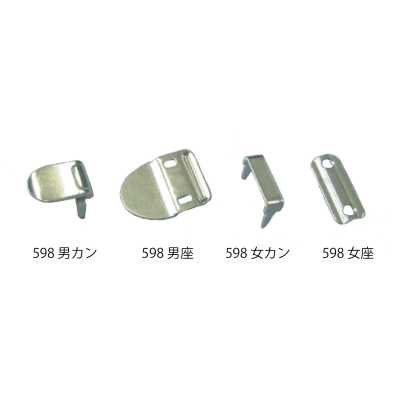
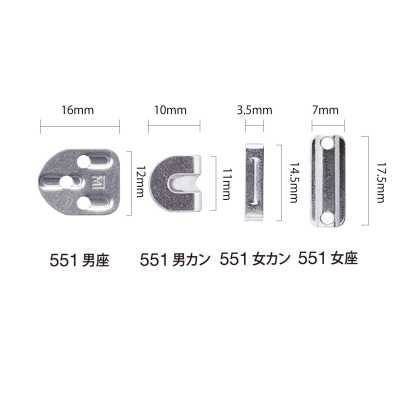
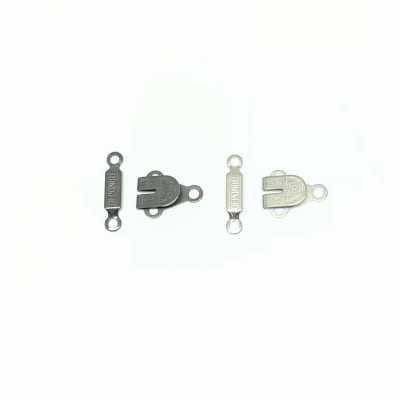
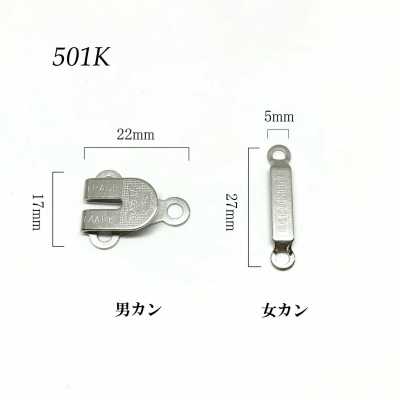
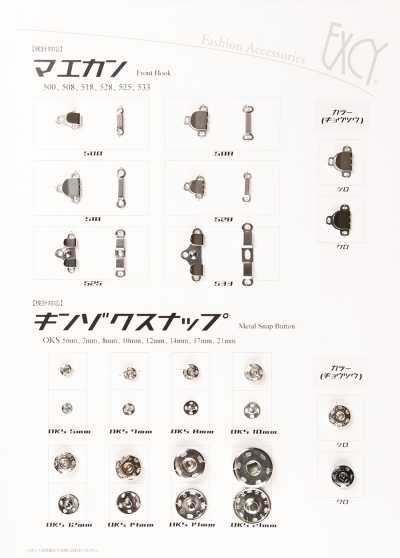
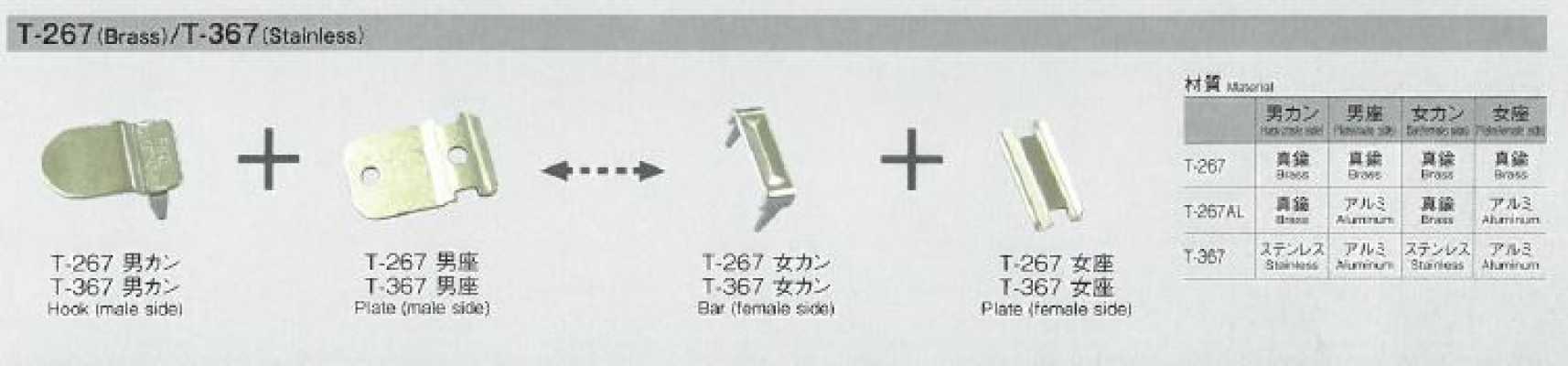
A typical hook and eye closure is made of metal and consists of a hook on the fastening side and a pair of bars on the receiving side. There are thread-attached types with holes for sewing, and rivet types that are fixed by passing prongs through the fabric.
A thread-attached hook and eye closure is installed by passing thread through the holes. A rivet-type hook and eye closure is fixed by penetrating the fabric and interfacing with the prongs of the part, then bending them over on the reverse side. Use them according to product specifications, fabric thickness, and the process.
- Hook: the hook-shaped fastening-side part.
- Bar: the rod-shaped part that receives the hook.
- Thread-attached type: a type fixed by sewing.
- Rivet type: a type fixed by bending the prongs.
How to Attach and Align
For a thread-attached hook and eye closure, check that there is reinforcement such as interfacing on the sewing position, such as the facing side at the waistband edge, before attaching it. Since force is concentrated during use, pass the thread securely through each hole and prevent fraying with a knot or backstitching.
For a rivet-type hook and eye closure, mark the specified position and set it so that the front and back sides and left and right parts are not mixed up. When using a dedicated setting tool or hand press, confirm that the prongs are sufficiently flattened and that the fabric has not been damaged.
If the height or left-right position of the hook and bar is off, the center front may twist or the waistband edge may lift. It is important to do a test fit with the zipper closed and fix it in the position where it naturally overlaps when worn.
Main Applications and Selection
Hook and eye closures are often used at the waistband of front-zip trousers, tailored pants, uniforms, skirts, and similar items. They distribute the pulling force that the zipper alone cannot easily bear, and help improve ease of use when putting on and taking off, as well as stability of the front opening.
When selecting one, check the garment application, the load on the waistband, the thickness of the fabric and interfacing, and the sewing equipment. For thin or delicate fabrics, the sewn-on type may be chosen, while the rivet type may be adopted in mass-production processes.
Points of Caution and Differences from Similar Terms
A hook and eye closure is not a part that alone bears a heavy load. When used in a design with little margin in size or with highly stretchable fabrics, confirm that repeated opening and closing or pulling will not cause deformation, breakage of the sewing thread, or pullout of the riveted part. Reinforce the attachment area with interfacing if necessary.
Metal hook and eye closures should be distinguished from the needle inspection process, which checks whether broken needles or foreign matter are mixed into the product. In operating a metal detector, set standards assuming a response from attached metal parts and confirm that the hook and eye closure is in the correct position.
Spring hooks and sewn-on snaps differ from hook and eye closures in that they fasten by engaging a spring or male-female parts. A hook and eye closure uses a hook-and-bar structure and is mainly suited to organizing the top edge of the front opening of pants and skirts.
Frequently Asked Questions
Are both a hook and eye closure and a zipper necessary?
In many front-opening pants, a zipper and a hook and eye closure are used together. The zipper closes the opening, while the hook and eye closure receives the lateral pull at the top of the waistband and suppresses gaping at the front opening. However, depending on the specification, another fastener such as a button may be used.
Can a rivet-type hook and eye closure be attached with household tools?
For a rivet-type hook and eye closure, it is important to use a setting tool or press suited to the part so the prongs are flattened evenly. If the tool is not compatible, it can cause fabric damage, part deformation, or insufficient fixation. Before mass production, perform test installations with the actual fabric and interfacing layered together.
Is interfacing necessary at the attachment area of a hook and eye closure?
Because force is concentrated on a hook and eye closure during opening and closing, it is common to reinforce the attachment area with interfacing or similar material. The required level of reinforcement varies depending on fabric thickness, structure, garment application, and the fixing method of the hook and eye closure. For thin fabrics, also pay attention to fading on the surface and deformation.
- Browse Hook And Eye Closure products
- Browse Hook And Eye Closure products
- Browse Hook And Eye Closure products
- Products with material "Metal"
- Products for style "For Pants"
- Products for style "For Skirts And Dresses"
- Products for style "For Jackets/Suits"
- Products for style "For Uniforms/Workwear"
- Products for style "For Formal Wear"
- Browse Hook products