Magnetic Snap
A magnetic snap is a hook-like fastener that opens and closes with the attractive force of paired magnets. It comes in sew-on and press-in types and is used for front openings and flaps on clothing and bags.
Contents6 sections
Definition and Overview
A magnetic button is an apparel accessory that fastens with the attraction of opposing magnets rather than a male-female interlocking mechanism. It closes simply by bringing the parts close together and opens by pulling them apart, so it offers both ease of use and a clean appearance.
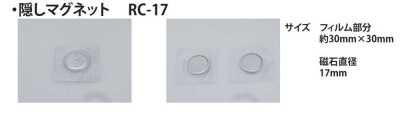
“Hidden magnetic” is a name often used to refer to a specification in which the fastener is placed inside the outer fabric or facing so it is less visible from the outside. However, because it does not uniformly indicate the product shape or attachment method itself, the position and finish should be checked in the specification sheet.
Materials and Structure
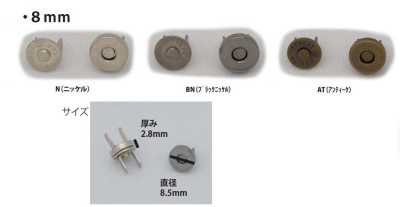
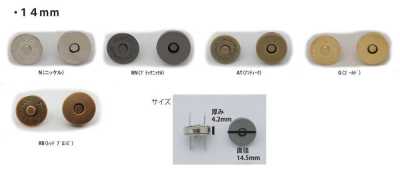
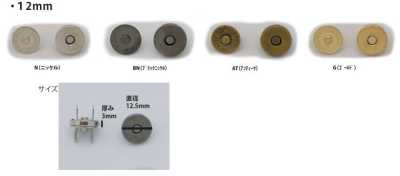
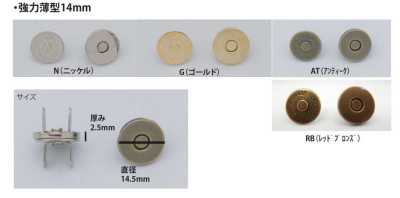
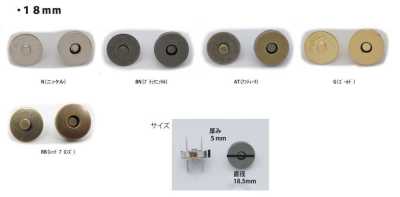
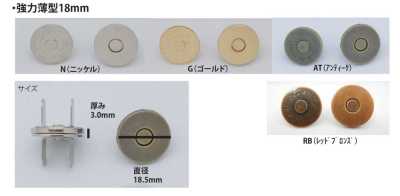
In general, it has a paired structure in which the magnet is covered by a metal cover or receiving part. There are also press-in types that combine a visible metal fitting on the front side with a washer or reinforcing part supporting the fabric on the back side, and the combination of parts varies by product.
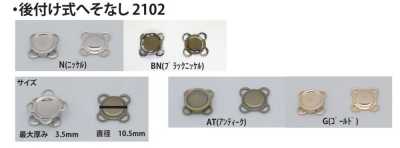
The sew-on type is attached by sewing the holes or tape part around it with thread. Compared with the press-in type, it can be attached without making large holes in the fabric, but holding strength is affected by the stitching and the method of reinforcing the fabric.
- Metal cover / receiving part: protects the magnet and forms the appearance.
- Magnet body: attracts the paired part.
- Washer: a part used in press-in types to support the back side of the fabric and prevent pullout.
- Reinforcing interfacing / patch cloth: used to distribute force in lightweight or stretch fabrics.
How to Attach and Sewing Key Points
For press-in types, use the specified setting tool or hand press to pass the prongs of the main body through the fabric and secure them with the washer. Because the compatible setting tool differs by part, substituting another tool can cause deformation, damage, or poor fixation. Before mass production, always perform a trial setting with the same fabric construction.
For sew-on types, fix the holes or sewn area evenly, taking into account the direction of force applied when opening and closing. On lightweight fabrics, knits, or pile fabrics, reinforce with interfacing or patch cloth, and also check that the outline of the fastener does not show through the surface.
If the centers of the paired parts on the left and right, or top and bottom, are misaligned, sufficient attraction may not be obtained, or the front edge or flap may become distorted when closed. It is important to determine the position including the pattern placement, seam allowance, and thickness, and to check opening and closing during the basting stage.
Main Applications and Selection
They are used for the front opening of coats and jackets, pockets and flaps, and the opening of bags. They are suitable for places where you want to fasten without making the metal fitting visible from the front, or where one-handed opening and closing is desired.
When selecting one, check the overlap amount of the fastening area, the fabric thickness, the pulling direction, and the required ease of opening and closing. In addition to attraction force, consider the outer diameter and thickness of the part, whether it shows through the outer fabric, and the handling conditions during washing or dry cleaning in line with the specification.
Points of Caution and Differences from Similar Terms
Depending on the application and installation conditions, a magnetic button may not provide sufficient strength as the main fastening in areas subject to continuous strong tensile load. Evaluate the actual product not only for opening and closing tests, but also for fabric tearing, washer pullout, and sewing thread breakage.
A sew-on snap is a fastener in which the protruding and recessed parts are physically engaged by a spring structure or similar mechanism, and the fastening method differs from that of a magnetic button, which adheres by magnetism. Press fasteners and spring hooks also have press-in types, but they usually open and close through mechanical engagement.
Because it contains magnets, it may affect needle detector settings and operation. For products that require needle detector compatibility, confirm in advance the pass result on the needle detector being used, the process control method, and the customer’s standards, and clearly state the presence of the magnet in the specification sheet.
Frequently Asked Questions
Can magnetic buttons be attached to lightweight fabrics?
Yes, but on lightweight fabrics, force may concentrate on the washer or sewn area, causing the fabric to tear or the shape to show on the surface. Reinforce with fusible interlining or patch cloth, and make a prototype using the actual specification with the outer fabric, lining, and interfacing layered together to check opening and closing as well as appearance.
How should magnetic buttons and sew-on snaps be used differently?
Magnetic buttons are suitable when you want easy, touch-to-close fastening or when you want to hide the metal fitting with a concealed specification. Sew-on snaps, by contrast, are chosen when a clear clicking feel from mechanical engagement is desired. Decide by comparing the required holding strength, fabric thickness, and needle detector conditions.
Can needle detection be performed on products that use magnetic buttons?
Because they contain magnets, they may cause reactions or operational issues in processes that detect ordinary needles. Whether this is possible depends on the fastener construction, the type and settings of the needle detector, and the customer’s standards. Before adoption, conduct testing with actual equipment and confirm the inspection procedure with all parties involved.