Linen Tape
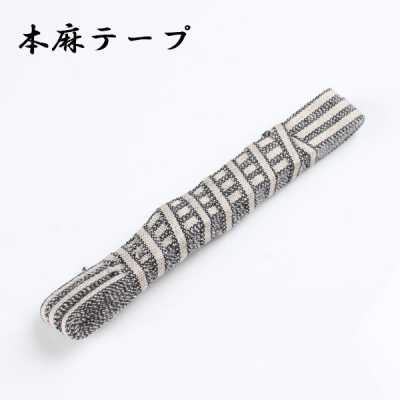
Linen Tape is a non-stretch tape made from linen fibers and used to stabilize the shape of garment seams and edges while preventing stretch and distortion.
Contents6 sections
Definition and Overview
Linen Tape is generally a woven tape made from linen-based fibers, used as a sewing supply to suppress stretch and distortion in fabric during sewing. It is used to reinforce seam lines in lightweight or easily stretched textiles and to reduce loss of shape caused by wear and washing.
“Hemp” has a broad range of meanings in material labeling and distribution, and may refer to linen or Ramie. When you want to match the texture and shrinkage behavior of the material, do not judge by the name alone; check the composition label and finish.
Areas of Use and Role
It is mainly used in areas that are prone to losing shape when stretched, such as shoulder seams, necklines, front edges, pocket openings, and waist seams. By sewing it into the seam allowance side or facing side, it suppresses stretch along the grain and stabilizes dimensions and lines after sewing.
When used to match a natural-fiber outer fabric, it may be easier to blend in with the texture. However, since hemp fabric tape itself has very little elasticity, when using it in areas that require body movement or on knit fabrics, carefully consider the direction of use and the necessary ease.
- Shoulder seams: suppresses stretch and sagging at the shoulder point.
- Necklines and front edges: suppresses waviness and stretch at openings.
- Pocket openings: suppresses deformation of the opening and piping.
- Waist area: stabilizes seam lines and belt attachment positions.
Types by Cutting Method and Adhesive Specification
The way the tape stretches changes depending on how it is cut relative to the weave direction. Straight-cut tape is cut along the warp or weft direction and is suitable for uses that need to firmly prevent stretch in a specific direction. Bias-cut tape is cut on the diagonal and is easier to follow curves.
Non-adhesive tape for sewing is fixed securely through sewing. Adhesive types can be temporarily fixed or bonded with an iron, simplifying the process, but the finish changes depending on compatibility with the outer fabric and the bonding conditions.
How to Choose
Choose the width according to the seam allowance width, the area to be reinforced, and the degree to which you do not want it to show on the outside. If it is too narrow, it may come loose from the seam or provide insufficient reinforcement; if it is too wide, it may create stiffness or a step. Check that it fits within the actual seam allowance.
For straight sections where stretch must be completely prevented, consider a straight type; for curves such as necklines, consider a bias or half-bias type that follows the curve moderately. Tape that is significantly stiffer than the outer fabric can cause seam pulling and discomfort when worn, so caution is needed.
Precautions for Bonding and Sewing
For adhesive types, perform a test bond with the outer fabric before full production. If the temperature, pressure, or time is insufficient, it may peel easily; excessive heat or pressure may cause fading, discoloration, or changes in texture in the outer fabric. Check the bonding condition, including after washing.
When sewing it in, place the tape without pulling it and without applying extra tension to the outer fabric. If you sew while strongly stretching the stretch-prevention tape, puckering (fine waviness around the seam) may occur after sewing. Because hemp-based materials may change dimensions with moisture, check shrinkage in advance if necessary.
FAQ
What is the difference between hemp fabric tape and general stretch-prevention tape?
Hemp fabric tape usually refers to a woven tape made from hemp-based fibers, and is characterized by a texture associated with natural fibers. Stretch-prevention tape, on the other hand, is a general term for the application and includes synthetic fiber products such as polyester, nonwoven products, and adhesive types. Choose based on the required stretch-prevention performance and compatibility with the outer fabric.
Can hemp fabric tape be used on curved areas such as necklines?
Yes, but straight-cut tape is difficult to follow curves and may cause pulling or waviness. For curves such as necklines, choose a type with diagonal flexibility, such as bias-cut or half-bias, and check the fit with a sample before sewing.
Can adhesive hemp fabric tape be used without sewing?
Whether it can be used with adhesive alone depends on the area, outer fabric, washing conditions, and adhesive specifications. In areas subject to stress or areas where long-term shape stability is important, a specification that is bonded and then sewn in may be chosen. Always perform a test bond and check for peeling after washing.