Half-bias Tape
Half-bias tape is a tape made by cutting woven fabric diagonally to the grain, used to prevent stretching in curved areas while having less stretch than bias tape.
Contents5 sections
Definition and Overview
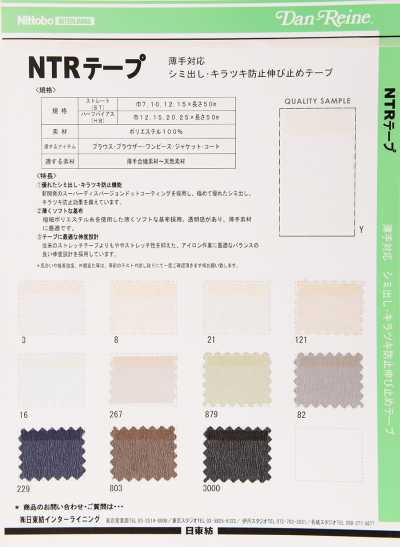
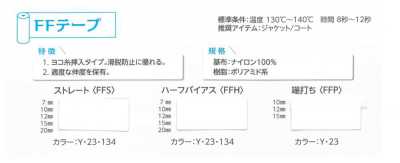
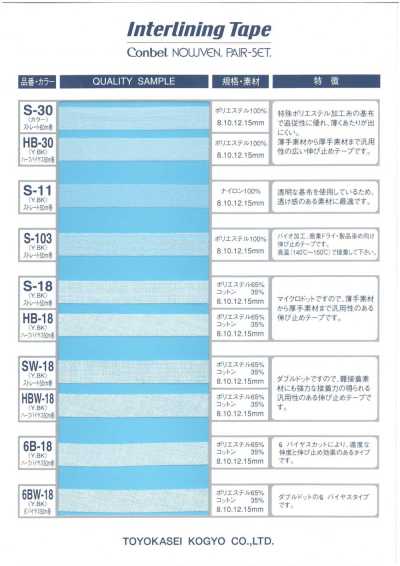
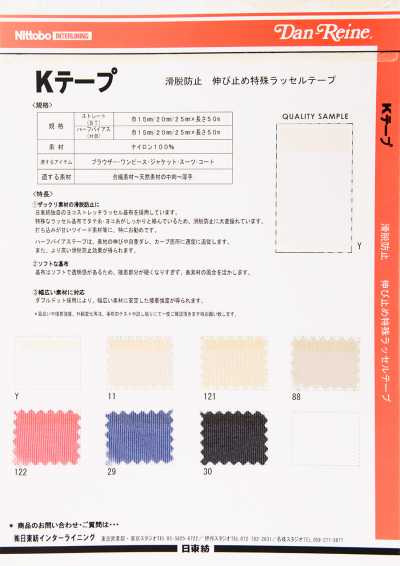
Half-bias tape is a stabilizing tape made by cutting woven fabric on the bias relative to the warp and weft. In general, it stretches less than bias tape cut on the true bias and has a property that makes it easier to conform to curves than straight tape.
It is used to prevent garment curves from stretching more than necessary and to reduce deformation during sewing and wear. Because the cutting angle and degree of stretch implied by “half” vary by manufacturer and workplace, specification confirmation is necessary.
Areas of Use and Role
It is mainly used for areas where the grain runs diagonally or where you want to suppress stretch in gentle curves. By applying it to the seam allowance side or sewing it in, it reduces seam stretching, distortion, and rippling at openings.
Typical applications include front edges, facing edges, pocket openings, and parts of the neckline or armhole. However, the suitable tape changes depending on the curve severity, fabric stretch, and sewing specifications.
- Stabilizing front edges and overlap edges
- Reinforcing pocket openings and bias-cut sections
- Stabilizing the shape around facings and necklines
Types and How to Use Them
In terms of cutting method, there are straight tape cut parallel to the grain, bias tape generally cut on the 45-degree direction, and half-bias tape cut on an intermediate diagonal. Half-bias is chosen when a balance between curve compliance and stretch suppression is needed.
Adhesive types can be temporarily fixed and bonded with an iron or press, making work easier, but adhesive conditions must be controlled. Non-adhesive types are used for stitching or sewing in, and are selected according to the fabric hand and process.
Selection and Precautions for Adhesion and Sewing
Select the width according to the seam allowance width to be applied, the position relative to the stitching line, and the area to be reinforced. If the tape stretches too much, the stabilizing effect will be insufficient; if it is too stiff, the curve may pucker or fading may appear on the outer fabric. Test it based on a thickness and stiffness similar to the outer fabric.
For adhesive types, apply without pulling the edge of the outer fabric, and bond at the specified temperature, time, and pressure. After bonding, let it cool and check the condition, and confirm before mass production that there is no peeling, strike-through, or bubbling.
In sewing, it is important to feed the tape and outer fabric together and not pull only one side. Especially on curved sections, do not force alignment by using the tape’s stretch; instead, confirm the pattern shape and seam allowance treatment as well.
Frequently Asked Questions
What is the difference between half-bias tape and bias tape?
In general, bias tape is cut more diagonally across the woven fabric, typically on the true bias, so it conforms better to curves and has greater stretch. Half-bias tape suppresses stretch more than that and is used for shape stability and stretch control on gentle curves. However, usage and cutting angles vary by terminology.
How should adhesive-type half-bias tape be checked?
Make a test application on the outer fabric to check peeling after bonding, strike-through or staining on the surface, and puckering at curved sections. It is important to follow the specified temperature, time, and pressure for each tape, and to confirm whether the result can be reproduced with the actual press machine and the fabric layering used in mass production.