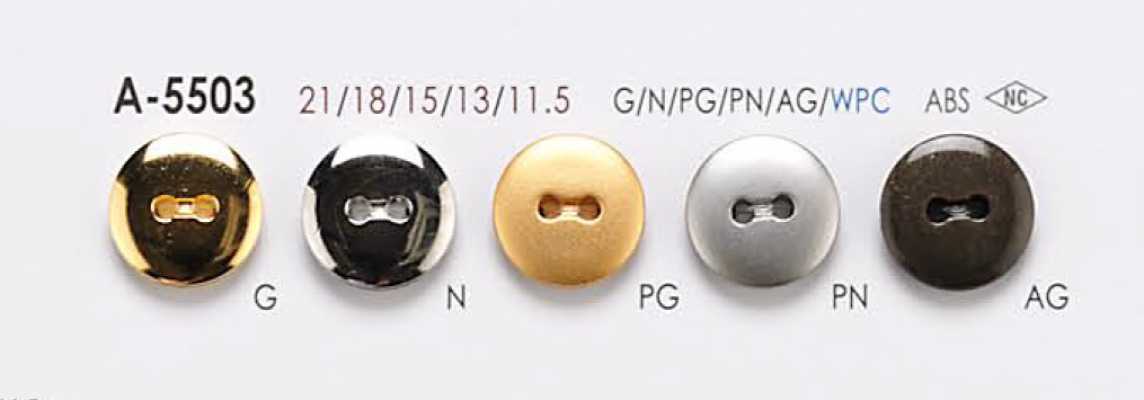
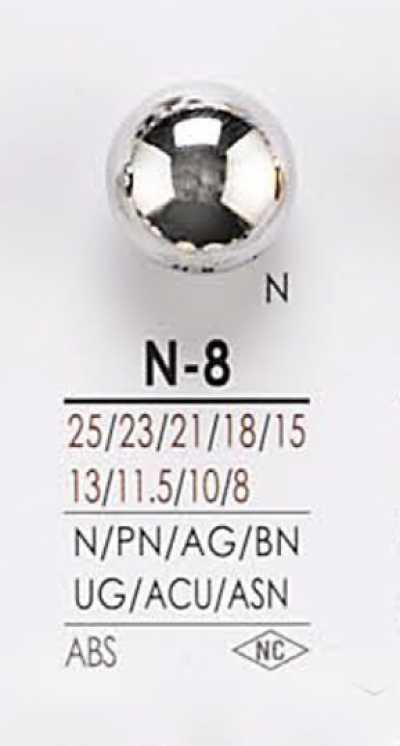
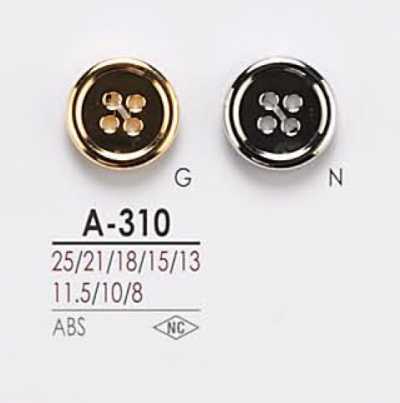
ABS Resin
ABS resin is a thermoplastic resin whose main components are acrylonitrile, butadiene, and styrene, and it is a material used for apparel buttons and other items, taking advantage of its moldability and impact resistance.
Contents6 sections
Definition and Material Characteristics
ABS resin is a thermoplastic resin that softens when heat is applied and can be molded. For buttons, it is molded into a variety of shapes using molds, and is used for design buttons that take advantage of its lightness, hardness, and ease of molding.
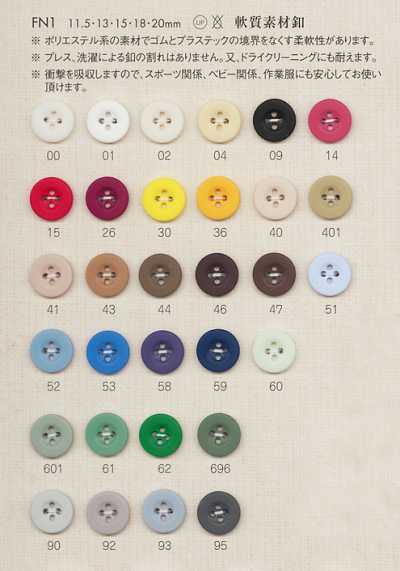
Even among resin buttons, the material differs from polyester resin and urea resin. ABS resin is well suited to creating raised designs and complex shank shapes, and the surface may also be finished with paint or a metallic coating.
Hole and Shank Shapes
ABS resin buttons are molded not only into perforated shapes such as two-hole and four-hole styles, but also into shank styles with a shank on the back. Shank styles make it harder for sewing thread to show on the front and are suitable for highly decorative shapes.
Shank specifications include ring shanks with a hole for threading and tunnel shanks that allow thread to pass through horizontally. For square and flower shapes, the appearance after sewing changes depending on the direction of the shank on the back, so the attachment direction should be checked in the specifications.
- Perforated buttons: stable attachment along the textile and commonly used for shirts and front openings.
- Shank buttons: easier to provide height between the button and the textile, and used for thick textiles and decorative designs.
- Shank height: select according to textile thickness, buttonhole thickness, and whether a shank wrap is used.
How Size Is Expressed
Button size is shown by diameter or maximum width in millimeters, and may also be expressed in lignes. Lignes are a customary unit for buttons, and 1 ligne is approx. 0.635 mm. For shapes other than round, the maximum dimensions in length and width may be shown instead of the diameter.
During planning, check not only the button's outer dimensions but also the buttonhole length, shank height, and thickness of the textile to be sewn. Even with the same indicated size, the appearance can change depending on the edge and three-dimensional effect, so checking the actual item is important.
Main Applications
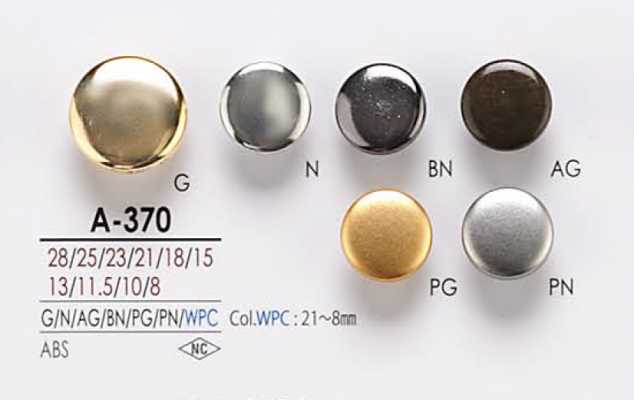
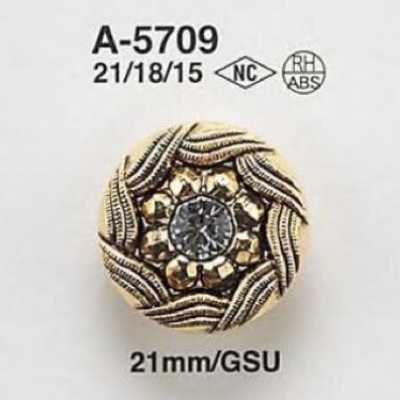
ABS resin buttons are used for front openings and decorative buttons on shirts, blouses, jackets, outerwear, pants, skirts, dresses, and more. Taking advantage of their molding flexibility, they are also suitable for applications where the design is meant to stand out, such as flower, geometric, and square shapes.
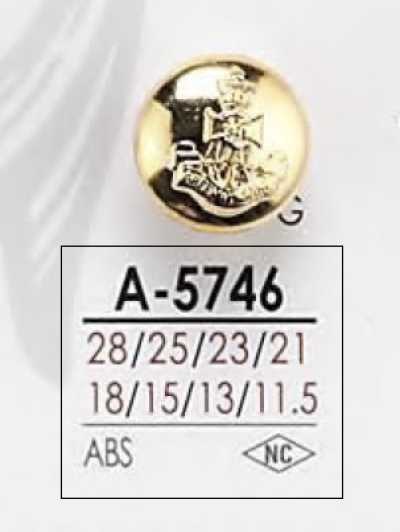
Depending on the surface finish, they may have a glossy look or a metallic appearance. However, even if they look metallic, the base material may still be ABS resin, so the material indication and finish specifications should be checked separately.
Attachment and Handling Precautions
For perforated buttons, leaving an appropriate amount of thread and creating a shank wrap can provide the clearance needed for the textile thickness. Shank buttons are sewn by passing thread through the shank hole, and if necessary, a backing button is used on the reverse side so that force from pulling does not concentrate at the base of the shank.
Resistance to washing, dry cleaning, and ironing depends not only on the ABS resin itself, but also on the paint, metallic finish, and bonded decorative parts. Direct exposure to a high-temperature iron, strong impact, and prolonged exposure to light can lead to deformation, cracking, discoloration, and deterioration of the surface finish. Before productization, washing tests including accessories should be performed, and the handling conditions for the buttons to be adopted should be confirmed.
Frequently Asked Questions
What is the difference between ABS resin buttons and polyester buttons?
Both are resin buttons, but the resins used are different. ABS resin is sometimes molded into complex three-dimensional shapes and shank styles, while polyester resin is also widely used for thick plate-style buttons. Do not decide based on appearance alone; select them while considering shape, finish, and washing conditions.
Can an iron be applied to ABS resin buttons?
Do not apply a high-temperature iron directly to the button. Heat may cause deformation, and if there is a painted or metallic surface finish, the appearance may also change. When ironing, avoid the button or use a pressing cloth, and check the handling conditions of the materials used.
Can ABS resin shank buttons be attached to thick textiles?
Yes, but it is necessary to check the combination of shank height, textile thickness, and buttonhole thickness. If the shank is too low, it can tighten the textile and make fastening difficult, while also putting stress on the sewing thread. Check the opening and closing performance and sewing strength with a prototype.
- Search products for "ABS Resin"
- Products with material "ABS Resin"
- Products for style "For Shirts/blouses"
- Products for style "For Outerwear/blousons/coats"
- Products for style "For Pants"
- Products for style "For Skirts And Dresses"
- Products for style "For Jackets/Suits"
- Products for style "For Kids"
- Browse Button products