Polyester Button
A polyester button is a button made by molding and processing polyester resin, with a wide range of colors, patterns, and surface finishes, and is used as a garment fastener and for decoration.
Contents6 sections
Definition and Overview
Polyester buttons are resin buttons made primarily from polyester resin. Through dyeing, blending, and pattern processing, they can express a wide range of colors, transparency, and marbled patterns. Some are made to resemble buffalo horn or shell in appearance, but the material itself is different from real buffalo horn or shell.
“Resin buttons” is a broad term for all synthetic resin buttons, and polyester buttons are one type. Because they differ from urea buttons, ABS resin buttons, and others in base resin, texture, and processing characteristics, the material specification should be checked when ordering.
Materials and Structure
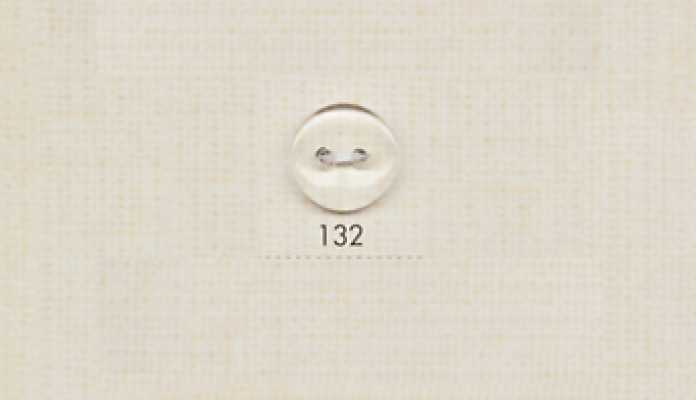
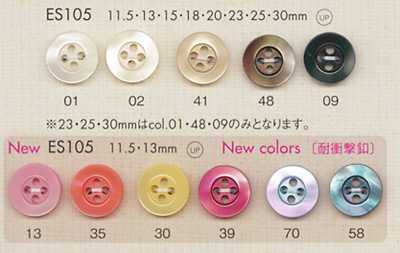
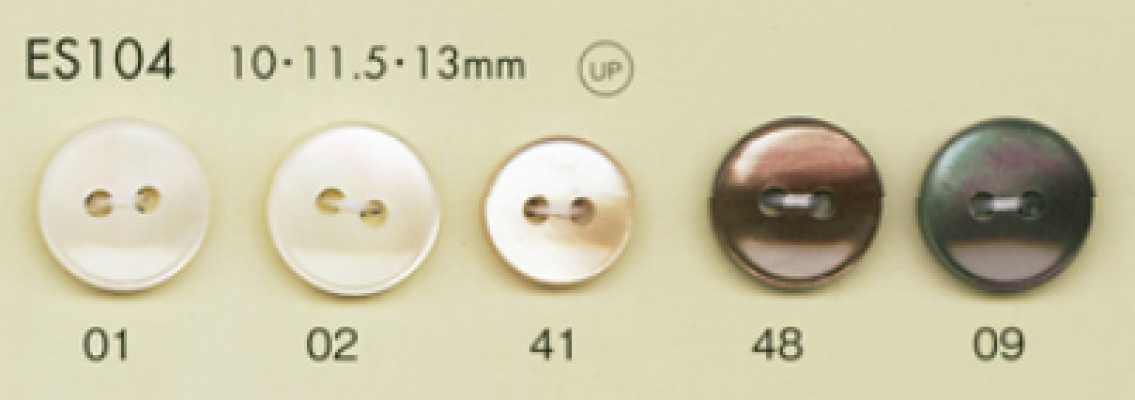
Common shapes include two-hole and four-hole buttons with thread holes on the front surface, and shank buttons that are sewn by looping thread around a shank on the back. Hole buttons are used for shirts and casual clothing, while shank buttons are used on jackets and blouses when a cleaner front appearance is desired.
Hole buttons also include cat-eye buttons with a recessed center and shapes that make it easier to accommodate sewing thread. Shank buttons create space between the button and the textile, so they are well suited to thick or bulky textiles; however, the attachment method should be considered so that stress does not concentrate on the shank.
- Two-hole / four-hole: a shape sewn on by passing thread through the holes.
- Cat-eye button: a shape with a groove between the holes that helps hold the thread in place.
- Shank button: a shape attached by looping thread around the shank on the back.
How Sizes Are Expressed
Button sizes are shown by diameter in mm, and may also be expressed in lignes (L). Lignes are a traditional unit for buttons, and 1 ligne is approx. 2.54 mm. Standard notation basically indicates the diameter, but for three-dimensional shapes, thickness and shank height also affect usability.
When selecting, check the buttonhole length and width, the front opening or placket, the textile thickness, and the application together. Even with the same indicated diameter, ease of fastening changes depending on the roundness of the edge and thickness. Before mass production, it is important to perform opening and closing tests using the actual buttonhole.
Main Applications and Selection
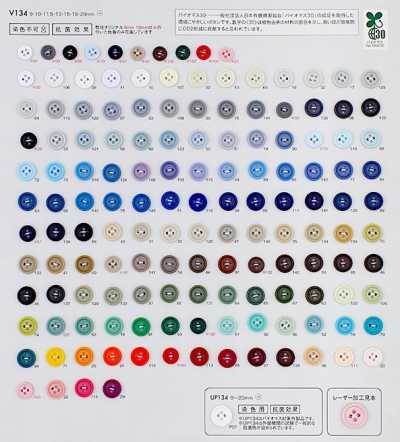
Polyester buttons are used for shirts, blouses, cardigans, jackets, coats, pants, skirts, dresses, and more. They offer many design options, from solid to pattern, and are also chosen when a natural-material look is desired while managing color and lot consistency.
Depending on the item, determine the button diameter, thickness, number of holes or shank shape, color, and gloss. For thin textiles, consider a light and flat shape; for thick textiles and outerwear, consider a diameter and thickness that are easy to handle. Buttonhole specifications, textile stretch, and washing method are also part of the selection criteria.
Attachment and Handling Notes
For hole buttons, leaving moderate slack in the sewing thread and making a thread shank creates space between the button and the textile, making it easier to insert and remove from the buttonhole. For shank buttons, avoid tightening the thread too much so as not to damage the base of the shank, and finish so that the button does not rotate excessively. If necessary, attach a backing button on the reverse side to distribute the load.
Resistance to washing and dry cleaning varies depending on the button formulation, surface finish, dyes/pigments, and sewing thread. Direct, prolonged exposure to high-temperature ironing, strong impact, and excessive tightening can cause deformation, cracking, or damage. Check washing and cleaning tests in advance according to the product conditions.
On light-colored, transparent, or surface-finished buttons, the color tone may change over time or depending on compatibility with chemicals. Evaluate appearance and strength before mass production, including compatibility with the textile, interlining, adhesive, detergent, and other materials.
Frequently Asked Questions
What is the difference between polyester buttons and urea buttons?
Both are resin buttons, but the base resin is different. Polyester buttons are characterized by a broad range of design expression such as color, pattern, and transparency. They may be difficult to distinguish by appearance alone, so check the specification sheet or material labeling.
Can polyester buttons be used for home laundering or dry cleaning?
Whether they are suitable depends on the button specifications and the product’s washing conditions. Some are used for regular laundering, but they may change depending on surface finish, color, and compatibility with chemicals. It is important to conduct tests that match the product conditions before mass production.
Can button lignes be converted to mm?
Yes. Since 1 ligne is approx. 2.54 mm, multiplying the number of lignes by approx. 2.54 gives the approximate diameter in mm. However, in actual selection, check not only the diameter but also the thickness and compatibility with the buttonhole.
- Browse Polyester Buttons products
- Products with material "Polyester Resin"
- Products for style "For Shirts/blouses"
- Products for style "For Outerwear/blousons/coats"
- Products for style "For Pants"
- Products for style "For Skirts And Dresses"
- Products for style "For Jackets/Suits"
- Browse Button products