Awl
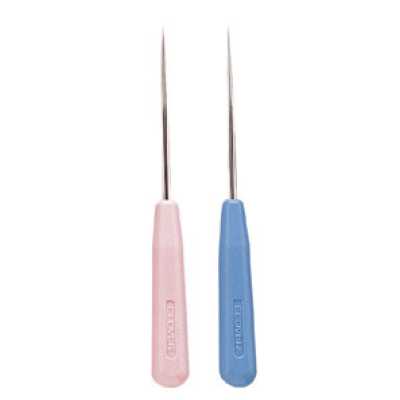
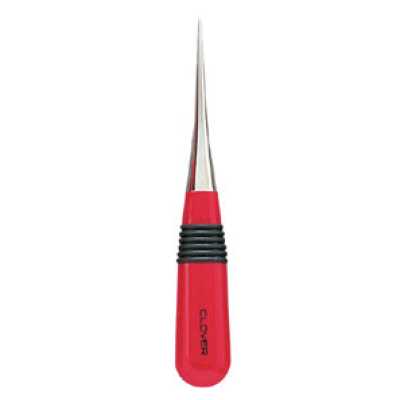
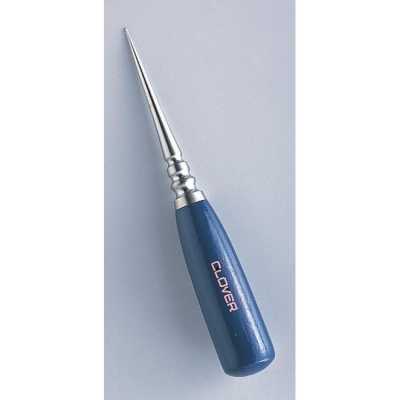
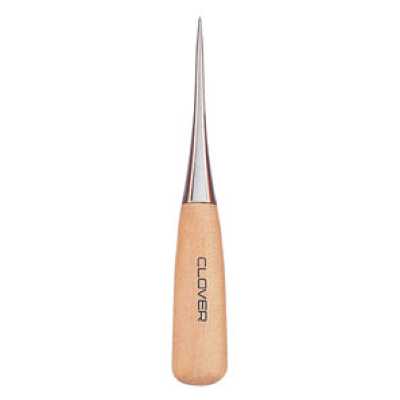
An awl is a handheld tool with a sharp pointed tip and a handle, used in sewing and handicrafts to punch holes in fabric, leather, and other materials, and to neaten seams and corners.
Contents6 sections
Definition and Overview
An awl is a hand tool with a thin, pointed metal tip and an easy-to-grip handle. It is used for fine tasks such as making small holes in materials, tidying fabric edges during machine sewing or hand sewing, splitting seam allowances, and turning out corners to shape them.
It is also used to make holes for sewing with a needle, but an awl is not a sewing needle itself. Unlike a tool that makes holes by cutting with a blade, it can sometimes make a hole by pushing the yarns of the textile apart without cutting the weave any more than necessary.
How to Use
When making a hole, place a backing material such as unwanted thick cardboard or a rubber mat on the work surface and hold the awl straight against the material. Start with a smaller opening than the desired hole, and if needed, advance the tip little by little to reduce damage around the hole.
In garment making, it is used to lightly push and shape corners such as turned collar points, pocket openings, and cuffs from the inside. Pushing too hard with the tip can pierce the textile or scratch the surface, so it is important to work gradually, as if easing out the seam allowance.
- Making pilot holes before button sewing or hand sewing
- Tidying seam allowances around zippers and hooks
- Shaping corners and curves after turning them out
- Loosening jammed threads and adjusting position
Types and How to Choose
The usability of an awl changes depending on the thickness, length, shape, and grip comfort of the tip. A thin, sharp tip is suitable for lightweight fabrics and delicate sewing, while a sturdier, thicker tip is better for thick materials and leather. If the tip is too thick for the material, it can leave noticeable holes or damage the fibers.
For leather work, tools such as a diamond awl, which makes diamond-shaped holes to neaten hand-sewn stitches, are used. A general awl is a tool for making or adjusting holes with a single fine tip, and its purpose differs from a diamond awl that makes evenly spaced multiple holes or from a hole punch.
- For lightweight fabrics and pilot holes: a fine-tip type
- For thick fabrics and leather: a thicker tip that does not bend easily
- For turning-out work: a handle that is easy to grip and a tip that is not excessively long
- For hand sewing leather: a diamond awl suited to the shape and pitch of the stitching holes
Care and Safety Notes
After use, wipe off lint and dirt stuck to the tip with a dry cloth, and store it away from moisture. If the tip is rusty or bent, it may damage the fabric or make it harder to make holes in the intended position, so check its condition before working. If it has a protective cap for the tip, use it during storage.
During work, do not place your fingers in the direction of the awl’s movement, and handle it on a stable surface. Making holes with the awl on your knee or with the palm of your hand as a support is dangerous. If excessive force is applied to a hard material, the tip may slip, so use suitable backing material and choose a dedicated hole-making tool if necessary.
Differences from Similar Terms
A bodkin is a thin, awl-like tool that is also used for making holes in stacked paper. Its shape and purpose may overlap with those of an awl, and in sales or on the worksite the two may be called the same thing, but in apparel sewing and handcrafts, it is more often called an awl as a tool for handling fabric and stitches.
A hole punch is a tool for punching round holes in leather, belts, and similar materials. An awl makes small holes by pushing the material apart, whereas a punch cuts out the material to make the hole. Also, a seam ripper is a tool for cutting and undoing stitches, and its tip shape and purpose differ from those of an awl.
Frequently Asked Questions
Will using an awl to make holes in fabric cause fraying?
In woven fabrics, if the awl makes a small hole by pushing the yarns apart without cutting the fibers, it may not be very noticeable. However, in coarse weaves, lightweight fabrics, or areas under strong stress, the hole may spread or fray. Please test it on a scrap piece first.
How should I choose between an awl and a hole punch?
Use an awl for small pilot holes, adjusting stitches, and shaping turned corners. A hole punch is suitable when you want to make uniform round holes in leather or thick sheet material. Using the wrong tool for the job can distort the hole shape or damage the material.
What should I watch out for when shaping corners with an awl?
If you insert the awl deeply into a turned corner and press hard, there is a risk of piercing through the fabric. Push little by little from the inside of the seam allowance, and do not place the tip directly against the seam. Be especially careful with lightweight fabrics and materials whose surfaces scratch easily.