Button Attachment
Button attachment is the sewing process of attaching buttons used for opening, closing, or decoration on garments and accessories to the textile by passing sewing thread through the holes or shank, and reinforcing them as needed.
Contents6 sections
Definition and Overview
Button attachment is the process of attaching buttons to the front opening, cuffs, collar, pockets, and other parts. It aligns with the receiving side, such as buttonholes or loops, to ensure ease of opening and closing, a neat appearance when worn, and sufficient strength. In addition to hand sewing, a button-sewing machine may also be used.
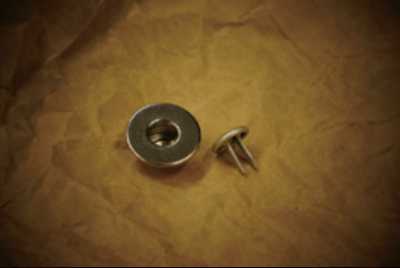
Unlike the process of making a buttonhole, button attachment refers to the process of securing the button itself to the garment. Attaching tack buttons or press fasteners, which are fastened by crimping parts with a setting tool, uses a method different from ordinary thread button attachment.
Button Materials and Construction
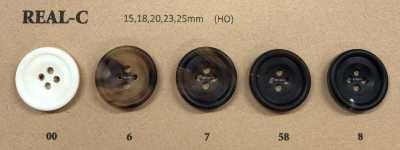
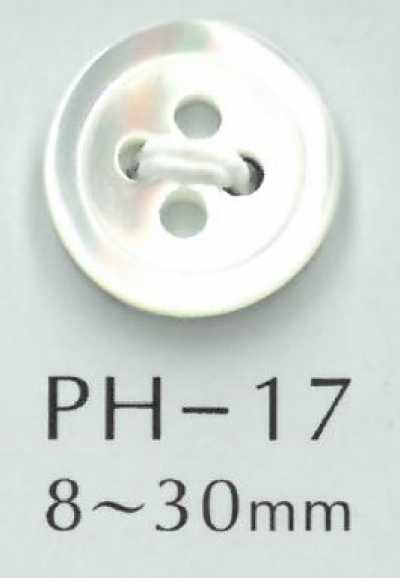
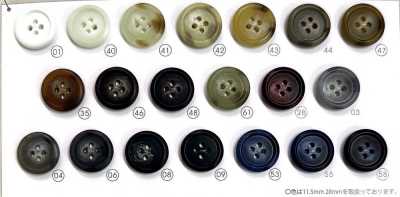
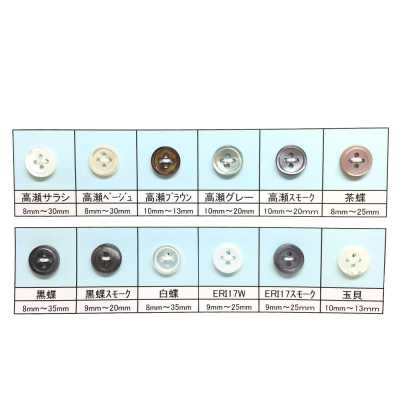
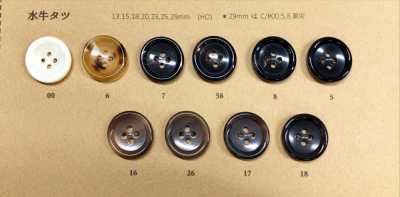
Buttons are made from a variety of materials, including shell, real buffalo horn, nut, wood, leather, polyester resin, urea resin, casein resin, metal, and glass. Depending on the material, gloss, weight, heat resistance, impact resistance, and properties for washing and dry cleaning differ, so selection should match the garment's applications and care label instructions.
For hole buttons, thread is passed through the holes, such as two-hole, four-hole, cat's eye, and raccoon eye types. Shank buttons have a structure in which the thread is passed through the shank on the back, making the thread less visible on the surface and also suitable for thick fabrics and designs with a three-dimensional feel. Tunnel shanks and ring shanks are differences in shank shape.
How Size Is Expressed
Button size is expressed in millimeters by diameter, and may also be expressed in lignes. Lignes are a unit used for button dimensions, and in purchase orders and specifications it is important to clearly confirm whether lignes or mm notation is used.
Size affects not only appearance but also fit with the buttonhole, ease of pinching with fingers, overlap at the front opening, and textile thickness. Even with the same diameter, usability changes depending on thickness and shank height, so actual samples must be checked.
Main Applications and Attachment Methods
Hole buttons and shank buttons are often used for shirts and blouses, while buttons matched to the material feel and thickness are selected for jackets, suits, and coats. For pants, skirts, dresses, and children's clothing as well, shape, size, and attachment strength are considered according to the opening and decorative parts.
For hole buttons, the thread is arranged according to the design, such as crossing through the holes or passing through them in parallel. Leaving a slight space between the textile and the button to make a thread shank makes fastening easier even on a thick front opening. For thin or stretch textiles, a backing button may be attached on the reverse side to distribute the load.
- Confirm the position and size of the buttonhole in advance.
- Match the sewing thread to the button color, textile thickness, and required strength.
- For areas where strong force is concentrated on the button during wear, consider reinforcement on the reverse side.
Handling and Quality Considerations
Whether washing, dry cleaning, and ironing are allowed depends on both the button material and the attachment thread. Buttons that are sensitive to heat or include adhesive decorations may deform, change gloss, or crack under high-temperature ironing or pressing. Avoid ironing over the buttons, or use a pressing cloth and check the conditions.
Shell and glass can break from impact, and natural materials may show individual variations in color and pattern. Metal buttons require attention to discoloration and corrosion caused by moisture, sweat, and detergent ingredients. Before mass production, confirm detachment, breakage, discoloration, and effects on surrounding textile using the actual textile, thread, and washing/cleaning conditions.
Frequently Asked Questions
Is thread shanking always necessary when attaching buttons?
Thread shanking is not always necessary, but it is effective in areas where textiles overlap, such as the front opening, and on thick fabrics. By creating a thread stem between the button and the textile, the button becomes easier to pass through the buttonhole. On thin fabrics where you want the button to sit close to the textile, thread shanking may be omitted.
Should button size be specified in lignes or mm?
Specify it according to the practices of the trading partner or specification sheet. Lignes are the dimension unit used for buttons, but mm notation is also widely used. Rather than judging by notation alone, it is important to check the diameter, thickness, shank height, and combination with the buttonhole using the actual sample.
What causes buttons to crack or discolor during washing?
The main factors are conditions for washing, drying, cleaning, and ironing that do not match the material, as well as impact, chemicals, and moisture. In particular, heat-sensitive resins, shell and glass that are prone to impact damage, and metals that may discolor require prior testing under product-specific conditions.
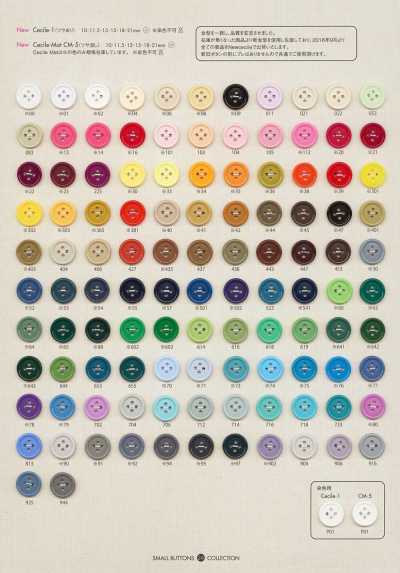
![COR27 [Buffalo Horn Style] 4-Hole Button, Glossy, With Rim](/img/item/thumb/OKURA/1014134_t2.jpg)