Shank Wrapping
Nedamaki is a button-attaching method in which, when sewing on a button, a thread shank is made between the button and the textile, and sewing thread is wrapped around the base to secure it.
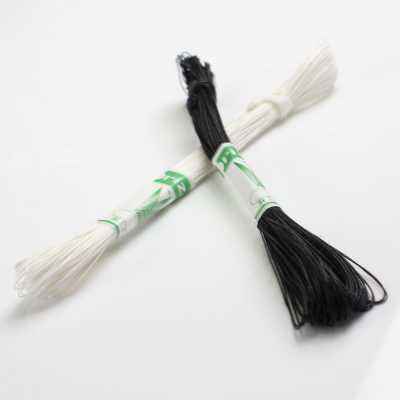

Contents6 sections
Definition and Overview
Root wrapping is a button-sewing method that does not press the button tightly against the textile, but instead creates a thread shank of moderate height with sewing thread. Finally, the thread is wrapped around the base of the shank and tightened, which reduces button wobble and stabilizes the attachment position.
In thick button plackets, facings, or layered sections, if there is not enough room between the button and the textile, it becomes harder to catch the fabric on the buttonhole side. Root wrapping is done to accommodate this thickness.
Structure and Button Types
Hole buttons such as two-hole, four-hole, and cat's-eye buttons can have a thread shank made by slightly lifting the sewing thread passed through the holes and then wrapping it at the base. The number and arrangement of holes affect how the stitches look, but root wrapping itself is a method used for hole buttons.
Shank buttons, tunnel shanks, ring shanks, and parachute shanks have the shank preformed on the button body. Their structure differs from the thread shank made by root wrapping, but both serve the purpose of securing space between the button and the textile.
- Thread shank: a support column between the button and the textile made with sewing thread.
- Formed shank: a shank made integrally with the button body or as an attached part.
- Back button: a button sewn on the underside to reinforce the attachment area; its role differs from root wrapping.
How Sizes Are Indicated
The size of the button body is generally indicated by its diameter in mm or lignes. Ligne is a traditional unit of measurement used for buttons, and it may be shown together with mm notation in orders and specifications.
There is no single standard dimension for root wrapping apart from the button diameter. The required thread shank height is determined by looking at the thickness of the textile, front overlap, buttonhole thickness, and button shape.
Main Applications and Sewing Precautions
It is used for garments fastened with buttonholes, such as shirt and blouse fronts, jackets, coats, dresses, skirts, and pants. In particular, on heavy fabrics or layered construction, the presence and height of root wrapping affect ease of fastening, appearance, and the load on the buttonhole.
When sewing, secure the necessary space between the button and the textile, then wrap the thread evenly around the shank. If the thread shank is too short, fastening becomes difficult; if it is too long, the button may tilt or snag easily, so confirm it against the actual layered thickness.
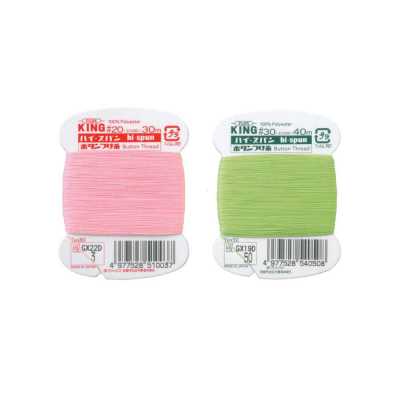
- Select thread with strength appropriate for the application, such as button-sewing thread.
- If the textile is thin or easily stretches, reinforce the underside with a back button as needed.
- Before mass production, check ease of passing through the buttonhole and repeated opening and closing.
Handling and Quality Control
Friction from washing or dry cleaning, and pulling during opening and closing, may cause the root-wrapped thread to fuzz, loosen, or break. Handle the product in accordance with the care label, and avoid opening and closing it when strong force is applied to the button.
Do not press an iron directly and strongly against the button or thread shank; use a temperature suitable for the material. Depending on the button material, heat, chemicals, or moisture may cause cracking, discoloration, or surface damage, so washing and cleaning tests that include both the button body and sewing thread are important.
Frequently Asked Questions
What is the difference between root wrapping and a shank button?
Root wrapping is a method of making a thread shank with sewing thread when sewing on a hole button. A shank button, on the other hand, refers to a shape with a shank attached to the button body. Both can create space between the button and the textile, but the structure and the part that forms the shank are different.
How do you decide the height of root wrapping?
It is determined based on the thickness of the layered fabric at the fastening section. Test it through the buttonhole in practice and confirm a height that fastens smoothly without excessive lift or tilt. Because the suitable height varies depending on the material and construction, a trial sample before sewing is effective.
Should a button with loosened root wrapping be resewn?
If fraying or wobbling of the thread shank is left unattended, it may lead to thread breakage or the button coming off. If the thread shows damage, the usual practice is not to add onto the remaining thread, but to remove the old thread and remake the thread shank at the proper height.