Warp And Weft
Warp and weft are the two directions of yarns that make up woven fabric: the warp yarns stretched lengthwise on the loom and the weft yarns passed crosswise through them.
Contents5 sections
Definition and overview
Woven fabric is made by crossing warp yarns, which are set on a loom under constant tension, with weft yarns that pass left and right between them. The direction parallel to the selvedge is the warp direction, and the direction from selvedge to selvedge is the weft direction.
Warp and weft may use yarns of the same type, thickness, and color, or they may be intentionally varied. The combination of yarns and the way they cross affect the appearance, thickness, strength, and hand of the woven fabric.
Characteristics and effect on textile
Because warp yarns remain under tension during weaving, yarns selected generally take strength and low fuzz into account. Weft yarns, on the other hand, can more easily incorporate colored yarns, fancy yarns, or yarns of different thicknesses, and they also help create the fabric's appearance.
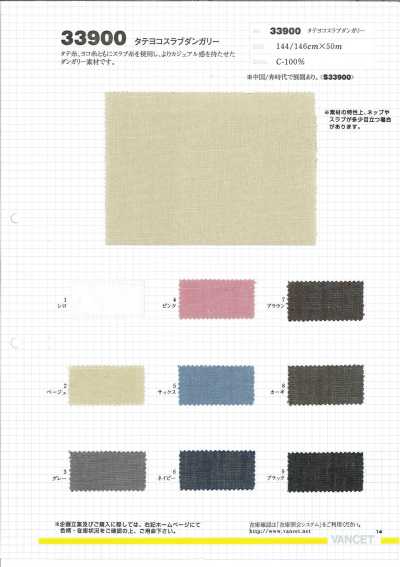
The number of warp and weft yarns is managed as density and affects sheerness, firmness, durability, and more. In addition, when different colored yarns are used for the warp and weft, expressions such as chambray can be created, where the color tone appears to change depending on the viewing angle and how the light hits the fabric.
Handling in cutting and sewing
In general, woven fabrics are less likely to stretch and are more stable in the warp direction, while the weft direction tends to move somewhat more easily than the warp direction. However, this varies depending on the material, weave structure, finishing, and density, so it is important to check the actual textile.
Patterns are usually placed with the grainline aligned to the warp direction. If the grainline is off, side seams and other areas may twist during wear, or the appearance of the pattern may become distorted. Before cutting, confirm the direction of the selvedge and warp yarns, and run the grainline accurately.
- For checks and stripes, confirm the pattern direction in both warp and weft and the matching of the left and right patterns.
- Yarn-dyed woven fabrics may have different front and back appearances or color visibility depending on the color combination of the warp and weft.
- In wetting or washing tests, confirm the shrinkage of both the warp and weft directions.
Differences from similar terms
Grainline is a term that refers to the directional reference used when cutting fabric. In woven fabrics, the direction along the warp is often treated as the basic grainline, while warp and weft refer to the actual yarns that form that grainline.
Bias is the diagonal direction relative to the warp and weft. Along the bias direction, the weave structure of a woven fabric is more likely to deform, creating stretch and drape. Knit fabrics are made of loops, so they are handled separately from warp and weft in woven fabrics.
Frequently asked questions
Which is the lengthwise direction of the textile, warp or weft?
Generally, the yarn running parallel to the selvedge in the lengthwise direction of a roll is the warp. The yarn that crosses from one selvedge to the other is the weft. However, cut fabric may not have a selvedge, so check the woven pattern and the stability of the textile as well.
Do warp and weft shrink differently?
Yes. If the type of yarn, twist, density, weave structure, finishing process, and other factors differ between warp and weft, there may also be differences in dimensional change after washing or steaming. Before mass production, it is important to check the shrinkage rate separately for the warp and weft directions.
Are there textiles where the warp and weft are made of different materials?
Yes. For example, by changing the fiber type, thickness, or color between the warp and weft, it is possible to adjust luster, drape, surface texture, and more. Since dyeability and reaction to heat differ by material, washing instructions and sewing conditions should be checked based on the textile specifications.