Lunéville Embroidery
Lunéville embroidery is an embroidery technique that uses a hook-ended Lunéville needle to make continuous chain stitches from the back of the fabric and secure beads, sequins, and other materials.
Contents6 sections
Definition and Overview
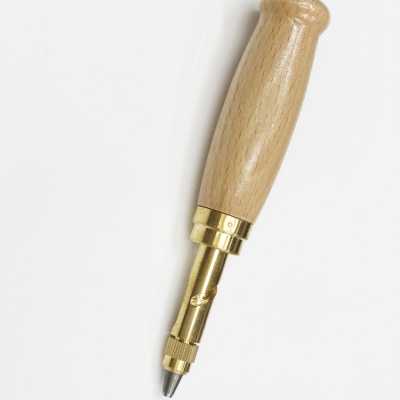
Lunéville embroidery is an embroidery technique that originated in the Lunéville region of France. Using a fine, hook-shaped special needle, it picks up thread from the back of the fabric and secures beads, sequins, and lame yarn placed on the front one stitch at a time in succession.
Unlike the method of stitching from the front with a regular embroidery needle, the needle movement and working side are different. On the back, chain-like stitches continue in a row, and on the front, decorative materials can be arranged neatly as surfaces or lines, which is a defining feature.
How to Use and Basic Work
The fabric to be embroidered is stretched evenly in an embroidery hoop, and the design is transferred to the front of the fabric or its position is checked using a pattern underneath. The materials are placed on the front, and work proceeds by inserting the needle from the back to make thread loops, so you work with awareness of the roles of the front and back.
If the thread is pulled too tightly, the base fabric will pucker; if it is too loose, beads and sequins will tend to float. First practice on straight or curved lines with fewer decorations, and it becomes more stable if you practice making the needle turn in the same direction, keeping the thread tension even, and matching the spacing for feeding the materials.
- Choose a base fabric such as organza or tulle that is stable and does not show needle holes easily.
- For beads and sequins, test in advance the combination of needle and thread that will pass through the hole diameter and thickness.
- When used for costumes, check the embroidery area, seam allowance, and change lines before sewing.
Types and Selection
In Lunéville embroidery, you can draw outlines and lines using only thread, or combine bead embroidery, sequin embroidery, cords, and lame materials. Even with the same technique, the finish changes from a delicate impression to three-dimensional decoration depending on the size, sheen, and density of the materials.
Select the needle according to the fineness of the base fabric and the hole diameter of the decorative materials. Use a fine needle for delicate fabrics to avoid enlarging the holes with a thick needle. For thread, check not only strength but also the color that blends with the base fabric, the thickness needed to support the decorations, and how inconspicuous it will be if seen from the front.
- For lightweight fabrics, a fine needle that does not damage the base fabric and light decorative materials are suitable.
- For designs with many curves, small beads and small sequins are easier to place.
- When filling a large area, check in a sample whether weight causes sagging and whether the fabric stretches.
- For products that touch the skin, be careful of irritation from the edges of the decorative materials and the thread finishing on the back.
Care and Safety Precautions
Whether a finished item can be washed is determined by the handling instructions for all materials used, including the base fabric, thread, beads, and sequins. Products with decorations may chip, deform, or come off due to friction or snagging, so check the care label and the water resistance of each material, and choose professional care if necessary.
When storing, place the item flat or insert thin paper between sections so the decorations do not rub against each other. During work, a pointed needle is used, so do not point the needle tip at anyone, and return it to a needle case or pincushion after use. Small beads may be a choking hazard, so keep them out of reach of infants, young children, and pets.
Differences from Similar Terms
Bead embroidery often refers broadly to embroidery using beads, and includes methods done with a regular hand-sewing needle. Lunéville embroidery refers to the technique among these that uses a special hook needle and secures the materials from the back with continuous chain-like stitches.
Haute couture embroidery is a broad term for advanced embroidery expressions used on luxury clothing and stage costumes. Lunéville embroidery is one of the representative techniques used in haute couture embroidery, but the two are not synonymous.
Frequently Asked Questions
Can beginners start Lunéville embroidery?
Yes, but because you operate the needle from the back while checking the material on the front, some practice is needed at first. If you practice chain-like stitches without decorations first and then move on to simple designs using small beads or small sequins, it becomes easier to learn the needle rotation and thread tension.
Do you need an embroidery hoop for Lunéville embroidery?
To keep the base fabric evenly taut and make it easier to create thread loops with the needle tip, using an embroidery hoop or a special frame is common. If the fabric slackens, the stitches become uneven and the placement of beads and similar materials can shift more easily. Check the tension during work and retighten if necessary.
What is the difference between Lunéville embroidery and bead embroidery?
Bead embroidery is a general term for embroidery that uses beads, and includes methods that use a sewing needle. Lunéville embroidery is characterized by operating a special hook-shaped needle from the back of the base fabric and securing front-side beads and sequins with chain-like stitches.