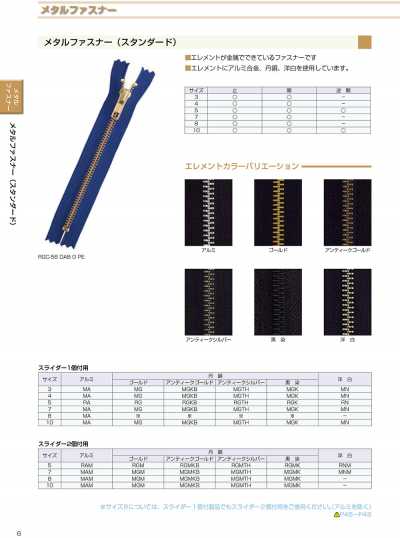
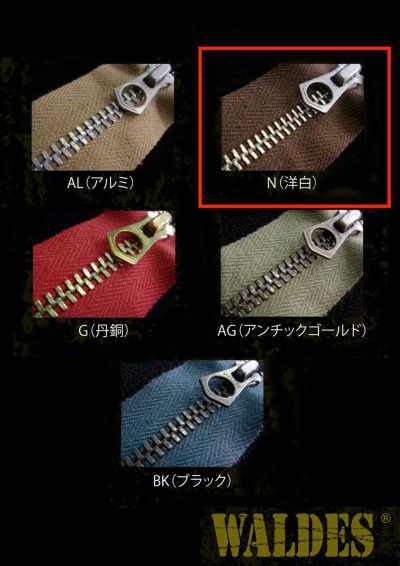
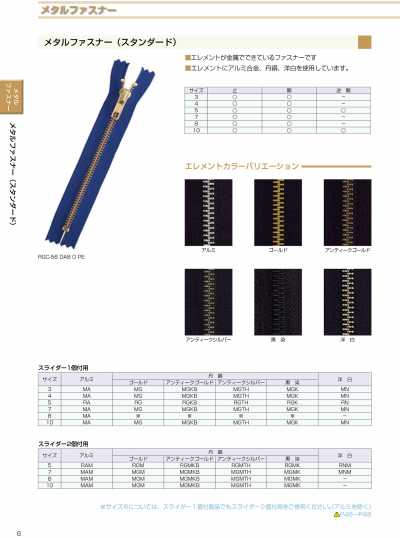
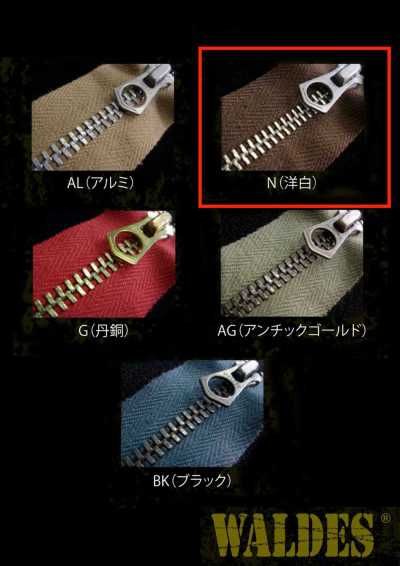
Nickel Silver
Nickel silver is a silvery-white alloy whose main components are copper, zinc, and nickel, and it is a material mainly used for metal zipper teeth.
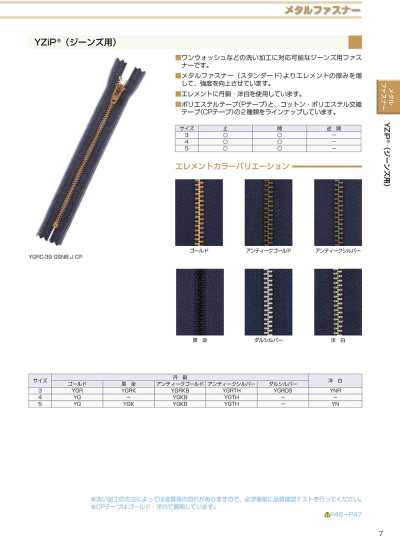
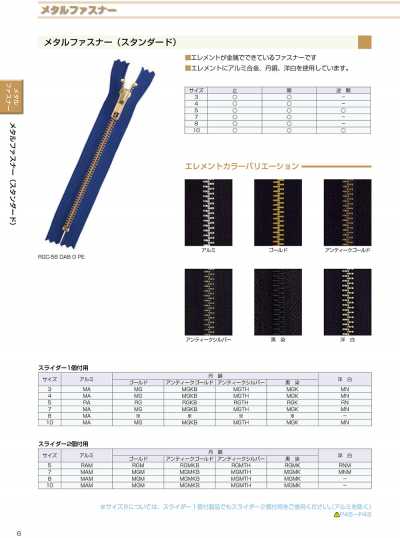
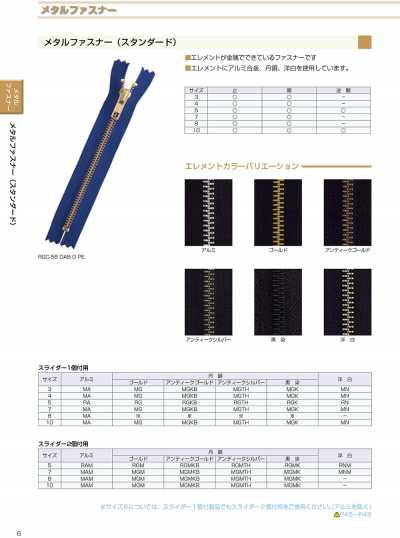
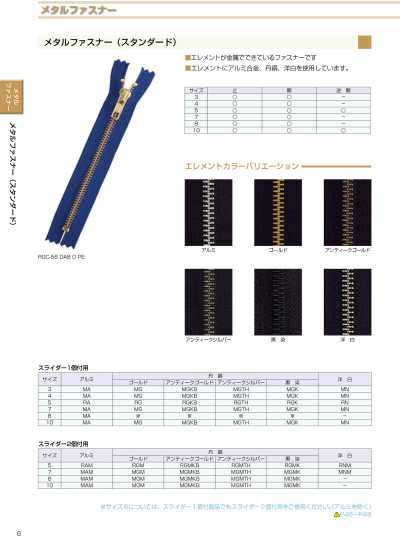
Contents6 sections
Definition and Overview
Nickel silver is an alloy based on copper with added zinc and nickel. It has a bright tone similar to silver, but it is not silver itself. In the zipper field, it is treated as the material name used for the teeth of metal zippers.
Although the name includes "silver," it does not refer to a white resin zipper. Also, it is important to distinguish between containing nickel and being a part that has been nickel-plated on the surface.
Structure and Parts
Metal zippers are made up of the teeth lined up on the left and right zipper tapes, the slider that interlocks the teeth, and the top stop and bottom stop that secure the ends. Nickel silver mainly refers to the material of the teeth, and the tape, puller, and slider are not necessarily made of the same material.
In an open zipper, a box is attached at the lower end. In a closed zipper, the bottom stop secures the lower end. When specifying a zipper with nickel silver teeth, the box and stop specifications, as well as the slider shape and surface treatment, are decided separately.
- Teeth: elements on the left and right that interlock to open and close.
- Slider: the moving part that opens and closes the teeth.
- Top stop and bottom stop: parts that prevent the slider from coming off and secure the ends.
- Zipper tape: the fabric tape that holds the teeth and is sewn to the product.
Types and Specifications
Nickel silver refers not to the zipper type, but to the material of the teeth. Therefore, when selecting one, you specify the zipper as nickel silver along with the teeth size, tape color, slider, length, and stop specifications. Teeth size affects the appearance roughness, the feel of opening and closing, and the application.
Opening types include closed, in which both ends are stopped, open, in which it opens from the bottom, and two way separator, in which it opens and closes with two sliders. Even with the same nickel silver teeth, the compatible specifications differ by product, so confirmation is necessary to match the application and pattern.
Main Applications
Zippers with nickel silver teeth are used for openings in clothing and fashion accessories where a metallic look is desired. They are selected according to the design and required opening and closing function, such as front openings, pockets, cuffs, and fly fronts on pants.
When deciding on applications, consider not only the teeth material but also the fabric thickness, the curves of the product, the position where tension is applied, and whether washing or processing will be performed. On thin fabrics where rigid teeth can show through the surface easily, it is important to review specifications including seam allowance and pressing cloth.
Selection and Notes
Zipper length is generally checked by the effective section of interlocking teeth from the top stop to the bottom stop. For open specifications, the indication standard may differ, such as total length including the box, so when placing an order, clearly define the measurement position for the required dimensions in the specification sheet.
In sewing, set the stitching line so that the needle does not hit the teeth, and align the tape width on both sides and the visibility of the teeth. Resistance to product washing, chemical processing, sweat, and humidity cannot be judged uniformly by nickel silver alone. Perform advance testing on the finished product, including the tape, slider, and surface treatment.
Because it is a material containing nickel, products with nickel-related requirements should individually confirm nickel-free specifications and compliance with regulations or customer standards. Nickel silver, nickel-plated, and brass teeth differ in tone and constituent materials, so it is important not to confuse them.
Frequently Asked Questions
Are nickel silver zippers and nickel-plated zippers the same?
No, they are not the same. Nickel silver is the material name for the alloy mainly used for the teeth, while nickel plating is a treatment applied to the surface of parts. Please check the material of the teeth, the material of each part such as the slider, and the surface treatment separately.
Where do you measure the length of a zipper with nickel silver teeth?
For a typical closed zipper, the length is taken as the interlocking section of the teeth from the top stop to the bottom stop. However, open specifications and special stops may have different indication methods, so check the specification sheet and product labeling.
Is nickel silver nickel-free?
Nickel silver is an alloy that contains nickel, so it is normally not treated as nickel-free. For products with nickel-related requirements, select them after confirming the material of each component and the necessary tests and standards.