Basting Thread
Basting thread is a sewing thread that is easy to remove and is used to temporarily secure cut textile or parts before final stitching for alignment and shape confirmation.
Contents6 sections
Definition and Overview
Basting thread is thread used to temporarily hold pieces of fabric together during the sewing process. It is used to make a temporary stitch on areas that are hard to stabilize with pins alone or where you want to prevent shifting, and is removed after the final stitching. Its defining feature is that it is not intended to remain in the finished product.
In addition to hand basting, it is also used for marking before sewing and for checking the fit of three-dimensional parts such as collars and sleeves. It is required to be easy to remove without damaging the fabric and to come out quickly.
Materials, Twist, and Structure
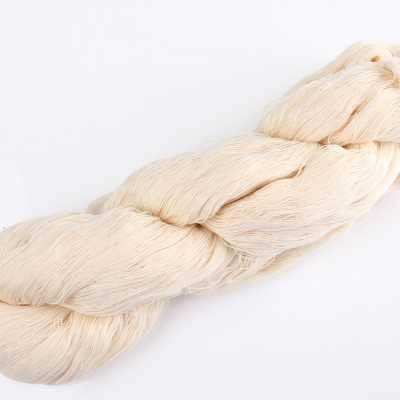
Many basting threads are made of cotton, and they use a looser twist structure than ordinary sewing thread. A loose twist means the fibers are held together with relatively weak twisting. As a result, the thread breaks easily and can be removed from the stitch more easily.
On the other hand, because the twist is loose, its strength and resistance to fuzzing are more limited than machine sewing thread for final stitching. For areas that are pulled strongly or for temporary holding that will be under load for a long time during processing, be careful of thread breakage and snagging on the fabric.
How Thickness Is Indicated
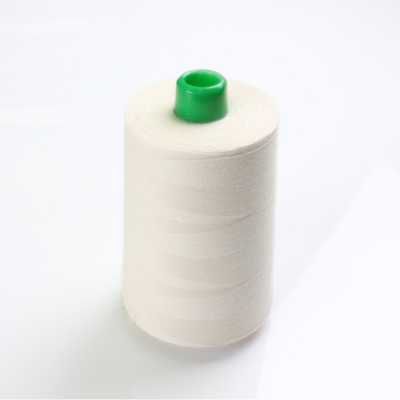
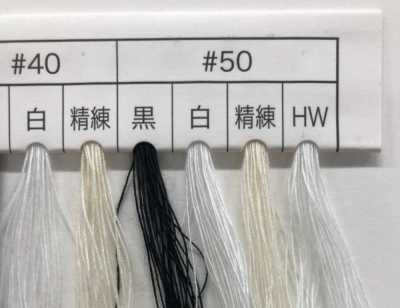
The thickness of basting thread may be shown by thread count or nominal thread count. Thread count is a unit that indicates thread thickness, but because the notation method differs by material and manufacturer, it cannot be simply compared with other types of thread by number alone.
For cotton thread counts, a larger number generally indicates a finer thread. However, since basting thread may also be handled by nominal thread count, it is important to check the listed material, thickness, and spool amount when purchasing, and to test-stitch on the actual fabric.
Main Uses and How to Choose
Main uses are temporary holding of parts, holding seam allowances in place, positioning gathers and tucks, and checking the shape of collars and facings. On slippery fabrics, lightweight fabrics, and stretch fabrics, adding basting before final stitching makes it easier to prevent shifting.
A thread that is too thick for the fabric can make needle holes or stitch marks stand out, while a thread that is too thin can break easily during work. For lightweight fabrics, combine a finer thread with a thin needle, and for thick fabrics or areas with many layers, choose a thickness that will not break during work.
- On dark or delicate fabrics, check for fuzzing or color transfer on a scrap piece.
- Do not make the stitches too fine; secure them at spacing that makes removal easy.
- After final stitching, cut the basting thread little by little and remove it without pulling on the fabric.
Differences from Similar Terms
Basting thread is a thread dedicated to temporary holding, and its purpose and required properties differ from sewing thread, which leaves stitching in the product. Sewing thread is selected with sewing strength, abrasion resistance, and stitch performance in mind, while basting thread prioritizes ease of removal.
Hand-sewing thread is thread used for hand sewing that leaves stitches behind, such as hemming and repairs. If you use basting thread for final stitching or button attachment, it may not provide the necessary strength. Use different thread types for basting and final stitching.
Frequently Asked Questions
Can sewing thread be used instead of basting thread?
It can be used for temporary holding, but sewing thread is stronger than basting thread and may be harder to remove from the stitches. Also, depending on the fabric, it may dig in when pulled out, leading to damage or stitch marks. Basting thread is suitable for delicate fabrics and temporary stitching over a wide area.
Should basting thread be removed before final stitching?
In many cases, it is removed after being secured by the final stitching. This is because removing it beforehand may cause the parts to shift. However, if there is a risk that the basting thread overlaps the stitching line and damages the machine needle, remove it as needed while sewing.