Lily Yarn
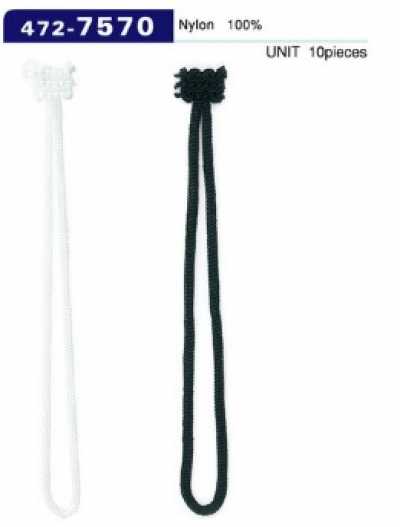
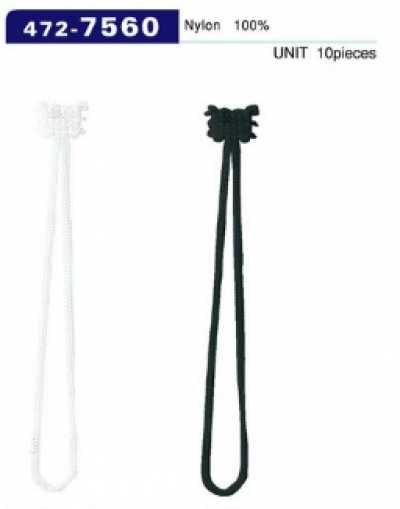
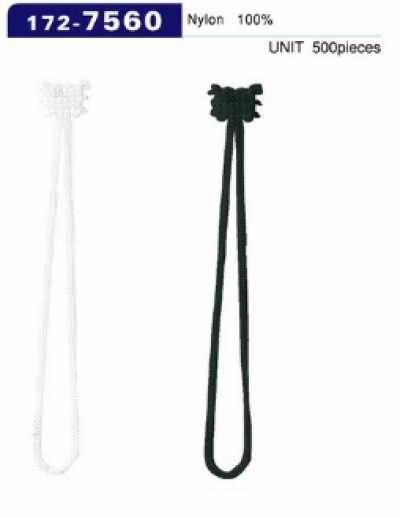
Lily yarn is a narrow knitted cord, either hollow or with a core, made by knitting yarn into a tubular shape, and used as an apparel accessory material for decorative cords, loops, and fastening details.
Contents6 sections
Definition and Overview
Lily yarn is a rounded knitted cord made by knitting multiple yarns into a looped form. It may be hollow, or it may have a core to stabilize its shape. The knit texture appears on the surface, and it may have a soft feel with moderate elasticity.
It may also refer to the knitting method or knitting tool used in handicrafts, but in apparel accessories, it generally refers to the knitted cord itself that is attached to a product.
Placement and Function
In garments, it is used for button loops, closures around front openings, decoration at necklines and cuffs, and waist cords. Its round cross-section and knit texture add a three-dimensional effect that differs from flat cords.
Core-filled lily yarn is suitable for decorative cords that need to hold their shape, or areas where a consistent thickness is desired. Hollow types, on the other hand, are chosen for applications that require softness and a light finish.
- Button loops and Chinese-style closures
- Decorative details at the front placket, neckline, and bust
- Waist cords for dresses and blouses
- Openings of pouches and bags, and around pull tabs
Materials and Types
Materials include polyester, cotton, nylon, and acrylic. Since gloss, color vividness, resistance to abrasion, absorbency, and heat response vary by material, selection should match the texture of the garment itself, the washing method, and the intended use.
Appearance changes depending on thickness, knit density, whether it is glossy or matte, whether it has a core, and the pattern or color combination. Core-filled types are less likely to flatten in cross-section, but they can become bulky at knots or sharp curves, so specifications should be checked in advance.
Selection and Sewing Notes
When selecting, check not only the thickness, but also the button diameter and thickness if it will be used as a loop, the required inside dimension, stretch under tension, and the method for finishing the ends. If it will be used as a fastening, it is important to confirm ease of use and deformation during repeated use through prototypes.
When sewing it on, adjust the presser foot pressure and seam allowance thickness so the knit structure is not crushed. Since fraying or core pullout may occur at the ends, leave enough sewing-in length, and if necessary finish it with heat treatment, tape wrapping, or by enclosing it between separate fabric pieces.
Some types can be cut and finished with heat, but depending on the material and processing, they may melt, harden, or discolor. Confirm the end finish and appearance after washing before mass production.
Differences from Similar Terms
Button loop refers to a loop-shaped part made for button fastening. Lily yarn can be used as the material for such a button loop, but it is also used for decorative cords and other applications beyond loops.
Frog button refers mainly to a small looped fastening part used to bridge the gap between a button and a buttonhole. It may be made with lily yarn, but frog button is the name of the application and shape, while lily yarn is the name of the knitted cord structure and material.
Round cord is a general term for cords with a round cross-section, including braided cords and woven cords. Lily yarn is characterized by its tubular structure created by circular knitting.
Frequently Asked Questions
Can lily yarn be used for button loops?
Yes. When used as a button loop, confirm through a prototype that the inside dimension allows the button's maximum diameter and thickness to pass through without difficulty. If the product stretches easily, dimensions may change with repeated fastening and unfastening, so stabilize the sewn-in section and reinforce it if necessary.
How do you choose between core-filled lily yarn and hollow lily yarn?
Core-filled types are suitable when shape retention is important, or when you want the roundness of the cross-section to stand out clearly. Hollow types are a good choice when softness, lightness, and ease of tying are important. Choose while also considering how well it follows curves, seam allowance thickness, and end finishing.