Round Cord
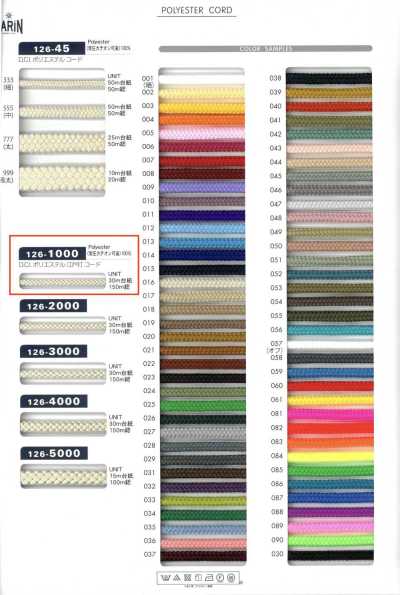
Round cord is a cord-like auxiliary material with a circular or nearly circular cross-section, used for apparel drawstrings, decoration, and bag ties.
Contents6 sections
Definition and Overview
Round cord is a string-like auxiliary material with a circular cross-section when viewed from the surface, or one that maintains a round appearance even when hollow. It is used for drawstrings that tighten hems and hoods, waist cords, loops, decoration, and more, and its appearance and usability change depending on its thickness and stiffness.
While flat cord is band-like, a key difference is that round cord has a three-dimensional bulge. In addition, spindle is a term that may refer to apparel cords, including round cord, and its scope differs from round cord, which describes the shape itself.
Materials and Structure
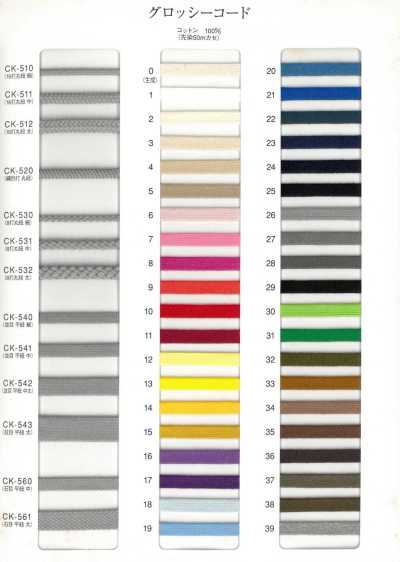
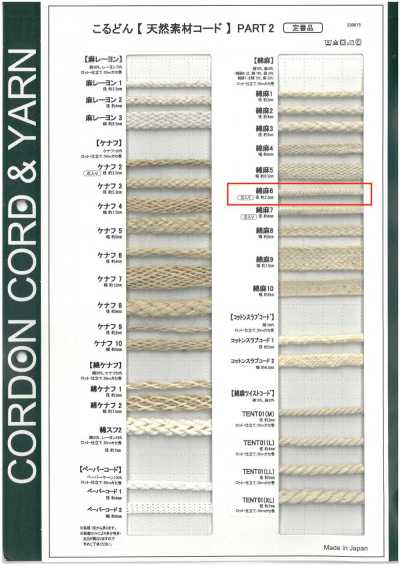
Round cord is made from fibers suited to the application, such as cotton, polyester, nylon, and acrylic. Those made from natural fibers tend to have a softer feel, while those made from synthetic fibers may be selected with considerations such as color development, abrasion resistance, and quick drying.
Structures include braided cord made by twisting threads together, knitted cord made by knitting threads into a tubular form, and cord woven from narrow fabric into a tube shape. Round cord with buttonhole thread or a core material is easier to keep its shape, while hollow types tend to be lighter and softer.
How Thickness Is Expressed
Round cord dimensions are generally expressed by diameter in millimeters. "φ" is a symbol indicating diameter, and for example it may be written with a number after φ. However, the actual apparent size may vary depending on how tightly the structure is made and how much it flattens during measurement.
Even with the same diameter notation, volume, stiffness, and ease of passing through holes or cord stoppers differ depending on the material, whether it has a core, and how it is knitted or braided. In specifications, listing the material, structure, finished stiffness, and required length as well as thickness can reduce misunderstandings.
- When passing through eyelets or loops, check not only the cord diameter but also the inner diameter of the opening.
- When used together with cord stoppers, confirm holding power and ease of operation with the actual item.
- For applications that require tying knots, check how easily it ties and how well the knot stays secure.
Main Applications
In apparel, it is used as a cord to tighten hoods and hems on hoodies and outerwear, the waist of pants and skirts, and the opening of bags. Thin round cord is used for loops and decorative knots, while thicker round cord is used for drawstrings and handles with a stronger presence.
Piping is a specification in which cord is wrapped in fabric and inserted into seams or edges, and it is different from round cord itself. In some cases, piping is made using round cord as the core, but it is important to consider the application, required thickness, and sewing method separately.
Selection and Handling Precautions
When selecting, check the thickness needed for the application, tensile strength, stretch, surface slipperiness, and ease of tying. For areas that are opened and closed repeatedly, also consider pilling and wear caused by friction. When matching the color to the same fabric as the garment or other accessories, confirm lot-to-lot differences as well.
Round cord may fray from the cut ends. Depending on the material and specifications, finish the ends with a knot, stitching, or a cord end. For products that will be washed or garment-washed, test in advance for shrinkage, stretching, color transfer, and deformation of the core material, and consider handling in line with the care label instructions.
Frequently Asked Questions
How should round cord and flat cord be used differently?
Round cord has a three-dimensional feel and is suitable for drawstrings that tighten hoods and hems, loops, and decorative knots. Flat cord is characterized by a thin knot and an easy-to-display surface appearance. Choose based on the shape of the opening, the required holding power, skin feel, and the overall design of the product.
How do you decide the thickness of round cord?
First, check the inner diameter of the eyelet, loop, or cord stopper it will pass through, as well as the required operability. Then consider the visual volume that matches the garment's thickness and design. Thickness notation alone does not show stiffness or how much it flattens, so a passing test with the actual item and a washing test are important.
What should be done if the cut end of round cord frays?
Fraying varies depending on the material and structure. Choose a treatment that suits the product specifications, such as sewing the end in, making a knot, or covering it with a cord end. Some materials can be heat-treated, but since there is a risk of discoloration, hardening, or melting, it is necessary not to do so without confirming the material first.