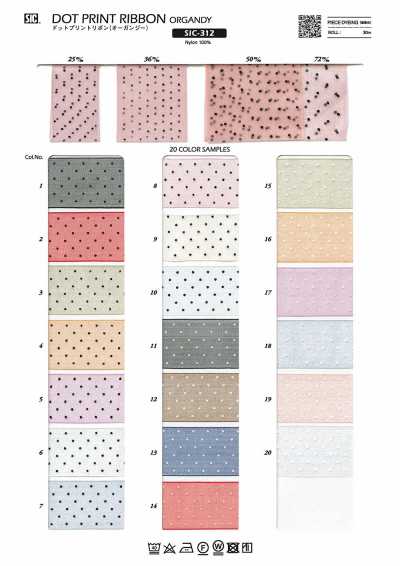
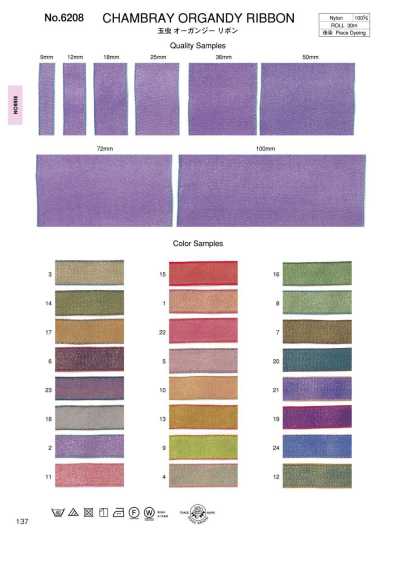
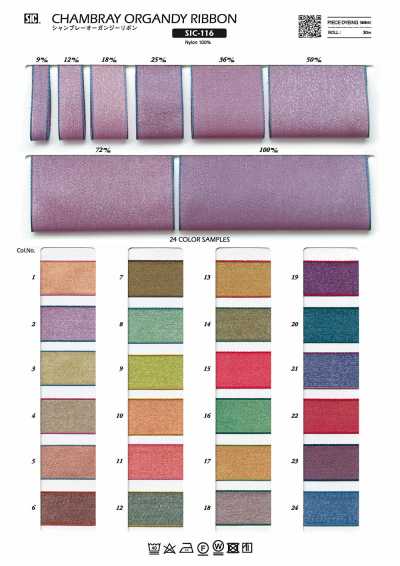
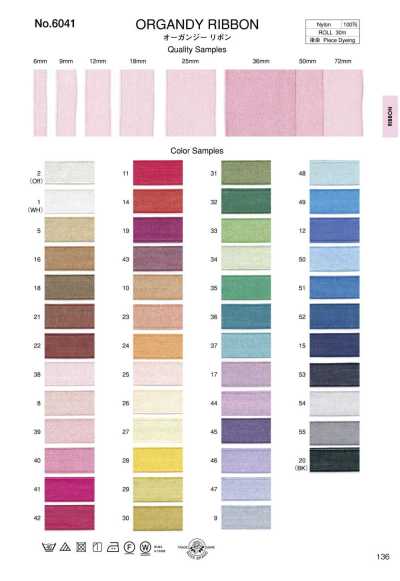
Organza Ribbon
An organza ribbon is a narrow ribbon made from sheer, lightly crisp organza fabric, adding a light, airy look to garments and decorative uses as a trim accessory.
Contents6 sections
Definition and Overview
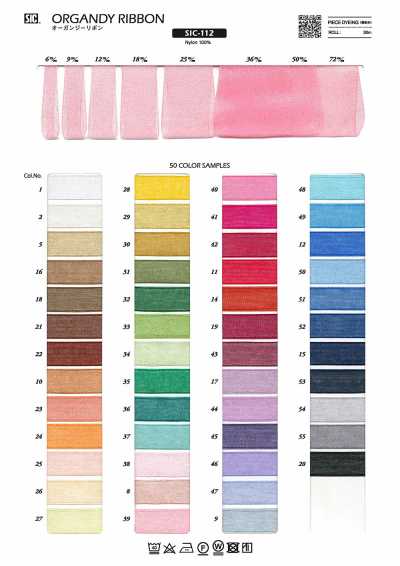
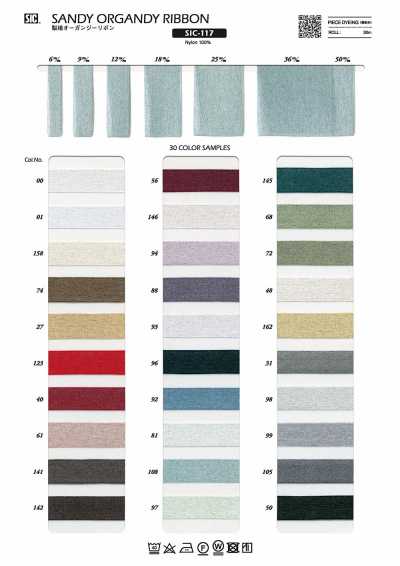
An organza ribbon is a narrow ribbon made from organza, a thin, sheer woven fabric. Its transparency makes it easy to bring out the color of the base layer, and delicate variations in shade appear in knots and overlaps. It is used not only as a garment trim but also for wrapping and decoration.
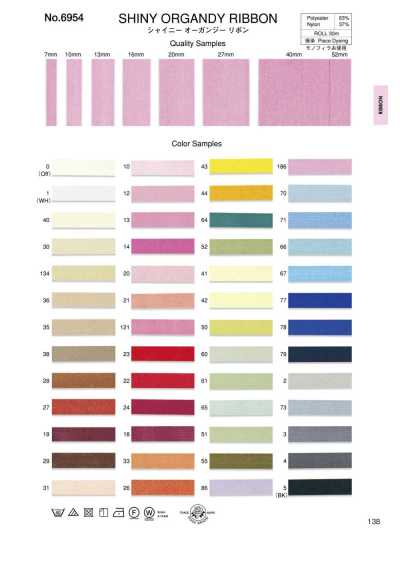
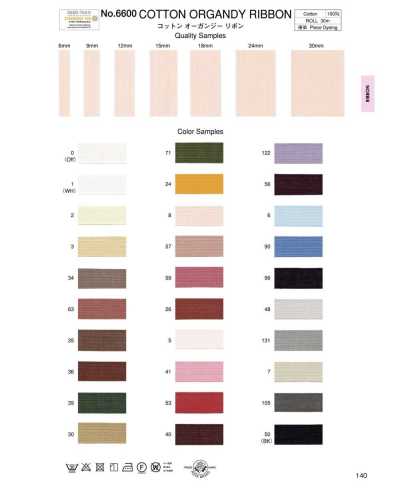
Organza is not a material name, but a fabric name that generally refers to a thin, crisp texture. Organza ribbon is also made from different fibers depending on the product, such as silk, cotton, and polyester.
Materials and Structure
In many cases, it is based on a plain weave structure made by tightly weaving fine yarns. Plain weave is a structure in which warp and weft yarns are interlaced alternately, and it is a method that makes the weave easy to keep even despite the thinness, while also expressing the light crispness characteristic of organza.
Some designs have organza in the center, with satin-like sections combined at both edges or in the center. Such products combine the lightness of the transparent part with the outline of glossy edges or bands, giving them a different appearance from simple solid organza ribbon.
- Silk versions tend to have a natural luster and suppleness.
- Polyester versions tend to offer more options in color count and handling conditions.
- Cotton versions tend to have a more subdued sheen and a natural texture.
Width Indication and Main Applications
Widths are generally shown in millimeters or centimeters, and multiple widths are available even for the same material name. Narrow widths are suitable for tags, accessories, and small ribbon ties, while wide widths can make use of the transparent area for waist decorations, corsages, and dress embellishments.
In garments, it is used for decorations around necklines, cuffs, and pocket openings, gathered frills, tie strings, and corsages. In addition to being sewn on, it can be used to add lightness and dimensionality through layered use or combinations with ribbons made from different materials.
Selection and Handling Precautions
When selecting, check the material, width, sheerness, crispness, edge finishing, and color. If you want knots to stand out, choose one with more crispness; if you want a softer drape, compare the thinness and the texture created by the material. Whether or not it has edging also affects the appearance of the cut edge and the design.
Woven organza ribbon is usually not intended for elasticity like elastic bands. However, its shape may change depending on pulling in the bias direction or the tension during sewing. Secure the necessary amount before cutting, and confirm through samples the conditions that prevent seam shrinkage or waviness.
The cut edge may fray, so depending on the application, consider folding in the edge, edge stitching, or, for materials that can be heat-treated, heat-finishing the edge. Because heat treatment may cause melting, discoloration, or hardening depending on the material and processing, always test on scrap pieces. Whether washing or ironing is allowed, and under what conditions, varies by material, so follow the labeling for each product.
Differences from Similar Terms
Organza ribbon is a ribbon characterized by sheerness and crispness. Satin ribbon is mainly characterized by a smooth, glossy surface created by satin weave, and is usually less sheer than organza ribbon, giving knots a different fullness.
Grosgrain ribbon is characterized by visible transverse ribs and is more opaque and more clearly outlined than organza ribbon. Tulle is a material with a mesh-like structure, and its structure and appearance differ from organza, a thin woven fabric with a tight weave.
Frequently Asked Questions
Can organza ribbon be washed?
Whether it can be washed depends on the type of fiber, dyeing, edge finishing, and after-processing. Even polyester products that combine decorations require caution regarding distortion and color transfer. Do not judge from the standalone information alone; check the care label for the ribbon you will use, and conduct washing tests with it attached before mass production.
Does organza ribbon fray at the ends?
Because it is a woven fabric, threads may come loose from the cut edge and fray. Methods include folding and sewing it in, securing the edge with stitches, or using an appropriate edge finish for the application and material. Some materials can be heat-treated, but because melting and discoloration may occur depending on the material, always check on a scrap piece.
- Search products for "Organza ribbon"
- Products with material "Cotton"
- Products with material "Polyester"
- Products with material "Silk"
- Products for style "For Costumes/dresses"
- Products for style "For Formal Wear"
- Products for style "For Kids"
- Products for style "For Interiors"
- Browse Ribbon, Tape, Cord products