Paracord
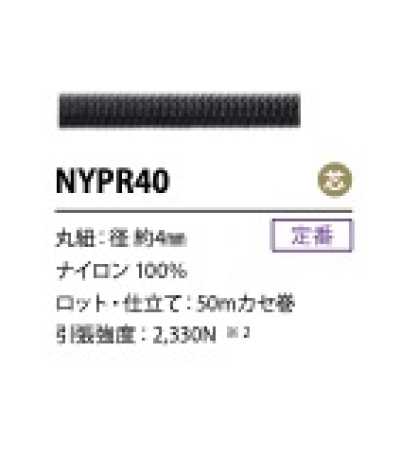
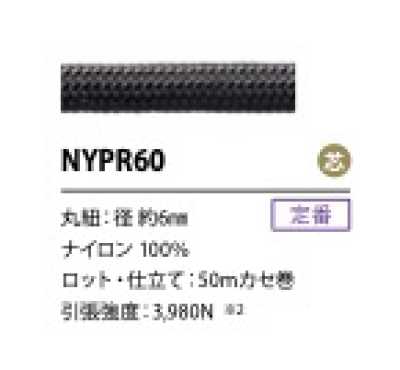
Paracord is a round cord with a buttonhole thread core covered by a braided outer sheath, and is mainly made of nylon and used for drawstrings and decoration on clothing and bags.
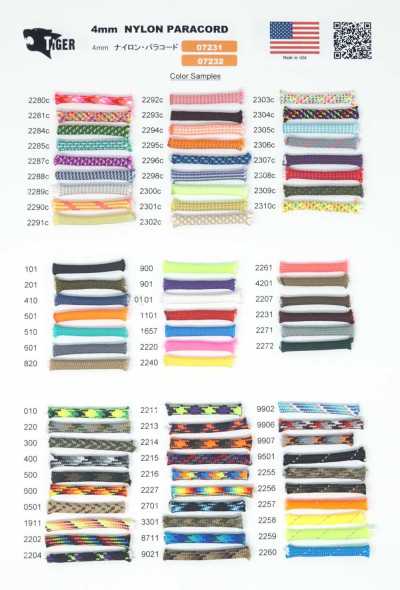
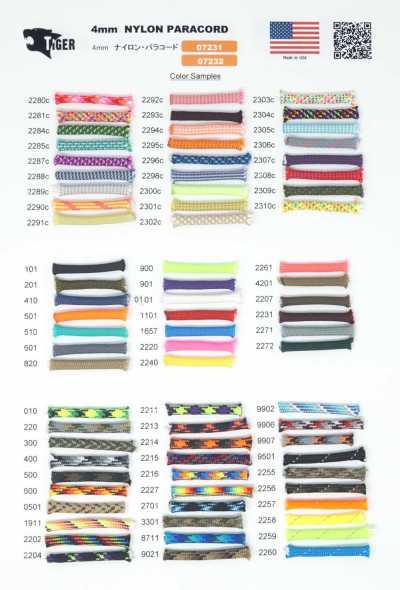
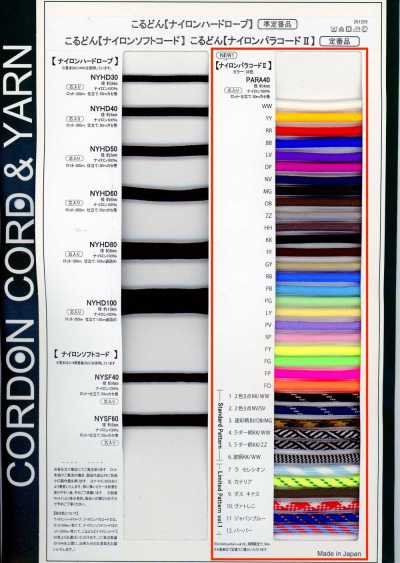
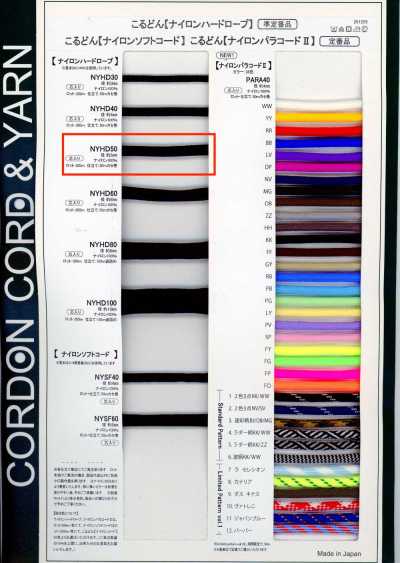
Contents6 sections
Definition and Overview
Paracord is a name derived from cord originally used in parachutes. Today it is used not only for outdoor gear, but also for drawcords, handles, and accessories on clothing and bags. Depending on the application, the material, structure, and strength vary widely.
“550 cord” is used as a common name for paracord. However, the name alone does not guarantee compliance with a standard or load-bearing capacity. When using it as a garment material, check the product’s stated dimensions, material, and test values.
Material and Structure
Typical paracord is made of nylon and has a structure in which multiple buttonhole thread cores are covered by a braided outer sheath. This structure, consisting of a core and outer braid, makes it easier to achieve roundness, flexibility, and resistance to friction, and some types allow the buttonhole thread to be pulled out from the cut end.
However, even under the name paracord, the number of cores, the way the outer sheath is braided, and the blend ratio of materials are not standardized. Because there are similar cords made with synthetic fibers other than nylon, it is important not to assume the hand feel, dyeability, or stretch characteristics are the same.
- The outer sheath is generally a braided structure made by crossing yarns diagonally.
- Whether buttonhole thread is included and how many strands there are affect thickness, firmness, and how it behaves when cut.
- Misalignment between the core and outer sheath affects end finishing and the feel of cord stoppers.
How Thickness Is Expressed
Unlike flat tape, paracord is generally expressed in millimeters by diameter or thickness rather than width. Since the apparent thickness of a round cord varies depending on the load, knots, and the hole diameter of hardware, a threading test with the actual product is performed as needed.
The thicker the cord, the more presence it has and the easier it is to grip, but knots become larger and it may not fit through the inner diameter of cord ends or stoppers. In a specification sheet, it is easier to manage if you include not only the cord diameter, but also the compatible hole diameter, hardware inner diameter, and end-finishing method.
Main Applications
In apparel, it is used as a drawcord to tighten hoods, hems, waists, and bag openings. Because it has a three-dimensional look and easily gives an outdoor or casual impression, it is suitable for accessories on blousons, pants, bags, hats, and similar items.
It is also used for decorative visible knots, pull tabs, key holders, and more. On the other hand, for applications that support the body or the product, the required performance differs even if the cord looks the same. For safety-related parts, select materials whose strength and specifications have been verified for the intended application.
Selection and Handling Notes
When selecting, check the thickness, material, whether a core is included, surface slipperiness, color, and required length. When combining with cord stoppers or eyelets, confirm not only the cord diameter but also how it passes through and how well it is held when compressed by making a prototype.
Nylon products may stretch or shrink during use or washing, and the length and tension may change between wet and dry conditions. For projects that involve washing the finished product, conduct a washing test in advance to check shrinkage, color transfer, and fraying at the ends.
After cutting, the ends may unravel or the core may protrude. Finish the ends with heat treatment suitable for the material, tape wrapping, attaching cord ends, or similar methods. Because heat treatment may cause melting or discoloration, always test on offcuts first.
FAQ
What is the difference between paracord and round cord?
Round cord is a general term for cord with a round cross-section and does not specify the material or manufacturing method. Paracord generally refers to a cord with a buttonhole thread core and braided outer sheath, and the name comes from parachute cord. Not all round cords are paracord, so check the structure and intended use to distinguish them.
Does paracord shrink when washed?
This cannot be determined universally because it varies depending on the material, core structure, dyeing, and finishing. Nylon-based cords may change in length and tension due to moisture, heat, and tension. Before mass production, test under the same washing conditions as the product and check shrinkage, color transfer, and the condition of the ends.
Can 550 cord be used as a clothing drawcord as is?
It can be used, but the name “550 cord” alone does not determine thickness, strength, material, or wash durability. Check compatibility with the hole or stopper, knot size, and post-wash length. For applications requiring safety, set the required performance separately and make the selection accordingly.