Braid
A braid is a narrow apparel material used for edging, decoration, and reinforcement on garments and fashion accessories, made into a long, narrow form by weaving, knitting, braiding, or similar methods from yarn or narrow tape-like materials.
Contents6 sections
Definition and Overview
Braid is a general term for decorative materials made into long, narrow strip or cord forms. It is sewn onto garment edges, seam lines, pocket openings, and similar areas, and used as a design accent, edge finishing, or reinforcement. Many have raised surfaces or patterns, adding texture.
The English word braid originally refers to something made by intertwining yarn or similar materials, but in Japanese apparel materials, decorative tape made by weaving or knitting may also be called braid, not only braided constructions. For that reason, it is important to confirm the structure and cross-section shape when ordering.
Materials and Structure
Braid is made from cotton, polyester, nylon, rayon, acrylic, wool, silk, and other materials. Luster, stiffness, fuzz, abrasion resistance, and changes during washing vary by material, and even products with the same appearance can differ in sewability and applications.
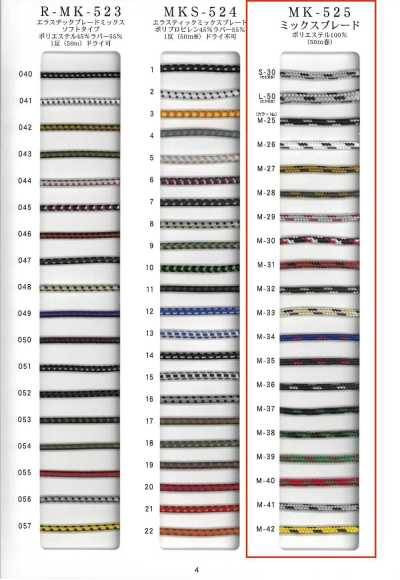
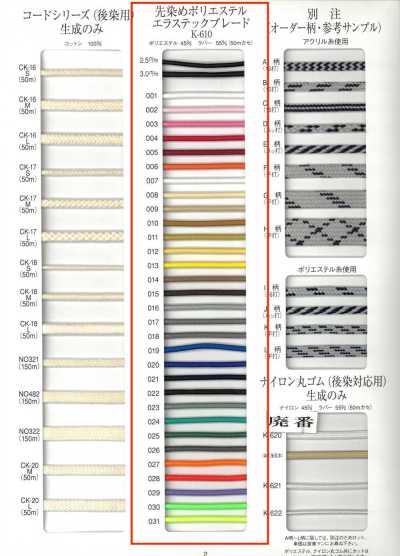
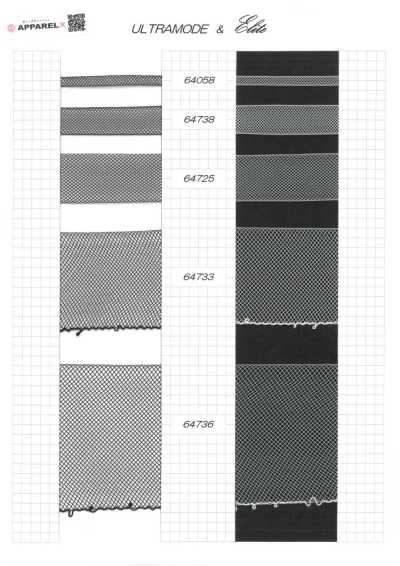
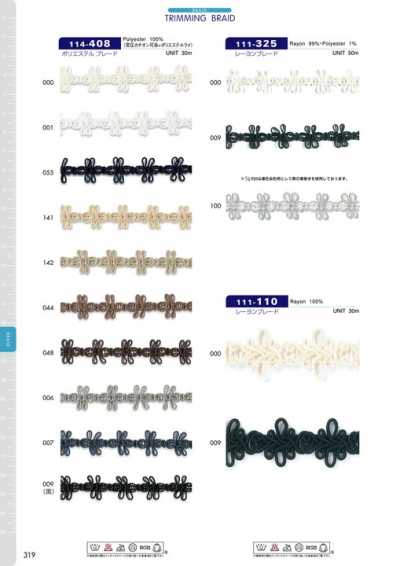
Structures include weaving, in which yarns cross; knitting, in which loops form the structure; and braiding, in which multiple yarns cross diagonally. There are flat types, round types, mountain-shaped or wave-shaped types, and fringe types. Depending on the structure, the direction in which it stretches and the tendency of the edges to fray also differ.
- Weaving: relatively stable in shape and used for flat edging.
- Knitting: flexible, and some types follow curves well.
- Braiding: gives a three-dimensional feel and is used for round-cord or cord-like designs.
How to Read Dimensions
Flat braid is generally expressed by width, and when checking a product, confirm the full width, including not only the visible portion after sewing but also the part hidden as seam allowance. For wave-shaped or looped forms, the maximum width and the effective sewing width may differ.
Round or cord-like braid is often indicated by thickness, that is, diameter. However, soft products can change dimension depending on how they are held. If necessary, check the cross-section, thickness, pattern repeat, and appearance with the actual product.
Main Applications and How to Choose
Main applications include jacket and uniform trimming, dress and stage costume decoration, edging for bags and hats, and decorative finishing for interior accessories. When using it not only on straight sections but also on curves such as necklines and cuffs, check ease of bending and how wrinkles appear during sewing.
When selecting, in addition to color, luster, and three-dimensional effect that match the design, check the difference in thickness and stretch compared with the shell fabric. Choose abrasion resistance for areas that are likely to catch during wear, and consider shrinkage after washing, color fading, and shape distortion for products that will be washed.
- When attaching to curves, baste first to confirm the required length and following performance.
- For stretch fabrics, be careful of rippling or puckering caused by differences in stretch between the fabric and the braid.
- Specify the direction of the pattern and the direction of ridges or waves, and align the cutting direction for symmetrical specifications.
Handling and Differences from Similar Terms
The cut ends may allow yarns to come out or fray depending on the structure. Finishing appropriate to the product specification is necessary, such as inserting it into the seam allowance, folding in the end, or applying anti-fray treatment. Whether heat treatment is possible depends on the type of fiber, so do not apply heat without prior testing.
Ribbon often refers to a flat, continuous strip material, while braid broadly includes narrow materials characterized by structure or surface design. Piping is mainly a specification or material used to create a piping-like edge at seams or edges, and its role differs from decorative braid.
Frequently Asked Questions
How do you distinguish between braid and ribbon?
Ribbon is often handled as a flat strip material and is also used for tying and layering. Braid often features a three-dimensional feel or continuous patterns created by braiding, knitting, or weaving, and is suitable for edging and decorating seam lines. In practice, some products are called by both names, so confirm by structure and application.
Does braid shrink or fray during washing?
The degree of shrinkage and fraying varies depending on the type of fiber, structure, processing, and washing conditions. Items containing natural fibers or with three-dimensional structures may change in size or shape after washing. Before mass production, conduct washing tests together with the shell fabric and confirm how the ends should be finished.
How can braid be neatly sewn onto curved sections?
If it is too stiff or too wide for the curve, wrinkles tend to appear on the inside and lifting on the outside. First confirm followability with a short test sew, and if necessary choose a narrow, flexible type. The basic approach is to sew little by little without pulling hard, while basting in place.