Satin Ribbon
A satin ribbon is a narrow woven ribbon characterized by a smooth, lustrous surface created by satin weave, and used for garment decoration, tying, and packaging.
Contents6 sections
Definition and Overview
Satin ribbon is a narrow ribbon with a smooth surface and a glossy appearance that reflects light easily. “Satin” is originally a term used to describe the weave structure and texture typified by satin weave, and does not refer to a specific fiber name.
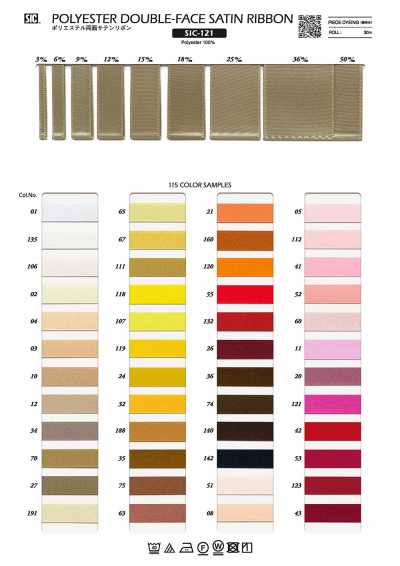
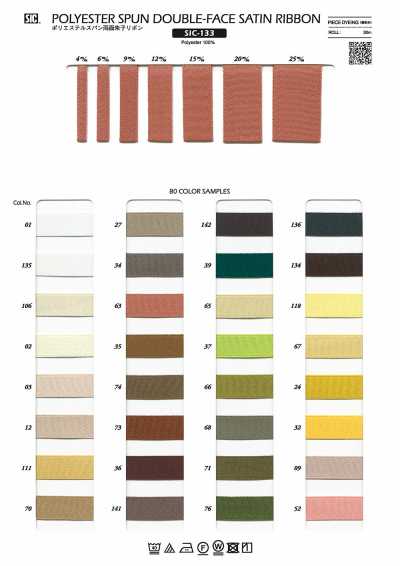
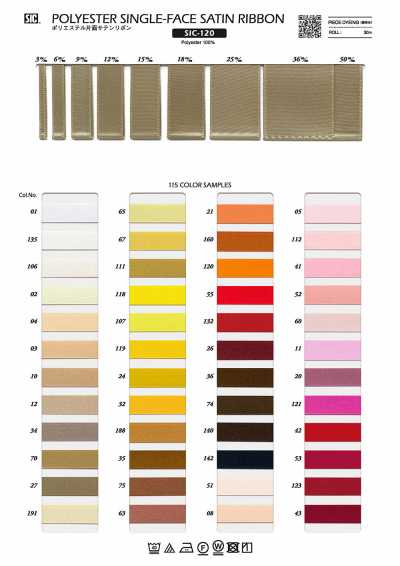
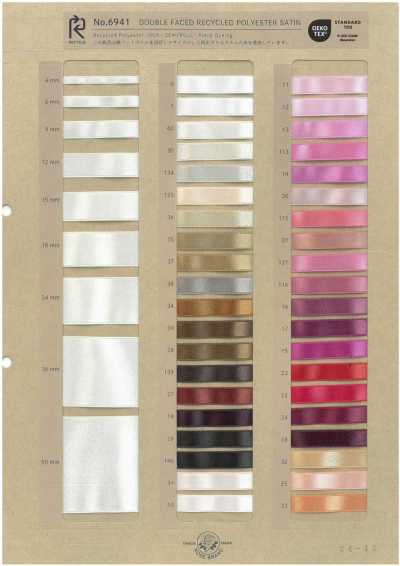
One-sided satin ribbon has one glossy side and a relatively matte reverse side. Double-sided satin ribbon has a glossy finish on both sides and is suitable for uses where the back of a bow is visible or where you want to use it without worrying about the front and back.
Materials and Structure
In many cases, satin ribbon is woven using a satin weave structure in which the warp yarn floats long on the surface, creating a smooth appearance. Because it is woven as a narrow textile, its weave width and selvedge construction differ from those of ordinary garment fabric.
Materials include polyester, nylon, rayon, and silk. The level of gloss, suppleness, thickness, and ease of tying vary depending on the material, yarn thickness, weave density, and finish. Satin ribbon is usually a woven textile, not a knit or braided cord.
How Width Is Shown and Main Applications
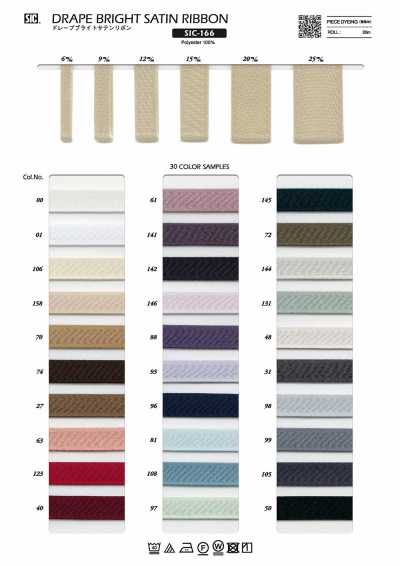
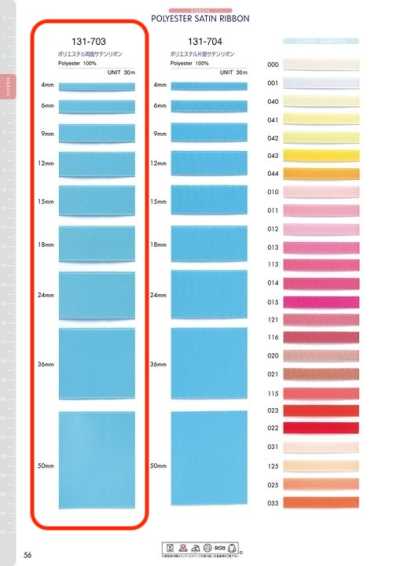
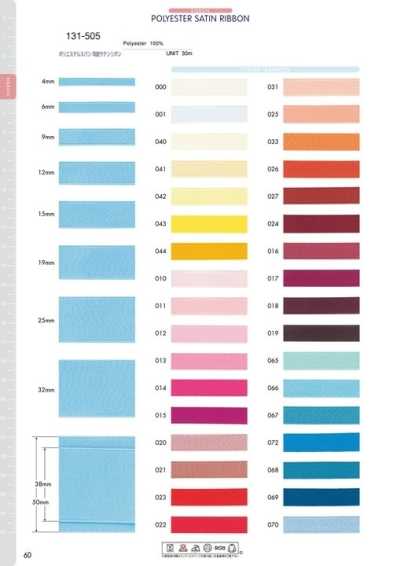
Satin ribbon size is basically shown by width. Narrow widths are used for delicate decoration around name tags, accessories, wrapping, and similar items, while wider widths are used for waist belts, shoulder straps, corsages, and garment decoration. The required length is checked separately in meters or rolls.
In apparel, it is used for blouse bow ties, lingerie decoration, dress ribbons, decorations on children’s clothing, and gift wrapping ties. Because its gloss stands out, it is important to check the balance of color difference, gloss difference, and thickness with the main textile of the product.
- Double-sided satin is suitable for bow knots and hanging designs where both front and back are visible.
- One-sided satin can also be an option for decorations that are sewn on and show only one side.
- When inserting it into a seam allowance, check in advance for added thickness from overlapping seams.
Selection and Handling Notes
When selecting, confirm the width, whether it is one-sided or double-sided, material, color, gloss, thickness, and the required flexibility. For tying applications, something too stiff may be hard to shape, while something too soft may cause the knot to loosen. It is important to make prototypes using the actual tying method and sewing specifications.
It is relatively hard to stretch in the weave direction, but some types are easy to distort diagonally. Cut edges tend to fray easily, so carry out processing suited to the application, such as folding the edge and sewing it or applying edge finishing. High-temperature ironing may reduce gloss, cause deformation, or lead to melting, so confirm the temperature suitable for the material.
Shrinkage, color fading, color transfer, and changes in gloss due to washing vary depending on the material and dyeing conditions. When using it in a product, confirm compatibility with the main textile and washing care label, and if necessary, carry out washing tests and checks for rubbing and wash fastness.
Differences from Similar Terms
Satin refers to a weave structure or the gloss that results from it. Satin ribbon, on the other hand, refers to a narrow ribbon product with that appearance or structure. It does not mean that the material is silk.
Grosgrain ribbon often has ribs running crosswise and has a more matte, raised appearance than satin ribbon. Velvet ribbon is characterized by a napped surface created by pile, and its look and feel differ from the smooth gloss of satin ribbon.
Frequently Asked Questions
Does satin ribbon stretch?
Ordinary satin ribbon is not a material that stretches greatly in the weave direction. However, when force is applied, it may distort diagonally or the knot area may become strained. If stretch is needed, consider a different type of tape with stretch properties.
How do you prevent the cut edge of satin ribbon from fraying?
Because cut edges may fray, the basic method is to fold in the edge and sew it. Depending on the application, edge finishing may also be used, but whether heat treatment can be used depends on the material. Before mass production, check the appearance, strength, and condition after washing.
Which should I choose, one-sided satin ribbon or double-sided satin ribbon?
For bow knots, hanging decorations, or straps where the back side is visible, double-sided satin ribbon with gloss on both sides is suitable. For decorations sewn on so that only the front side is visible, one-sided satin ribbon can also be used. In addition to appearance, compare thickness and ease of sewing as well.