Stretch Tape
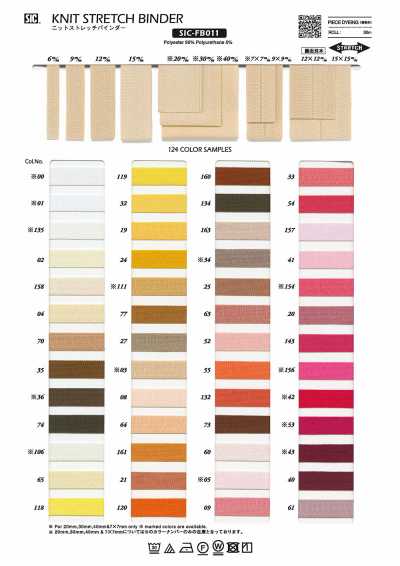
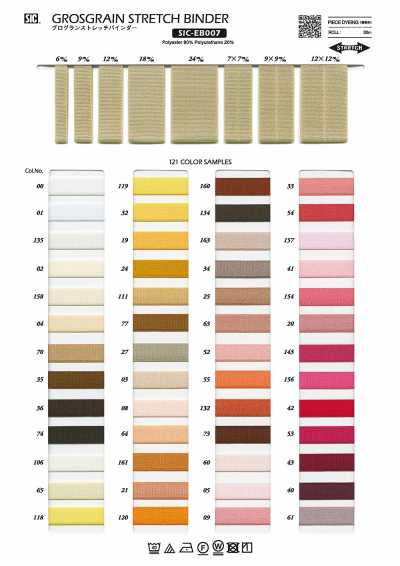
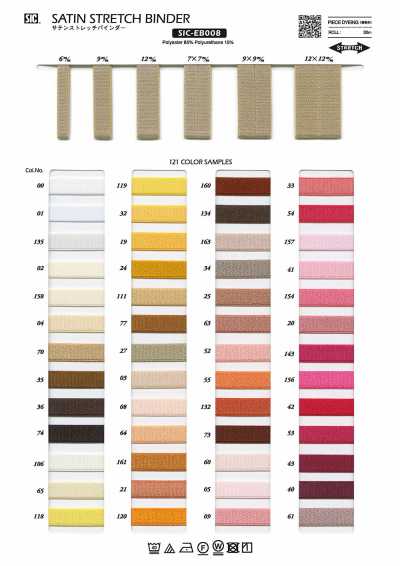
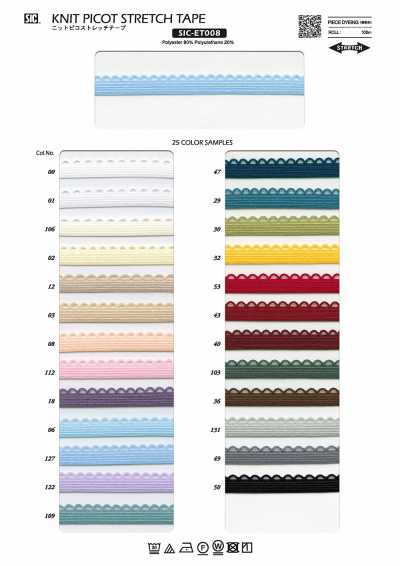
Stretch Tape is a narrow tape-like auxiliary material made with elastic threads or materials that provides fit and moderate holding power to garment edge finishes and seam sections.
Contents6 sections
Definition and Overview
Stretch tape is a narrow tape with the property of stretching when pulled and returning to a certain extent when the force is released. It is used in areas that require stretch, such as binding fabric edges, securing seam allowances, and fitting openings on the skin side to the body.
The term “stretch tape” may refer broadly to any stretchable tape, or specifically to a thin tape for edging. Applications and specifications vary by product. It is important to confirm the area of use, the direction of stretch, and the required recovery.
Materials and Structure
Stretch is imparted by using elastic fibers such as polyurethane as the core or constituent thread. Polyester, nylon, and similar materials are often used for the surface or around the tape, and the combination of materials affects the texture, strength, and durability.
Structures include woven, knitted, and braided types. Woven tape tends to be relatively shape-stable, while knitted tape tends to be softer and easier to conform to body movement. Braided tape can also accommodate specifications with thickness or roundness.
- Woven: A structure whose edges are relatively stable and that easily retains its shape.
- Knitted: A soft structure that makes it easy to take advantage of stretchability.
- Braided: A structure made by crossing threads together, allowing thickness and a three-dimensional feel.
Dimensions and Main Applications
Width is generally expressed in millimeters, and the finished width, whether folded, and the width visible after sewing should be checked separately. Flat tape is managed by width, but for round or thick specifications, diameter and thickness must also be checked.
It is used for necklines, cuffs, hems, and leg openings in underwear, sportswear, swimwear, and cut-and-sew garments. It is also used to reinforce seam allowances and to hold gathered sections. The basic rule is to match the fabric stretch with the stretch direction of the tape.
How to Choose and Handling Precautions
When selecting, check the width, thickness, force at extension, recovery, feel against the skin, and sewing method. A tape that constricts too strongly will impair comfort, while a tape that is too weak will allow the opening to remain stretched, so make samples in combination with the actual fabric.
If the tape is pulled more than necessary during sewing, waviness or shrinkage may appear in the finished seam. Manage the sewing conditions, such as stretching the fabric and tape by the same ratio, or, depending on the specification, stretching only the tape uniformly before sewing.
The cut edge may fray depending on the structure. During washing, elastic fibers may deteriorate due to heat, bleach, drying conditions, and similar factors, so confirm the garment’s overall care label and the tape’s quality information before adoption.
Differences from Similar Terms
Elastic webbing is a flat elastic accessory material mainly used to tighten areas such as waists and cuffs. Although some applications overlap with stretch tape, stretch tape also includes thin specifications that serve as edging or decorative elements, so the term can cover a broader range.
Stay tape is tape used to prevent fabric from stretching or losing its shape, and it is usually not intended to stretch. Since its purpose is opposite to that of stretch tape, use them appropriately according to the purpose of the area, such as shoulder seams or pocket openings.
Frequently Asked Questions
Are stretch tape and elastic webbing the same?
They are sometimes treated as the same, but they are not always identical. Elastic webbing is a flat elastic material mainly intended for tightening and holding. Stretch tape also includes thin stretch tape that serves for edging, finishing cut lines, and decoration. Choose based on the required holding power and appearance.
Why does fabric wave when stretch tape is sewn on?
Waviness is likely to occur when the tape is sewn while being pulled harder than the fabric, or when the feed amount does not match. Check the stretch direction of the fabric and tape, the degree of stretch applied, presser foot pressure, and the elasticity of the stitches. Conducting a sewing test with the same fabric before mass production makes judgment easier.
- Search products for "Stretch tape"
- Products with material "Polyester"
- Products with material "Nylon"
- Products with material "Polyurethane"
- Products for style "For Innerwear"
- Products for style "For Lingerie"
- Products for style "For Sports"
- Products for style "For Swimwear"
- Browse Ribbon, Tape, Cord products