Back Neck Tape
Back neck tape is a narrow tape sewn mainly to the back neckline and shoulder seams of garments, used to finish seam allowances and prevent stretching and distortion.

Contents6 sections
Definition and Overview
Back neck tape is a narrow tape placed mainly on the inside of the back neckline of cut-and-sew items, shirts, blousons, and similar garments. It covers the seam allowance at the neckline to improve comfort against the skin while helping prevent the neckline from stretching with wear and washing.
It is called back neck tape because it is used at the back neckline. Neck tape and neck tape also refer to nearly the same area, but in specifications, clearly stating the attachment position, width, material, and stitching method helps prevent misunderstandings.
Placement and Function
The typical application is the seam allowance at the back neckline. Especially in stretchy knitted fabrics such as jersey, it helps prevent the neckline from stretching and eases bulkiness and irritation caused by the seam allowance directly touching the neck.
In constructions where it is attached continuously into the shoulder seam, it also reinforces the shoulder seam and helps prevent stretching and loss of shape. However, items used only on the shoulder seam are generally distinguished as shoulder tape.
- Covering the seam allowance at the back neckline
- Preventing stretching at the neckline and shoulder seam
- Improving comfort against the skin and appearance
- Providing a base for attaching a brand label
Types and Cutting Methods
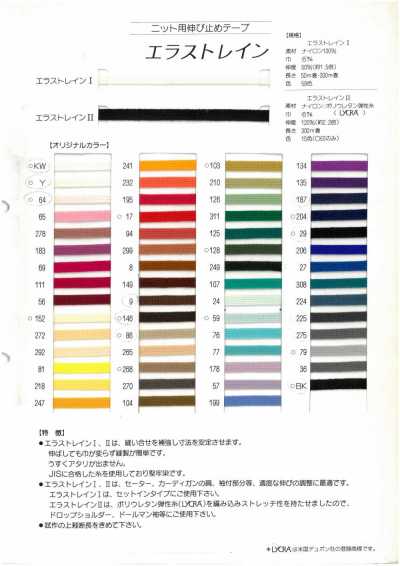
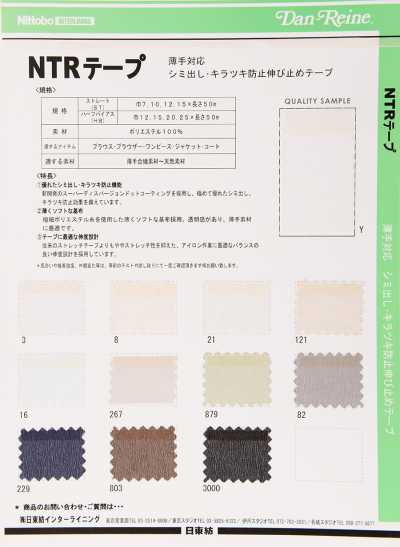
Back neck tape includes woven tape, knit tape, and tape cut narrowly from the same fabric. Woven tape offers easier stability, while knit tape and same-fabric tape blend more naturally with knit fabrics, so they are chosen according to the stretch and texture of the body fabric.
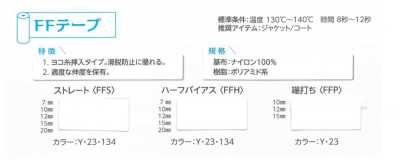
Cutting methods include straight grain cutting, bias cutting, and the intermediate half-bias. Straight grain cutting is less stretchy, while bias cutting follows curves better.
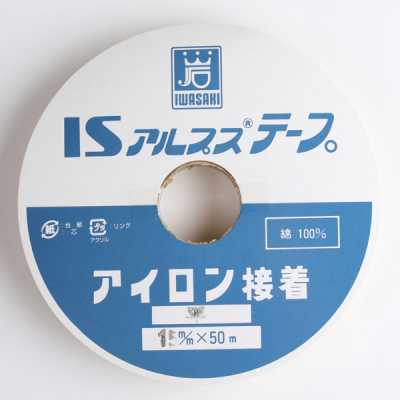
In addition to the non-adhesive type, which is sewn in place, there are also types with adhesive resin for temporary fixing or reinforcement. Whether or not adhesive is used affects not only appearance but also the process and post-wash condition.
Selection and Sewing Notes
The width is determined by the neckline seam allowance width, the stitching position, and the visible tape width desired in the finished garment. If it is too narrow, it may not adequately cover the seam allowance; if it is too wide, the neck area may become stiff or the top side may show fading.
Low-stretch tape is effective for maintaining shape, but if it is pulled too strongly when attached to a highly stretchy body fabric, it can cause rippling at the neckline or tightness when worn. Check the balance of stretch in the body, neckline, and tape, and set it through trial stitching.
For adhesive types, confirm the temperature, time, and pressure for each fabric-and-tape combination. Excessive heat or pressure can cause changes in texture, gloss, or adhesive bleed-through, so it is important to verify through testing, including wash tests, before full production.
Differences from Similar Terms
Stretch prevention tape is a supplementary material used in areas where stretching needs to be prevented, such as necklines, front openings, and pocket openings. Back neck tape describes the application position and often has a stretch-preventing function, but some constructions mainly aim to finish seam allowances or serve a decorative purpose.
Bias tape is tape cut or processed on the bias grain of the fabric and is suitable for edging and finishing curved sections. Bias tape can be used as back neck tape, but the two terms differ in whether they refer to the application or the structure.
Frequently Asked Questions
Are back neck tape and shoulder tape the same?
Sometimes the same tape is used, but generally they are distinguished by where they are attached. Back neck tape refers to a construction that covers the seam allowance at the back neckline, while shoulder tape refers to a construction that prevents stretching and loss of shape at the shoulder seam. The specification should state the tape range and stitching position.
Does back neck tape always need to be bonded?
Bonding is not always necessary. Many back neck tapes are secured by sewing. Adhesive types are useful for workability and reinforcement, but depending on the fabric they can cause poor bonding, changes in texture, or peeling after washing, so testing is necessary.
How should back neck tape for stretchy cut-and-sew items be selected?
Select a tape that does not interfere with the stretch of the body or neckline while still preventing neckline stretching. If a stiff woven tape is strongly pulled when attached, it may cause rippling or tightness. Check the worn and post-wash condition using prototypes with different widths, stretch levels, and thicknesses.