Jacquard Lace
Jacquard lace is a general term for lace that expresses floral patterns, geometric patterns, and more on lace fabric by individually controlling the movement of yarns that create the pattern.
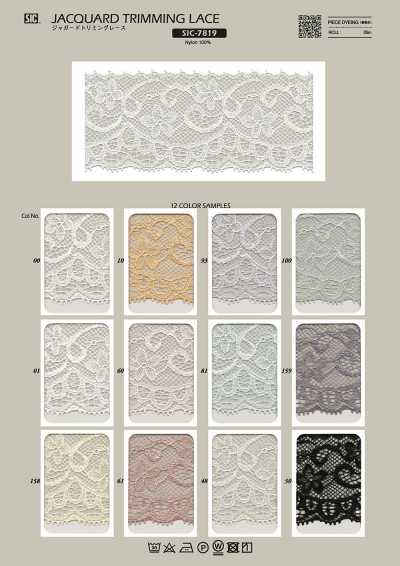
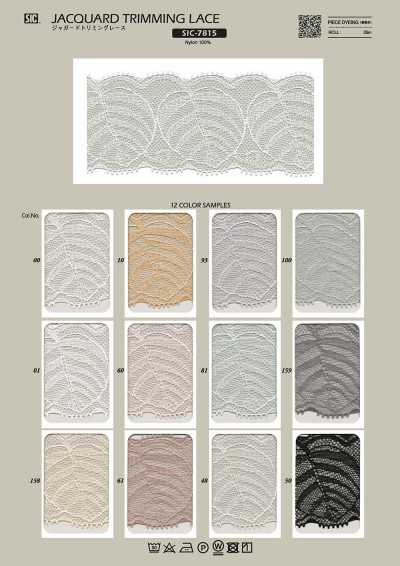
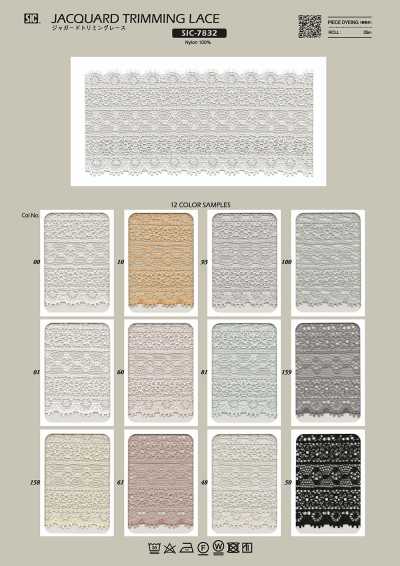
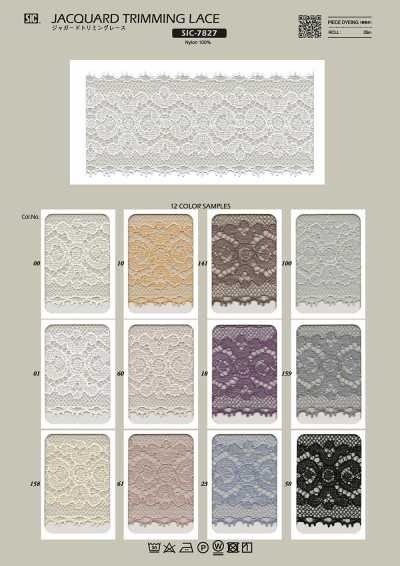
Contents6 sections
Definition and Overview
Jacquard lace is lace made by controlling yarn movement for each pattern with a Jacquard mechanism, combining openwork sections and patterned sections. Its distinguishing feature is that the pattern is formed during the knitting or weaving process, rather than being added later by printing.
How It Is Made and Materials
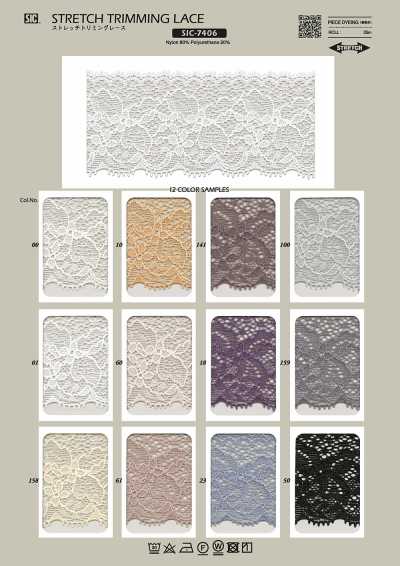
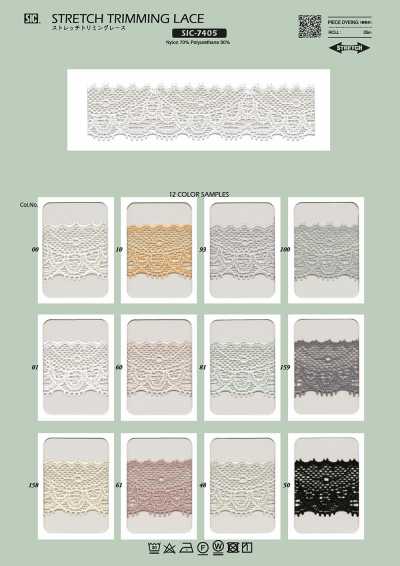
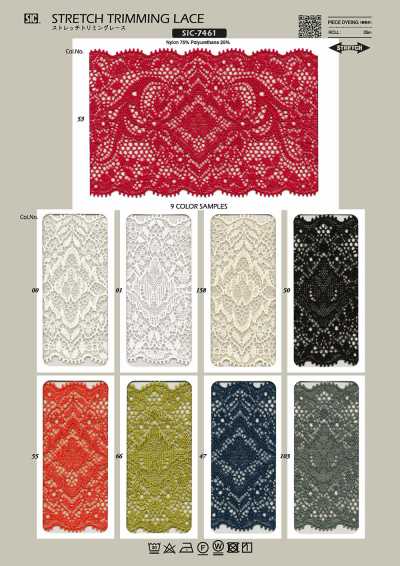
In many cases, it is produced on lace machines by warp knitting, with the ground structure and pattern structure knitted at the same time. Taking advantage of knitting characteristics, stretch types are also made, but being Jacquard lace itself does not mean that it stretches.
Materials include polyester, nylon, rayon, and cotton, and polyurethane is combined as needed. Depending on the material, yarn thickness, and knitting density, sheerness, firmness, drape, and durability vary greatly.
Visual Characteristics
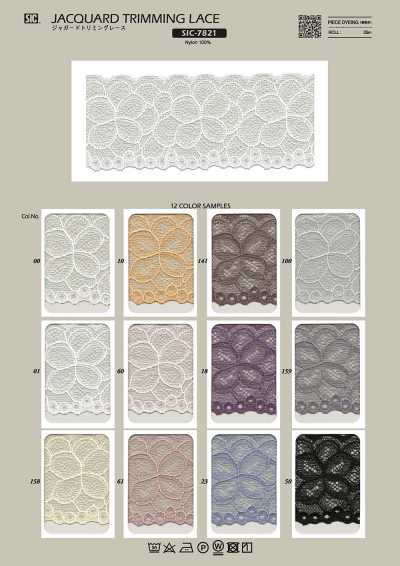
Because floral patterns, botanical patterns, geometric patterns, and the like can be expressed through the contrast between openwork motifs and dense patterned sections, this material tends to have a dimensional look with shading. Depending on the outline of the pattern, the ground mesh, and the density of the pattern, it ranges from a delicate impression to a more striking one.
Jacquard is a term related to the method and structure used to create patterns. Therefore, its pattern formation method differs from that of embroidered lace, which is made by embroidery on a base fabric, and chemical lace, which is made by removing the base fabric through chemical treatment.
Main Applications
It is used for outer fabric or panel sections of blouses, dresses, skirts, and gowns, as well as decorative parts such as lingerie, cuffs, and collars. When a sheer type is used as outer fabric, check how the pattern appears and how it feels to wear by layering it with lining or a separate fabric.
- Decoration for formal wear and dresses
- Partial use in blouses and dresses
- Decoration for lingerie and innerwear
- Design expression for stage costumes and similar items
Selection and Handling Notes
When selecting, confirm the pattern size, pattern direction, fabric width, usable width, stretch direction, and edge shape. Pattern matching may be required when cutting, so it is important to allow extra yardage, especially for symmetrical designs and panel sections.
For materials with a coarse mesh or made with fine yarn, care is needed to prevent pulled yarns and fraying caused by snagging. In sewing, consider a specification that stabilizes the seam allowance, and washing should follow the material label and the product care label. For stretch varieties, avoid excessive pulling during storage or sewing.
Frequently Asked Questions
Is Jacquard lace stretch lace?
Jacquard lace is a name that refers to how the pattern is made, and it does not necessarily stretch. Some varieties have stretch properties due to the characteristics of warp knitting or the use of polyurethane. During planning, check the stretch in both the lengthwise and widthwise directions, as well as the recovery after stretching, using the actual material.
What is the difference between Jacquard lace and chemical lace?
Jacquard lace forms patterns by controlling yarn movement during knitting or weaving. Chemical lace, on the other hand, is made by embroidering on a base fabric such as a water-soluble one, then removing the base fabric to leave the pattern. Since the appearance may be similar, check the material label, edges, and structure.