Casein Button
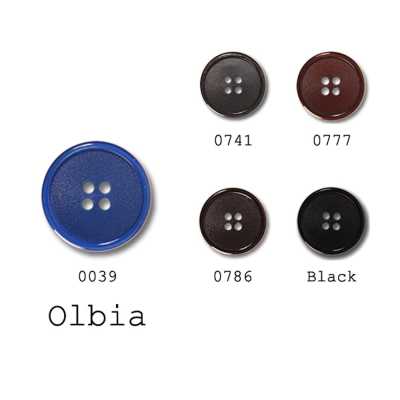
A casein button is a button molded from casein, a milk-derived protein, as its main ingredient, with a natural-material-like color and a deep texture.
Contents6 sections
Definition and Material Characteristics
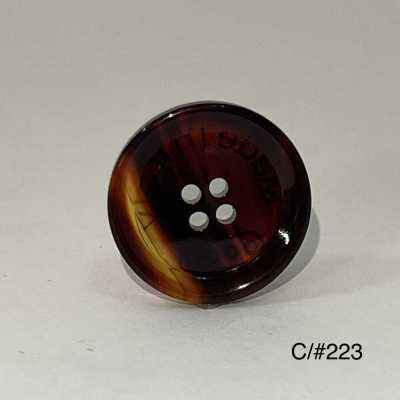
A casein button is a button made from casein, a protein found in milk. By dyeing and polishing after molding, it can express natural-looking depth, translucency, and rich shading like buffalo horn or tortoiseshell.
Even with the same casein material, there may be individual differences and lot-to-lot variation in color, pattern, thickness, and gloss. It is suited to applications that make use of natural-looking unevenness as part of the design, and if a uniform color tone is important, prior confirmation is necessary.
Hole and Shank Shapes
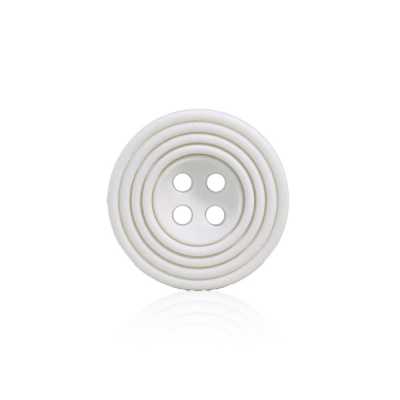
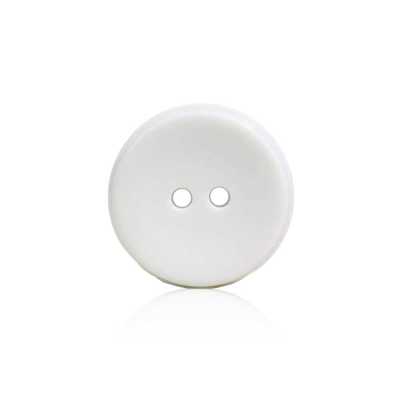
Casein buttons come in holed styles such as two-hole and four-hole buttons, as well as shank styles with a sewing shank on the back. Holed buttons are used for shirts and cardigans, while shank buttons are used for garments such as jackets and coats where a neat surface appearance is desired.
When sewing on holed buttons, do not pull the thread too tightly; leave an appropriate amount of slack between the button and the textile. For shank buttons as well, it is important to match the textile thickness and buttonhole size so that excessive force is not applied to the base of the shank.
- Two-hole, four-hole: a style sewn on by passing thread through the holes.
- Shank: a style in which thread is passed through the shank on the back, making it less likely for stitches to show on the front.
How Size Is Expressed
Button size is shown by diameter in mm, and also in ligne. Ligne is a unit used in the button industry, and in specifications, sample cards, and purchase orders it may be written together with the mm notation.
Even with the same stated size, the appearance and fit into the buttonhole vary depending on the rounded edge, thickness, and shank height. During planning, confirm not only the diameter but also the thickness, buttonhole length, and the placket and textile thickness.
Main Applications and Selection
It is used for jackets, coats, cardigans, shirts, dresses, and more. In particular, it is a button that makes it easy to bring out the texture of the material in natural textiles, classic tailored items, and designs that aim for a natural appearance.
When selecting, check not only the color and pattern but also the strength appropriate for the garment's applications, washing method, and compatibility with the buttonhole. For front-opening main buttons, it is important to consider the number of openings and closings and the pulling load, and to perform sewing and opening/closing tests on the actual textile.
Handling and Differences from Similar Materials
Casein material may deform, crack, discolor, or change on the surface due to long exposure to moisture, heat, chemicals, or strong impact. Whether it can be washed or dry-cleaned should not be judged by the button alone; instead, conduct advance testing under the treatment assumed for the finished product.
Do not apply an iron directly to the button; iron around it or use a pressing cloth. During storage as well, avoid high heat, high humidity, and direct sunlight, and be careful of chipping from contact with other hard trims. Confirm during the product design stage so that there is no discrepancy between the care label and the actual trim resistance.
Real buffalo horn buttons are made from buffalo horn, so their raw material differs from casein buttons made from milk. Nut buttons use coconut seeds, while urea buttons and polyester buttons use synthetic resins as their main raw material, and each has different tendencies in texture, pattern appearance, and durability.
Frequently Asked Questions
Can casein buttons be machine washed at home?
Suitability for home laundering varies depending on the button's processing condition, sewing method, detergent, water temperature, and washing time. Because casein material may be affected by moisture, chemicals, and heat, before commercialization confirm the appearance, cracking, deformation, and color change under the intended washing conditions, and decide the care label based on the results.
What is the difference between a casein button and a real buffalo horn button?
A casein button is a molded material whose main raw material is casein derived from milk, while a real buffalo horn button is made by processing buffalo horn. Both have a natural-looking appearance, but the raw materials and manufacturing methods differ, and there are also differences in pattern, color tone, thickness, processability, and handling precautions. Select after checking actual samples.
Can an iron be applied to a casein button?
Avoid applying a hot iron directly to the button. Because heat may affect the surface gloss and shape, iron around the button area or use a pressing cloth if necessary. Before mass production, it is reassuring to carry out a heat-resistance test assuming the set temperature and pressing process.