Double Knit
Double Knit is a general term for knitted fabrics made by knitting in a way that connects the front and back layers, resulting in more thickness and stability than a single-layer knit.
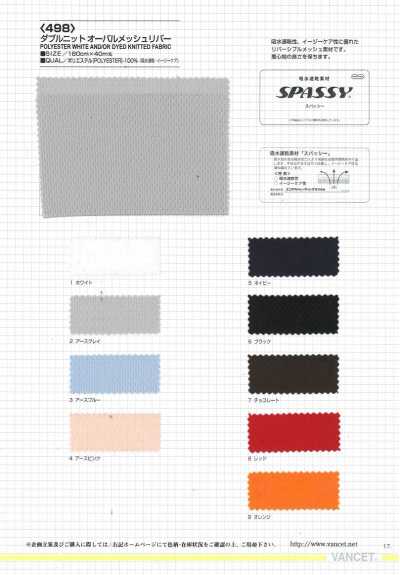
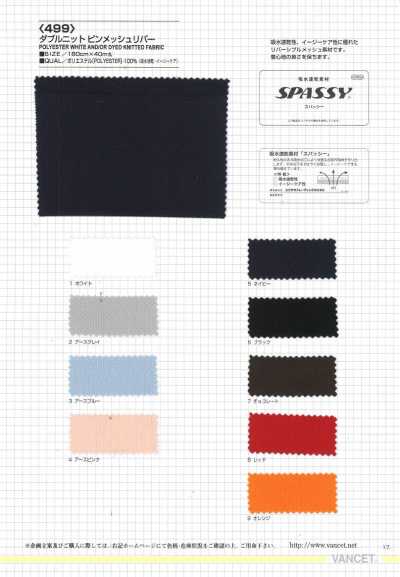
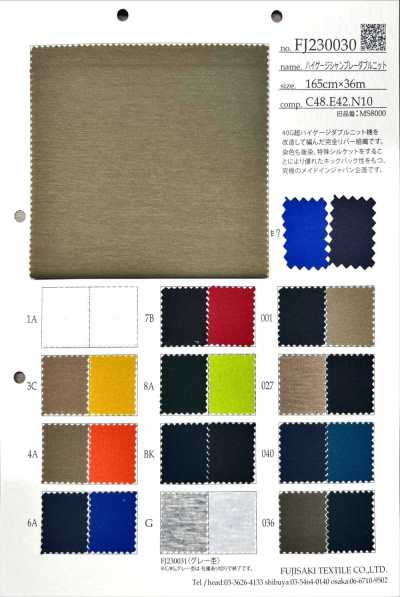
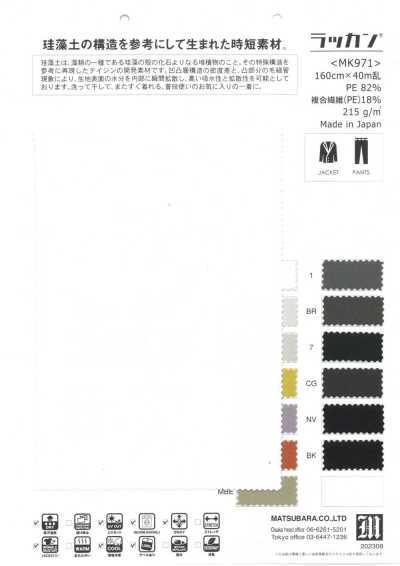
Contents6 sections
Definition and Overview
Double knit is a double-structure knitted fabric made on knitting machines that mainly use two sets of needle beds. Because the stitches on the face and back are connected, it tends to be thicker and more stable than ordinary single-layer circular knits. Rather than a specific structure name, it is used as a general term for knitted textiles with a double structure.
The appearance of the front and back is not always the same and varies depending on the yarn and knitting structure used. Some can be used with either side as the face, but the term “double-sided knit” does not necessarily mean the two sides are completely identical in appearance or that it is reversible.
Texture and Function
It has moderate thickness and firmness, and while it is a knit, it is relatively easy to create a neat, structured impression. In structures that readily trap air between the layers, it also provides fullness and warmth retention. On the other hand, softness, weight, stretch, and breathability vary greatly depending on the material, fabric weight, and structure.
Although it has stretch, many types stretch less than single-layer knits such as jersey, and the degree of stretch may differ between the horizontal and vertical directions. When evaluating specifications, it is important to check not only the appearance but also recovery after stretching, curling at the edges, and the firmness when worn using an actual sample.
Main Applications
Taking advantage of its stability, it is used for cut-and-sew items, pullovers, cardigans, dresses, skirts, pants, jackets, and more. It is suitable for designs that do not easily show body lines and that are intended to retain some three-dimensional shape after sewing.
The suitable season varies depending on thickness and blend materials, but in many cases it is used for spring-autumn or autumn-winter apparel. Thin, smooth types can also be used in spring and summer, but even within double knit, the perceived warmth and heaviness are not uniform.
Selection and Handling Notes
When selecting, check the fabric weight, fabric width, thickness, stretch direction, rebound, and the appearance of the front and back. Choose according to the properties required for the item, such as firmness and recovery for jackets and pants, or hand feel and drape for tops. If polyurethane is included, consider changes in performance over time.
Shrinkage and twisting caused by washing differ depending on the fiber type, knitting density, and finishing process. Before cutting, carry out scouring and straightening as needed, and perform washing tests before mass production. In sewing, choose thread and stitching that follow the fabric’s stretch, and adjust to prevent puckering and seam stretching caused by feeding.
- Align the grainline and the front/back sides before and after cutting.
- Because seam allowances tend to become thick, check the specifications at overlapping sections.
- When ironing, use a pressing cloth and be careful not to cause shine or flatten the knit by pressing too hard.
Differences from Similar Terms
Interlock and smooth are sometimes treated as representative knitting structures included in double knit. However, double knit does not refer to a specific stitch pattern, so when ordering, confirm the structure, material, thickness, and front/back specifications as well.
Spacer knit refers to a structure that creates space with yarns connecting the front and back surfaces, and it is distinguished from double knit by its often greater loft. Also, double weave and double face may refer to a double structure in woven fabrics, and the manufacturing method differs from double knit, which is a knitted fabric.
Frequently Asked Questions
Is double knit a thick fabric?
There are many types that feel thick, but thickness is not determined by the name double knit alone. Depending on the yarn thickness, knitting density, structure, and finishing, it ranges from thin to bulky. Check the fabric weight, thickness, and sheerness with a swatch or actual sample and choose one that suits the intended use.
Does double knit shrink in home laundering?
The degree of shrinkage varies depending on the material composition, such as cotton, wool, and polyester, as well as the knitting structure and finishing. Those containing natural fibers may change dimensions when washed. Before productization, it is necessary to check the fabric care label and confirm the shrinkage rate under the expected washing conditions.
What should be considered when sewing double knit?
If the seam does not follow the fabric’s stretch, skipped stitches or seam waviness may occur. Adjust differential feed and presser foot pressure to suit the fabric, and consider needles for knits and stretch-compatible sewing specifications. For thick fabrics, also pay attention to poor feeding at stepped sections.