Boa Fleece
Boa fleece is a textile centered on pile knit fabric with a wool-like, raised, and voluminous pile on the surface, and it is characterized by warmth and a soft appearance.
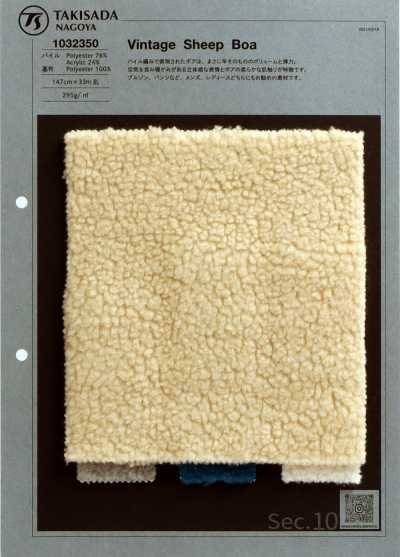
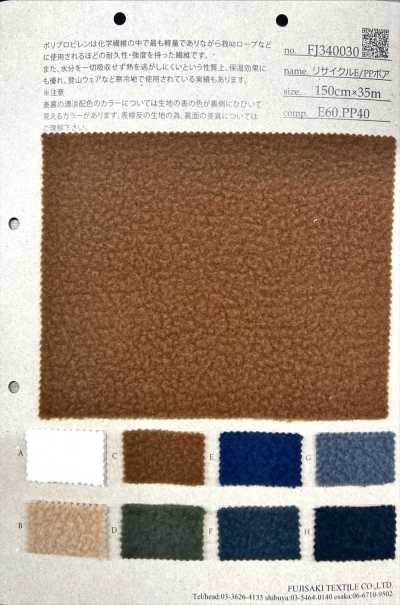
![NT-6040 Craft Fur [Double-Sided Eco Wool Boa Fleece]](/img/item/thumb/OKURA/1089759_t2.jpg)
Contents6 sections
Definition and Overview
Boa fleece is a textile centered on pile knit fabrics that create loops and fuzz on the surface, expressing a wool-like sense of volume. In general, many are made with synthetic fibers, and they are used as autumn-winter materials with lightness and ease of handling.
“Boa” is not a material name, but mainly a term for the surface hair and appearance. Depending on the structure, pile length, density, and blended fibers, the fullness, firmness, warmth, and stretch can vary greatly.
Texture and Function
Because it traps air between the pile, it generally provides good warmth and gives a soft, warm impression when touched. Since it has a strong surface presence, it is a material that easily creates a seasonal feel and casual look even in simple shapes.
On the other hand, items with long pile or low density can let wind pass through easily, and may not provide sufficient wind resistance on their own. For outerwear applications, combinations with lining, a wind-resistant separate fabric, or bonding are also considered.
Main Applications
Boa fleece is used for blousons, vests, partial use in coats, hoodies, and loungewear. In addition to apparel, it is also suitable for applications that make use of softness and warmth, such as hats, bags, boot openings, and lap blankets.
The main season of use is autumn and winter. Since pile length and fabric weight affect the product’s volume and weight, it is used differently depending on the purpose, such as thin and short-pile types for light intermediate layers, and thick and high-density types for cold-weather outerwear.
Selection and Handling Notes
When selecting, check the pile length, pile direction, density, stability of the back side, and stretch with the actual material. When cutting, align the pile direction across all pieces, and if necessary, cut in one direction only. If the pile directions are mixed, the color and sheen may appear different.
During sewing, the seam allowance tends to overlap due to thickness, making seam slippage and bulky seams more likely. Brushing the pile out of the seam and neatening the seam allowance can help produce a cleaner finish. For construction stitching, set needles, thread, and feed conditions that suit the stretch and thickness.
Changes in dimensions from washing, distortion of the pile direction, fuzz shedding, and pilling vary depending on the fiber composition and processing conditions. In particular, since some materials may contain fibers that are easily deformed by heat, check whether tumble drying or ironing is allowed according to the textile and product care labels.
Differences from Similar Terms
Fleece often refers to a brushed material with fine fuzz raised on a knit fabric, and includes relatively smooth materials with short pile. Boa fleece is sometimes treated as a type of fleece, but it is a term characterized by a more wool-like looped feel and prominent raised pile.
Fake fur is a textile that expresses fur-like pile and long hair. It tends to have longer pile than boa fleece, and often emphasizes pile direction and sheen. Pile is a general term for structures with loops or fuzz on the surface, and boa fleece can be considered one expression of that.
Frequently Asked Questions
Are boa fleece and fleece the same textile?
They are closely related, but not necessarily the same meaning. Fleece often refers broadly to brushed knit fabric, while boa fleece emphasizes a wool-like looped feel and a raised pile appearance. In planning and ordering, confirm not only the name but also the pile length, density, and back-side specifications.
Does boa fleece shrink when washed?
How much it shrinks depends on the fiber composition, knit structure, finishing, and washing conditions. Even in materials made mainly of synthetic fibers, heat and mechanical action can change the pile direction or alter the dimensions. Before mass production, it is important to carry out washing tests and check both dimensional change and appearance change as a product.
What should I be careful about when sewing boa fleece?
Cut with the pile direction aligned, and be careful of seam slippage and bulky seams due to thickness. After sewing, brushing the sewn-in pile out to the face side with an awl or similar tool helps make the seam less noticeable. In prototyping, check the needle, thread, stitch, and feed conditions, and also decide how the seam allowance will be finished.
![NT-6050 Craft Fur [Double-Sided Wool Boa Fleece]](/img/item/thumb/OKURA/1089760_t2.jpg)
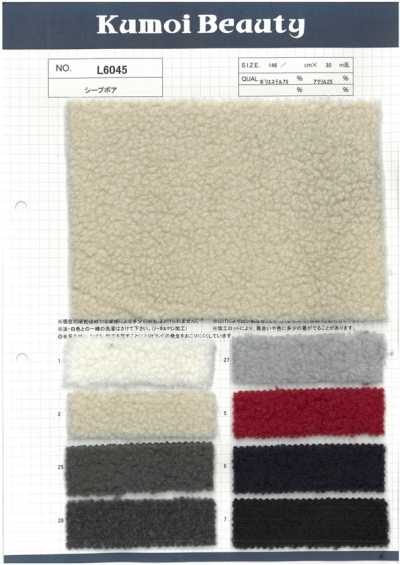
![NT-1200 Craft Fur [Organic Cotton Pile Boa Fleece]](/img/item/thumb/OKURA/1089791_t2.jpg)