Pinpoint Oxford
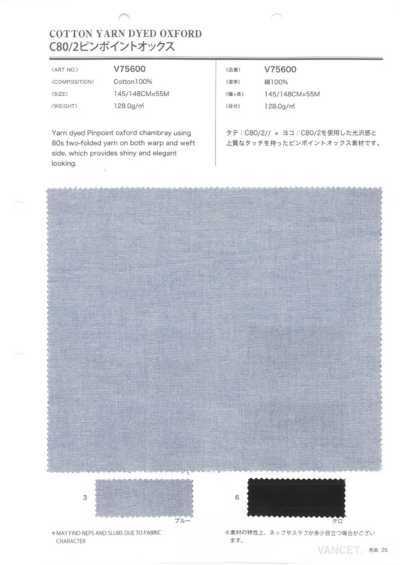
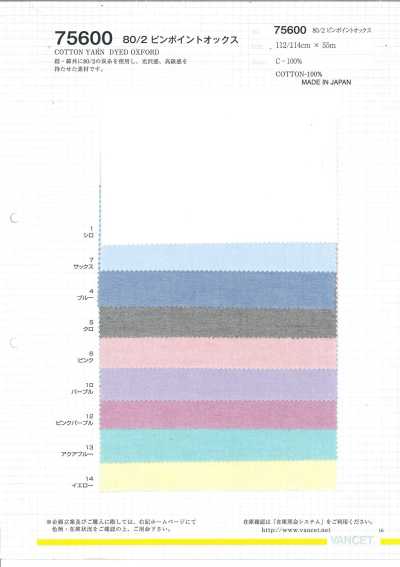
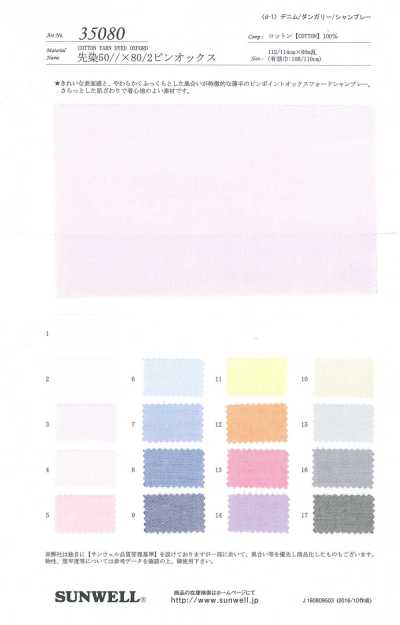
Pinpoint oxford is a fabric woven in a fine basket weave using finer yarn than oxford, with an elegant, relatively smooth surface.
Contents6 sections
Definition and Overview
Pinpoint oxford is a dobby weave fabric in which multiple warp and weft yarns are combined, creating a fine weave with small openings by using fine yarns. It is widely used as shirting material, and besides cotton, there are also polyester blends.
Although it includes oxford in the name, it is a fabric with a finer weave than ordinary oxford, and is often finished with a thickness ranging from thin to medium. Its properties vary depending on the composition, yarn thickness, density, and finish.
Texture and Appearance Characteristics
The fine dobby weave gives it a subtle uneven surface, so even solid colors have depth. Compared with ordinary oxford, the surface is smoother, and it is characterized by an ability to create a neat impression that is not too casual.
Many versions combine moderate firmness and suppleness, making them easy to keep in shape after sewing. On the other hand, softness, breathability, absorbency, and dimensional stability need to be checked depending on the fiber type, blend ratio, and whether any finishing has been applied.
Main Uses and Suitable Seasons
It is suitable for dress shirts, button-down shirts, casual shirts, blouses, and more. It is also sometimes used for neat uniform shirts and lightweight dresses. Because of its fine weave, it is a material that can be easily incorporated from business wear to everyday wear.
Depending on the fabric thickness and composition, it is mainly chosen as shirting material for spring, summer, and year-round use. Thin product numbers are used for a light feel, while medium-thickness product numbers are used for single-layer garments or layering. When used in autumn and winter, the thickness and warmth retention when layered should also be checked.
How to Choose and Handling Precautions
When selecting it, in addition to composition, fabric weight, density, and fabric width, check sheerness, firmness, and wrinkling through swatches and prototypes. White and light colors may be sheer, so depending on the application, consider pairing with an inner layer and also the specifications such as the front placket and pockets.
In fabrics with a high proportion of natural fibers, shrinkage and wrinkling may occur through washing. It is important to conduct washing tests before mass production and reflect the shrinkage rate in the pattern. Washing and ironing conditions should always follow the washing instructions and finishing details for each fabric.
The texture of the dobby weave may stand out as fading at seams or under pressing. Check in advance the compatibility with interlining, seam allowance thickness, and feed conditions during sewing, and press collars and front plackets without flattening the surface too much.
Differences from Similar Terms
Oxford is used as a general term for dobby weave fabrics, and the representative type has a firm casual look created with relatively thick yarns and larger weave openings. Pinpoint oxford is treated as a type with a finer weave.
Royal oxford is also a fine dobby weave shirting fabric, but it sometimes refers to a fabric that uses even finer yarns at a higher density than pinpoint oxford, giving a more delicate and lustrous appearance. However, the distinction in naming differs depending on the fabric planning, so physical samples must be checked. Broadcloth and poplin are based on plain weave, so their structure differs from pinpoint oxford, which has the surface character derived from dobby weave.
Frequently Asked Questions
How is pinpoint oxford different from oxford?
Does pinpoint oxford shrink when washed?
The degree of shrinkage depends on the composition, yarn, density, and finishing process. Fabrics with a high cotton content may shrink when washed, so shrinkage should be checked through washing tests before mass production. Please also check the presence or absence of shrink-resistant finishing and dimensional-stability finishing in the specifications or fabric information.
What should be noted when sewing pinpoint oxford?
The unevenness of the weave may be flattened by pressing, or fading around the stitching may become noticeable. Test the compatibility of the outer fabric and interlining, and set appropriate seam allowance processing and pressing conditions. For collars and front plackets, it is reassuring to confirm the finished firmness and surface texture with prototypes.