Broadcloth
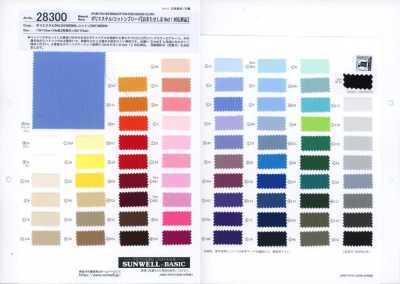
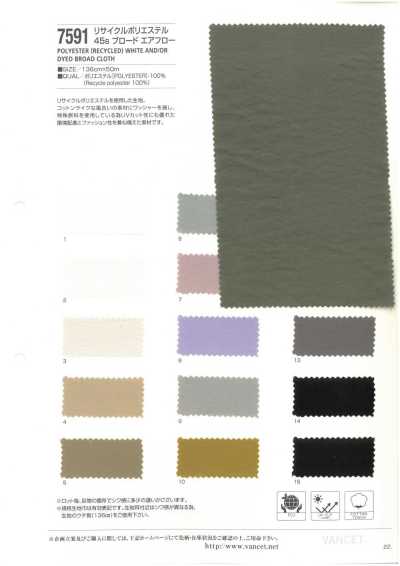
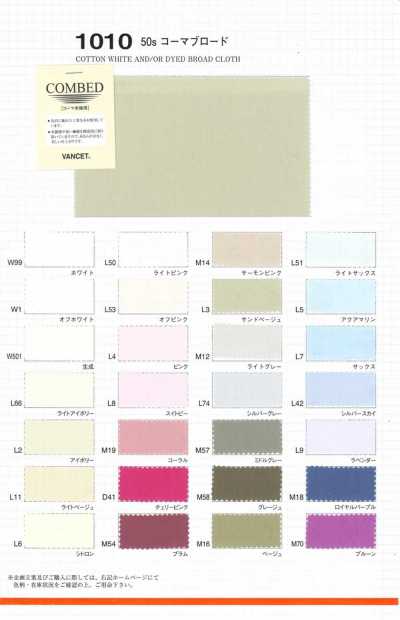
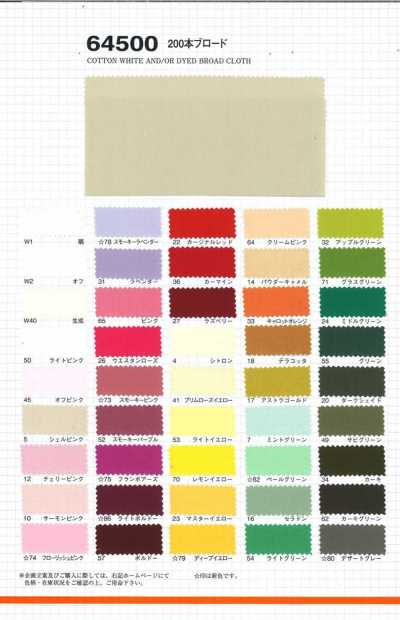
Broadcloth is a lightweight to medium-weight woven fabric made by densely plain weaving fine yarn, with a smooth surface, moderate luster, and firmness.
![19300 40s Broadcloth [Sorry To Keep You Waiting! Matching Item]](/img/item/thumb/OKURA/1084542_t2.jpg)
Contents6 sections
Definition and Overview
Broadcloth is a woven fabric made by plain weaving with one warp yarn and one weft yarn crossing each other. In general, it is woven with relatively fine yarn at a fairly high density, and finished to have few fuzz fibers and a uniform, smooth surface. It is made mainly from cotton, but also from polyester blends and the like.
As a fabric name, broadcloth refers not to the raw material itself, but to the appearance and texture created by yarn thickness, weave density, and finishing. For that reason, even broadcloth can vary in composition, thickness, firmness, and sheerness.
Features
It has a clean smoothness and a subdued sheen, giving it a crisp, neat appearance. Even when lightweight, those with a high weave density tend to have fairly firm body and resilience, making it easier to shape collars and cuffs.
Lightweight fabrics made with fine yarn are light and relatively smooth against the skin. On the other hand, light colors and lightweight versions can be sheer, so depending on the item and application, consider pairing them with lining, facings, or layering.
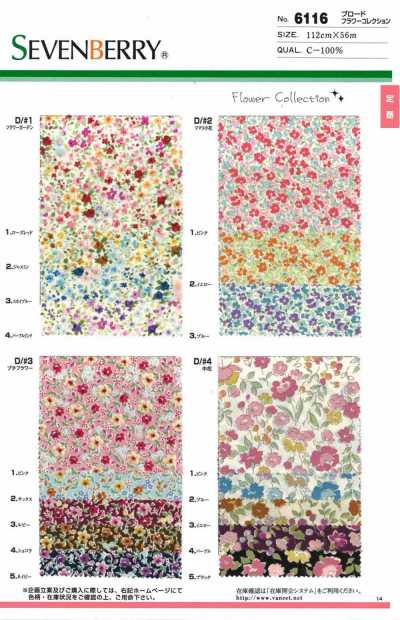
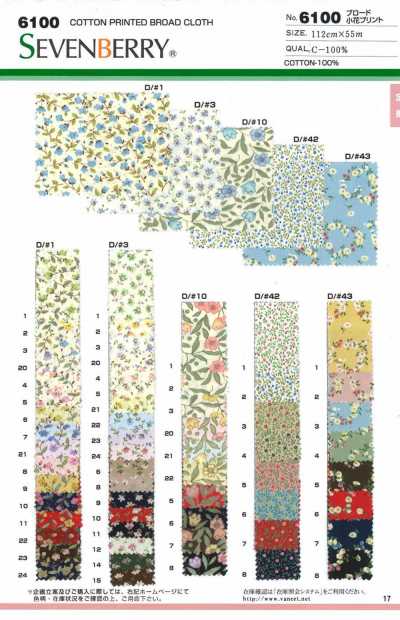
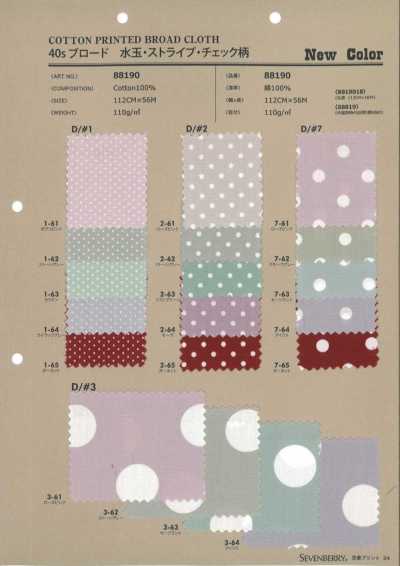
- The surface is smooth, making patterns and prints easy to see.
- Because it is a plain weave, the structure is stable, making it one of the easier fabrics to cut and sew.
- Depending on the yarn count and density, the texture changes from shirting fabric to somewhat sturdier applications.
Main Applications
Broadcloth is widely used for dress shirts, casual shirts, blouses, and dresses. In solid colors, it easily creates a neat impression, while yarn-dyed stripes and checks, piece-dyed fabrics, and prints make it easy to express patterns clearly.
Lightweight types are used for spring and summer shirts and blouses, while high-density, firm types are used for year-round shirts, uniforms, children's clothing, and more. When deciding on an application, check the actual fabric for thickness and sheerness.
How to Choose and Handling Notes
When selecting it, check not only the composition but also the yarn count, density, fabric weight, and finishing process. The finer the yarn count and the higher the density, the more delicate and refined the appearance tends to be, but in some cases you need to be careful about thinness, sheerness, and puckering at the seams.
Broadcloth made mainly from cotton may shrink or wrinkle after washing. Before mass production, perform wash testing and confirm the shrinkage rate and color fading. It is important to straighten the grain before cutting and to set the ironing temperature according to the composition and care label.
For sewing, choose a needle and thread that match the fabric thickness, and if the seams pucker, adjust the thread tension and presser foot pressure. On lightweight fabrics, seam allowances can show through or fray easily, so choose a finishing method suited to the product specifications, such as overlock finishing or flat-felled seams.
Differences from Similar Terms
Poplin generally refers to a plain weave fabric in which thicker yarn is used for the weft than for the warp, making horizontal ribs more noticeable. It is sometimes handled in applications similar to broadcloth, but broadcloth is often distinguished as having a smoother, more uniform surface. Usage of the term varies by region and through the distribution chain.
Lawn is also a lightweight plain weave made with fine yarn, but it tends to be lighter, thinner, softer, and more sheer than broadcloth. Oxford differs from broadcloth in that its weave uses multiple yarns combined, creating a surface with a pebbled texture.
Frequently Asked Questions
Is broadcloth suitable for shirts?
Yes, broadcloth has a smooth surface and a clean appearance, and is widely used for shirts and blouses. If you want to give shape to collars and cuffs, a high-density fabric with moderate body is a good option. For lightweight light-colored versions, also check the sheerness.
Are broadcloth and poplin the same?
They may be handled in similar applications, but they are not strictly the same. Poplin often refers to a fabric in which horizontal ribs are easy to see, while broadcloth is distinguished as having a smoother surface. However, usage of the name varies in distribution.
Does cotton broadcloth shrink when washed?
Broadcloth made mainly from cotton may shrink somewhat when washed. The amount of shrinkage varies depending on the yarn, density, finishing, and washing conditions, so before making the product it is important to test it with the intended washing method and confirm the shrinkage rate, wrinkling, and color fading.