Twill
Twill is a woven structure in which the intersections of the warp and weft threads are shifted at regular intervals, creating diagonal ribs on the surface, or a general term for textile made with that structure.
Contents6 sections
Definition and Overview
Twill is the English term for a diagonal weave. It is a weave in which either the warp yarn or weft yarn floats over multiple yarns, and because the floating position shifts as weaving progresses, continuous diagonal lines, that is, twill ribs, appear on the surface.
Because it is the name of a weave structure rather than a material name, it is made from various fibers such as cotton, polyester, wool, and rayon. Depending on yarn thickness, density, composition, and finishing, it can range from lightweight to heavyweight with a wide variety of looks.
Features
Compared with plain weave, it has fewer interlacings of yarns, so it generally tends to be softer and more supple, and it is a structure that is easy to give body to. The diagonal twill ribs create shading, giving it a textured appearance even in solid colors.
The direction of the twill ribs is either rising to the right or rising to the left when viewed from the face side of the textile. Depending on the weave structure, yarn use, and density, the twill ribs may be less noticeable. The way it handles friction, its sheen, and its drape also vary greatly depending on the material and design.
- This is a structure that makes it easy to achieve both a firm appearance and a relatively supple hand.
- High-density twill may be used for applications that require less sheerness and greater durability.
- Because the twill ribs become a design feature, they are checked as a grain direction when cutting.
Main Applications
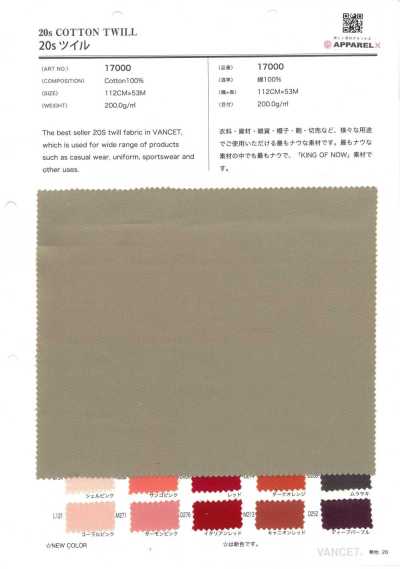
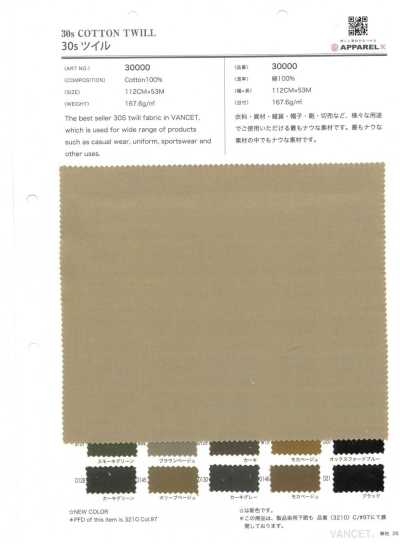
Medium to heavyweight twill is used for pants, skirts, jackets, coats, workwear, uniforms, and more. Chino cloth, a type of cotton twill, and denim are also representative textiles that make use of diagonal weave.
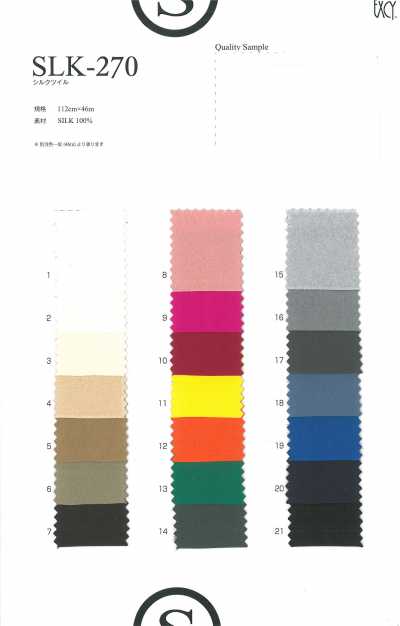
Lightweight twill with good drape is also used for shirts, blouses, dresses, and linings. It is important to choose based not only on the weave name, but also by checking the fabric weight, width, blend ratio, stretch, and sheerness.
Selection and Handling Notes
For the intended product use, check the appearance of the twill ribs, thickness, firmness, drape, and required strength on the actual material. For pants and uniforms, it helps to check abrasion resistance and appearance after washing; for garments that take advantage of drape, check the fall and how well seams blend in.
Because twill has diagonal weave lines, depending on cutting and sewing conditions it may be prone to skewing, that is, the phenomenon where the textile or side seam appears twisted. It is important to follow the grain accurately and to carry out fabric straightening before cutting and sewing tests.
Shrinkage from washing, color fading, and whitening of rubbed areas called fading differ depending on the type of fiber and dyeing or finishing. Before mass production, carry out washing tests and review the care label and sewing specifications in line with the characteristics of the textile.
Differences from Similar Terms
Diagonal weave is the Japanese name for the weave structure, and twill is used as its English name. However, in distribution, twill may refer either to diagonal weave in general or to medium-weight diagonal weave textiles made from cotton or other materials, so usage varies.
Gabardine is generally a high-density diagonal weave textile with a high warp density and a steep diagonal rib. Chino cloth often refers to a durable diagonal weave textile made mainly from cotton, and both are included within the framework of the twill structure.
Frequently Asked Questions
Do twill and diagonal weave mean the same thing?
Basically, they refer to the same weave structure, with diagonal weave being the Japanese term and twill the English term. However, in textile distribution, twill is sometimes used as a product name for diagonal weave textiles with a specific texture or thickness. Check the composition, fabric weight, and weave diagram.
Is twill the same textile as denim?
Denim is generally made in diagonal weave, so in terms of structure it can be said to be a type of twill. However, denim has its own appearance and properties derived from the color use of the warp and weft yarns, yarn use, dyeing method, and so on, and it is not synonymous with twill in general.
What should be noted when cutting twill?
Align the twill ribs with the grain and cut so that the direction does not vary between the left and right parts. Depending on the textile, skewing and twisting after washing may occur, so in addition to straightening the fabric before cutting, it is reassuring to carry out sample checks including interlining and sewing specifications.
- Browse Twill / Drill / Kersey products
- Products for style "For Shirts/blouses"
- Products for style "For Outerwear/blousons/coats"
- Products for style "For Pants"
- Products for style "For Skirts And Dresses"
- Products for style "For Jackets/Suits"
- Products for style "For Uniforms/Workwear"
- Browse Textile products