Poplin
Poplin is a plain-weave fabric that often uses fine warp threads and comparatively thicker weft threads, and is characterized by delicate crosswise ribs and a smooth surface.
Contents6 sections
Definition and Overview
Poplin is a textile based on plain weave, in which warp and weft yarns cross over and under each other. It generally uses fine warp yarns at a high density and inserts slightly thicker weft yarns, creating fine horizontal ridges.
Cotton is the most common material, but polyester, linen, rayon, and other materials and blend ratios are used. It is treated not as a fiber name, but mainly as a fabric name based on the yarn use and weaving method.
Features
The surface is relatively smooth, with moderate firmness from the fine horizontal ridges and a neat appearance. Depending on the material, yarn thickness, density, and finishing process, the texture ranges from thin and light to firm and substantial.
High-density poplin is less sheer and tends to make it easier to keep the silhouette neat after sewing. On the other hand, those made mainly from short fibers such as cotton may wrinkle from friction or shrink after washing.
Main Applications
With its clean surface and moderate firmness, it is used for shirts, blouses, dresses, skirts, pants, and more. Thin product numbers are suitable for spring and summer garments, while denser, firmer product numbers are also suitable for uniforms and light garments.
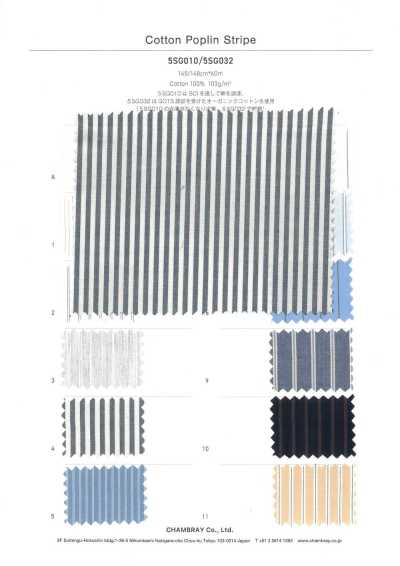
It is also used for solid fabrics as well as yarn-dyed stripes and checks, and printed fabrics. It is important to check the fabric thickness and drape, and choose it according to designs with a large amount of gathers or designs meant to show dimensionality.
- Shirts and blouses
- Dresses and skirts
- Lightweight pants
- Uniforms and workwear
Selection and Handling Notes
When selecting, check not only the composition, but also fabric weight, density, fabric width, sheerness, firmness, and shrinkage after washing. Even within poplin, 100% cotton, polyester blends, and linen blends differ in wrinkle resistance, moisture absorbency, quick-drying performance, and ease of sewing.
Before cutting, align the grain and arrange the fabric so the horizontal ridges do not look crooked. On thin fabrics, needle holes and seam puckering may stand out, so choose a fine needle and a sewing thread suited to the fabric, and check thread tension with a test seam. Shrinkage and color fading from washing or steaming depend on the material and finishing, so testing and checking the care label before mass production are necessary.
Differences from Similar Terms
Broadcloth often refers to a plain weave made with fine-count yarns and a smooth, fine surface, and is handled in applications similar to poplin. However, the naming and classification of the two may overlap depending on the place of production, distribution, and the maker.
Oxford is often woven by combining multiple yarns, and has a more visible weave and a more granular surface than poplin. Lawn is a fine-count, thin, lightweight plain weave and is generally more delicate and more sheer than poplin.
Frequently Asked Questions
Are poplin and broadcloth the same fabric?
They have similar properties, and in distribution they may sometimes be treated as synonymous, but they do not always mean the same thing. In general, poplin is characterized by fine horizontal ridges, while broadcloth often refers to a smooth plain weave made with fine yarns woven at high density. When purchasing, check the composition, density, thickness, and surface feel, not just the name.
Can poplin be washed at home?
Whether it can be washed is determined not by the name of the weave, poplin, but by the fiber composition, dyeing, finishing, and use of accessories. Cotton-based fabrics may shrink or wrinkle when washed, and linen blends may show more pronounced wrinkling. Always follow the fabric test results and care label, and perform wash tests before full production.
Can poplin be used for more than shirts?
Yes. Thin, supple types are suitable for blouses, dresses, and unlined skirts, while denser, firmer types are also used for pants and uniforms. However, because stretch is not very strong, consider pattern ease and the use of other materials in areas that require movement.