Sharkskin
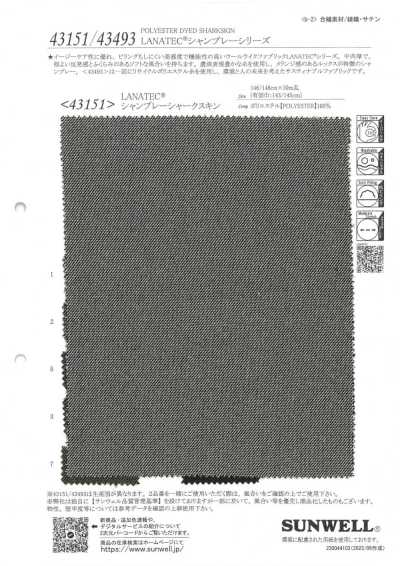
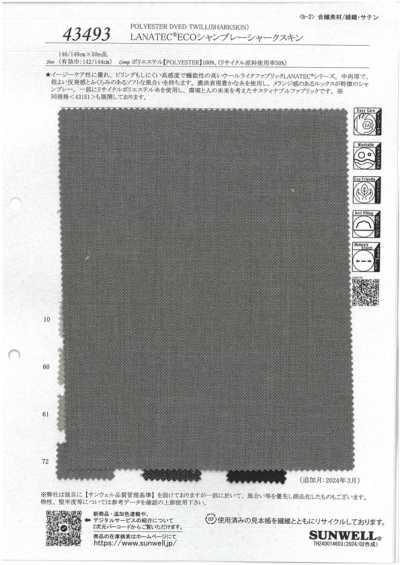
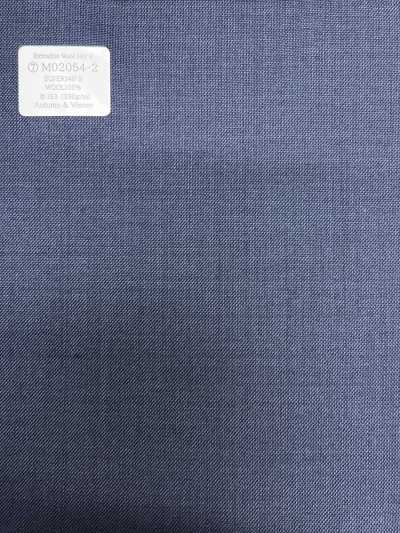
Sharkskin is a woven fabric reminiscent of shark skin, characterized by a fine diagonal weave and a heathered appearance created using threads of differing shades or colors.

![M02054-9 KUNISHIMA1850 Exclusive Line [Extrafine Wool 140’s] Black And White Sharkskin](/img/item/thumb/YX/1109477_t2.jpg)
Contents6 sections
Definition and Overview
Sharkskin is a textile named for its fine, lustrous appearance that resembles shark skin. By arranging yarns with differences in lightness and darkness or color in the warp and weft, it creates a dense twill texture with a solid-like, dimensional look.
It is not a specific fiber name, but a term that mainly refers to appearance and weaving method. While it is centered on wool, there are also blended and union fabric versions with polyester and other materials, and the thickness, hand, and sheen vary greatly depending on the raw material, density, and finishing.
Texture and Visual Characteristics
From a distance it looks like a calm solid, but up close you can see the fine diagonal weave structure and the heathered color mixture. A difference in yarn reflectivity creates subtle shading depending on the viewing angle and how the light hits it.
In general, the surface is relatively smooth, and those made with worsted yarns have a sharp, neat impression. On the other hand, it is not a name for textiles with a strong brushed feel or a coarse surface texture.
Main Uses and Suitable Seasons
Its neat appearance makes it suitable for suits, jackets, slacks, skirts, dresses, and more. Because the color mixture gives it more character than a plain solid color, it also works well for business wear, uniforms, and ceremonial garments.
Uses and season depend on the material and fabric weight. Lightweight, breathable versions may be used for spring and summer suit fabrics, while dense, heavier versions may be used for autumn and winter jackets and bottoms.
Selection and Handling Notes
At the planning stage, check the appearance of the color difference, the fineness of the diagonal weave, the fabric weight, body, and drape in the actual material. Even within sharkskin, wool-based versions differ in tailoring appearance and warmth retention, while synthetic-blend versions differ in properties such as wrinkle recovery.
Shrinkage from washing, color fading, and the tendency to develop shine vary depending on the fiber composition and finishing process. It is important to carry out tests and care according to the care label, and before mass production to check dimensional changes after washing and the appearance around the seams.
During cutting, follow the grain accurately and align the diagonal weave and color flow. Excessive heat or pressure from an iron can cause fading or shine, especially in wool-blend materials, so use a pressing cloth and the proper temperature setting.
Differences from Similar Terms
Twill is a general term for twill weaves, while sharkskin is a term within that category characterized by the arrangement of colored yarns and a fine visual texture. Therefore, not every twill is sharkskin.
Serge is also sometimes treated as a type of twill, but sharkskin generally places more emphasis on a finer heathered look and sheen. Because usage of fabric names varies by region and trading partner, check with a weave sample.
Frequently Asked Questions
Is sharkskin a summer suit fabric?
It is not limited to summer use. Lightweight worsted materials designed for breathability are used for spring and summer suits, but heavier versions with different yarn thickness, density, and composition can also be suitable for autumn and winter. The season is judged by fabric weight and material composition, not by the name.
What is the difference between sharkskin and twill?
Twill is a broad term for all twill weaves that show diagonal ridges. Sharkskin usually refers to a textile that adds a heathered look created by light-and-dark or different-colored yarns to a fine twill texture, and it can be understood as a term describing the appearance of twill.