Tapestry Needle
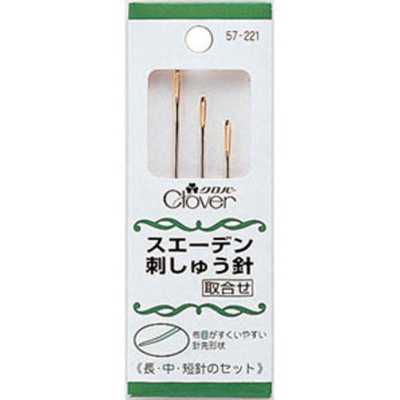
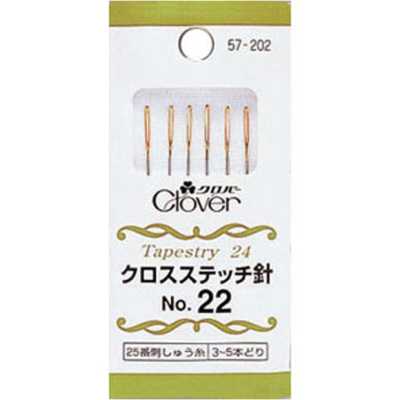
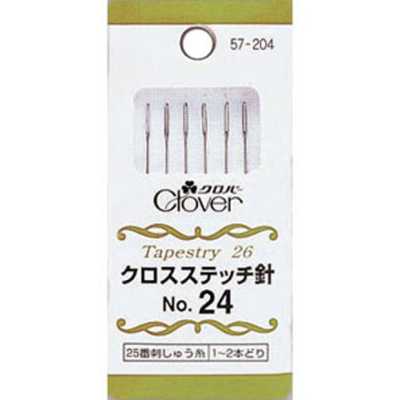
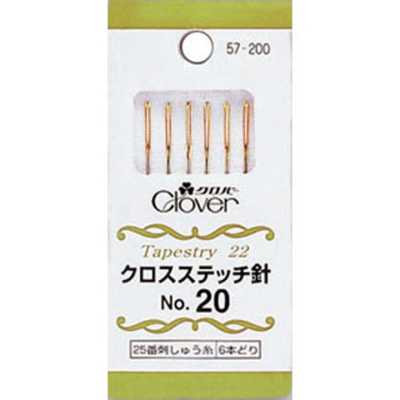
A tapestry needle is a handicraft needle with a rounded tip and a large eye, used for joining knitted pieces, finishing yarn ends, and finishing embroidery thread and wool yarn.
Contents6 sections
Definition and Overview
A tapestry needle is a needle used to thread yarn or embroidery thread, scoop up stitches, and join knitted fabric pieces together. It generally has a rounded tip, which makes it less likely to split the yarn and less likely to damage the stitches in the knitted fabric. Many types have a large needle eye, making it easier to thread thicker yarn as well.
Depending on the product, they may be divided into types such as heavy-gauge types for seaming knitted fabric, types for fine yarn, and types for embroidery. Since the standards for gauge and length may differ depending on the needle number, check the actual dimensions and the compatible yarn thickness.
How to Use
For seaming, place the pieces of knitted fabric to be joined face side in or face side out, and scoop up the stitches alternately from left and right along the shape of the stitches. If you do not pull the stitches too tightly and adjust them to about the same tension as the ground stitches, the seam is less likely to pucker.
For finishing yarn ends, thread the yarn tail through several stitches on the back side of the knitted fabric, change direction if necessary, and then cut off the excess. Check that no yarn tail shows on the front side and that the finishing yarn does not show through to the front when pulled.
- Seaming the sides and shoulders of sweaters and similar items
- Finishing yarn ends at the end of knitting or at yarn changes
- Joining motifs together
- Assisting with wool embroidery or repairs on woven fabric
Types and How to Choose
When selecting one, first check whether the yarn you will use passes through the needle eye without difficulty. If the yarn is too thick for the needle eye, it will be hard to thread and may fray during work. On the other hand, if the needle is too thick, it may be difficult to pass through tightly knit fabric and may spread the stitches.
Long needles can pick up more stitches at once and are convenient for wide seams. Short needles tend to be easier to handle for fine yarn finishing and small motifs. For the tip, a rounded one is standard for picking up stitches, while for use on woven fabric, choose a needle separately that is suitable for the fabric and yarn.
- For extra-fine to fine yarn, choose a thinner needle with a smaller needle eye.
- For medium-weight yarn and thicker, choose a needle eye large enough to accommodate the yarn.
- For joining thick knitted fabric, consider a heavy-gauge type with strength and length.
- Compare needle thickness, length, and eye shape by the listed dimensions.
Differences from Similar Terms
A sewing needle is a sharp-tipped needle used to pass through fabric and sew pieces together. By contrast, a tapestry needle is mainly used to pass yarn through existing stitches for joining and finishing, so a rounded tip is standard. For sewing thin woven fabric, a sewing needle is more suitable than a tapestry needle.
A darning needle is used for darning to repair holes and worn areas, and like a tapestry needle it may have a large eye and a rounded tip. However, there is a wide range of differences among products in how the name and shape are used, so it is important to check the usage description and needle thickness.
Care and Safety Notes
After use, wipe off lint and hand oils with a dry soft cloth and store the needle in a case with low humidity. If the needle is bent, rusty, or has a damaged tip, it may damage the yarn or snag the stitches, so check its condition and replace it.
Even a tapestry needle with a rounded tip can injure the eyes or skin. It is necessary not to hold it in your mouth while working, to protect the tip when carrying it, and to store it out of reach of children.
Frequently Asked Questions
Can a tapestry needle be used for materials other than yarn?
Yes, it can be used for materials that pass through the needle eye without difficulty, such as embroidery thread, thicker hand-sewing thread, and ribbon-like yarn. However, a tapestry needle is suited to scooping up stitches. For uses such as sewing woven fabric together or stitching leather after punching holes, choose a dedicated needle suitable for the material and process.
How do you choose the thickness of a tapestry needle?
Choose a thickness that lets the yarn pass smoothly through the needle eye and does not unnecessarily enlarge the holes when inserted into the stitches. A needle that is too thin for the yarn makes threading difficult, while one that is too thick can damage the knitted fabric. If in doubt, test it on a scrap edge of the knitted fabric before working.