Tie Interlining
Tie interlining is an interlining inserted between the outer fabric and lining of a tie to control the shape of the knot, appropriate thickness, recovery, and how it feels when tied.
Contents6 sections
Definition and Overview
Tie interlining is the interlining used inside a tie, from the wide end and narrow end to the part that forms the knot. It gives body and shape retention that are hard to achieve with the shell fabric alone, and also affects how easily the tie knots and how it recovers after being untied.
Although it is a supporting material that is not visible from the outside, interlining greatly influences the feel of the tie. If it is too thick, the knot becomes large and stiff; if it is too thin, it can create a weak impression and lead to loss of shape.
Where It Is Used and Its Role
In general, interlining cut to match the shape of the tie is inserted between the shell fabric and lining. Not only the wide section on the wide-end side, but also the design of the area that enters the knot affects the knot size and the appearance of the dimple-like indentation called a dimple.
Interlining does more than reinforce the shell fabric; it also helps control the turn after sewing and the vertical drape. Because ties are often closed with blind stitching at the center, the thickness and resilience of the interlining also affect how easy it is to handle during sewing.
Materials and Types
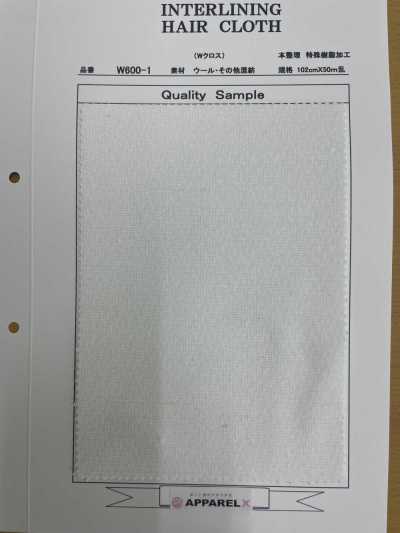
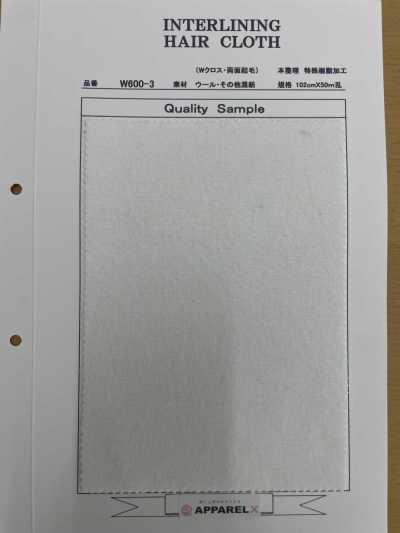
Tie interlining includes types made mainly with wool, types combining wool and synthetic fibers, and types based on woven or nonwoven fabrics. Depending on the material composition, structure, and fabric weight, softness, resilience, thickness, and lightness differ.
In tailoring, a non fusible interlining inserted without adhesive is sometimes used. On the other hand, fusible types also exist, but since tie shell fabrics may include materials such as silk that are easily affected by heat and pressure, careful confirmation is necessary before use.
- Soft interlining: Considered when a supple knotting feel and a light finish are desired.
- Firm interlining: Considered when knot shape retention and definition are important.
- Thick interlining: Easier to give a three-dimensional look, but care is needed because the knot can become large.
- Thin interlining: Easier to finish lightly, but depending on the thinness of the shell fabric, the interlining may not feel substantial enough.
Selection and Precautions
Interlining is selected in combination with the shell fabric’s thickness, weave density, stretch, luster, and pattern appearance. For thin and delicate shell fabrics, an interlining that does not show through the surface and does not add excessive stiffness is suitable. For thick or bulky shell fabrics, avoid layering interlining too much and making it overly firm.
When deciding on a candidate, make a prototype with the actual shell fabric and lining, and check the knot size, how smoothly it tightens, the appearance of the dimple, and wrinkles or recovery after untying. It is important to evaluate not only the hardness of the interlining itself, but also its combination with the shell fabric.
Precautions for Bonding and Sewing
When using fusible interlining, set the temperature, pressure, and time according to the heat resistance of the shell fabric. If the conditions are not suitable, poor bonding, surface fading, adhesive bleed-through, and appearance defects such as lifting or bubbling called bubbling may occur.
With non fusible interlining, align the grain during cutting and construct it so that the edges of the interlining do not show through the shell fabric. If the interlining and shell fabric are pulled too much during sewing, twisting and waviness may result, so adjust the needle, sewing thread, and amount of seam allowance in consideration of the interlining thickness.
Frequently Asked Questions
Should tie interlining be fusible or non fusible?
Choose according to the desired construction and shell fabric. Non fusible interlining makes it easier to take advantage of the interlining’s natural fullness and suppleness, while fusible interlining can help stabilize the process. However, with fusing, it is necessary to confirm heat effects on the shell fabric, peeling, and appearance changes through prototyping.
What problems occur if tie interlining is too firm?
The knot may become larger than necessary, or feel stiff when tightened. In addition, the suppleness of the shell fabric may be lost, and the knot shape may look unnatural. Confirm the knotting feel and appearance through a prototype including the shell fabric and lining.
What should be noted when using tie interlining with a thin silk shell fabric?
Consider an interlining that is thin and blends well, so that the texture and edges of the interlining do not show through the shell fabric. If fusing is used, luster changes, fading, and bleed-through may become noticeable, so perform a fusing test on the same shell fabric and then finalize the conditions before mass production.