Twist Cord
Twist Cord is a decorative or tying cord made by twisting together multiple yarns or thin cords to give it a spiral surface and raised thickness.
Contents6 sections
Definition and Overview
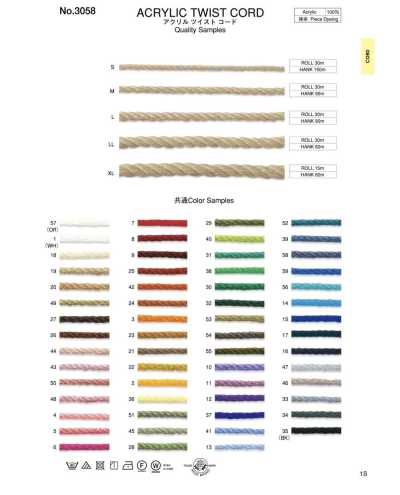
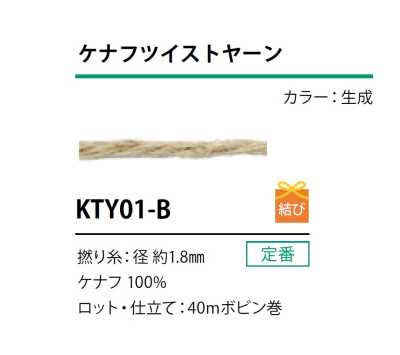
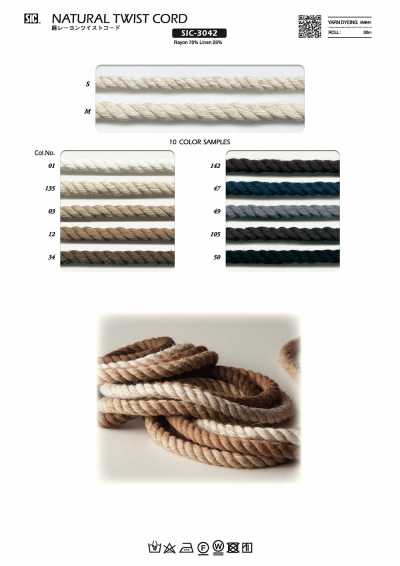
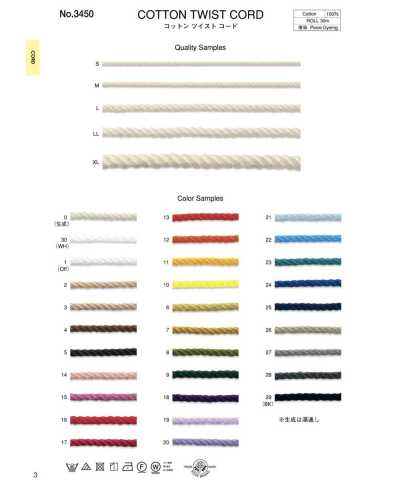
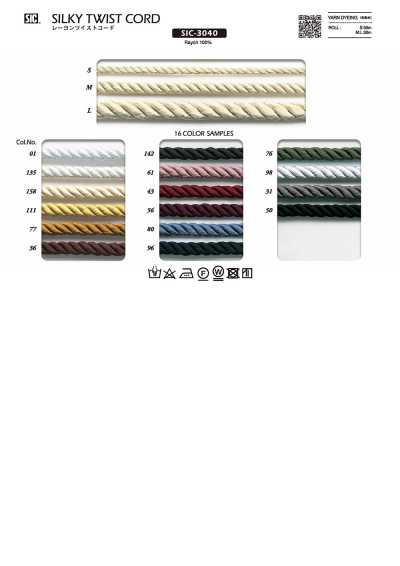
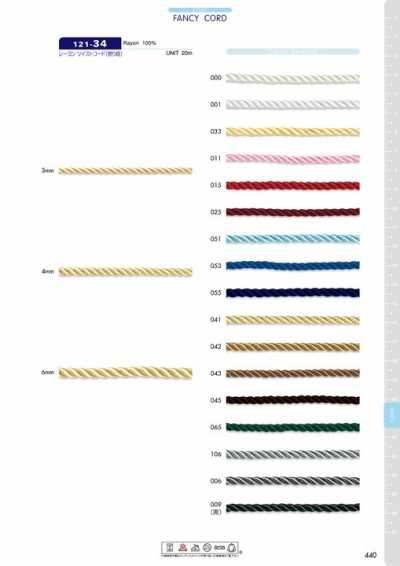
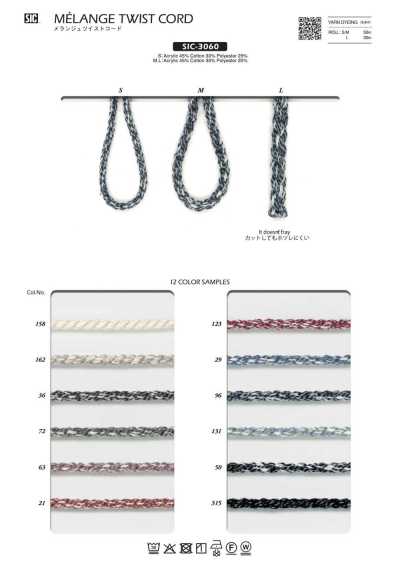
Twist cord is a round cord made by twisting together multiple bundles of yarn or thin cords. It has spiral ridges created by the twist and a three-dimensional feel and shading that differ from flat tapes. It is also sometimes called twisted cord or twist cord.
For apparel, it is used for decorative purposes, and it is also used as a cord for tying the openings of bags or around the waist. Because the impression changes greatly depending on thickness, twist tightness, sheen, and texture, selection to suit the design is important.
Materials and Structure
Materials include rayon, cotton, acrylic, and linen. Rayon tends to have sheen and drape, cotton and linen a natural texture, and acrylic vivid color and lightness. Blending materials also allows adjustment of both appearance and ease of handling.
In general, twist cord differs from woven fabrics that are woven into a flat surface and knits that are made by connecting loops, in that it is formed by twisting bundled yarn or thin cords. However, some products include a separate cord in the core or use a braided structure on the surface, so the structure should be confirmed for each product.
- Woven fabrics have a flat structure in which warp and weft yarns cross.
- Knits are made of yarn loops and may have elasticity.
- Braided cords are made by interlacing multiple yarns, and their construction and surface appearance differ from twist cord.
How Thickness Is Shown and Applications
The dimensions of twist cord are often shown by diameter or thickness rather than width. However, because the cross section changes depending on how tightly it is twisted and how it is held, it is important to check not only the stated dimensions but also the actual appearance, knot size, and compatibility with the inner diameter of hardware or eyelets.
Main applications include decorative parts for dresses and costumes, waist cords, drawstrings for pouches and bags, and tassels. It is also used for edging on interior accessories. For applications that bear load by being pulled, choose a cord with the required strength clearly specified rather than a decorative cord.
Selection and Handling Notes
When selecting, check the material, thickness, twist density, sheen, flexibility, and also how the ends are finished. Thick cords or loosely twisted cords tend to stand out, but they may also be harder to tie and more likely to snag. When sewing it on, consider a sewing method that does not crush the cord.
Because the cut end may unravel as the twist loosens, finish it appropriately for the material, such as sewing the end in place, temporarily fixing it with tape, or covering it with hardware or a cord end. Whether heat can be used depends on the fiber, so always test heat treatment with scrap material.
Shrinkage from washing, color fading, fuzzing, and loosening of the twist depend on the material and finish. If product washing will be performed, test both the cord alone and after it has been sewn on, and decide the specifications after checking length change, color transfer, and fraying at the ends.
Differences from Similar Terms
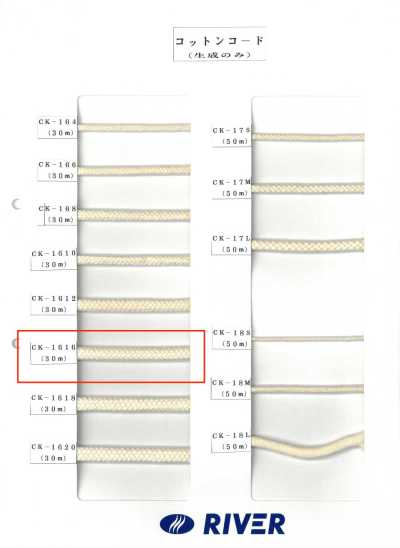
Round cord is a general term for cords with a round cross section and includes not only twisted structures but also braided and knitted structures. Twist cord is a term that especially refers to a spiral expression created by twisting. Flat cord has a flat cross section, and its shape and intended use give a different impression from twist cord.
Spindle often refers to a round cord used through a garment hood or waist area, and is a term that focuses on the usage location rather than the manufacturing method. Piping refers to a specification in which a cord is wrapped in fabric to decorate seams or edges, and it is distinguished from twist cord, which is the cord itself.
Frequently Asked Questions
How do you choose the thickness of twist cord?
Choose based on the inner diameter of the hardware or eyelet it passes through, the knot size, and the required presence. The stated diameter is only a guideline, and the appearance changes depending on the swelling of the twist and the softness of the material. It is important to check by making a prototype for actual threading, tying, or sewing.
What should I do if the cut end of twist cord frays?
Temporarily fix it with tape before and after cutting, and finish it by sewing the end in place or covering it with hardware. Even with synthetic fibers, whether heat treatment is possible depends on the fiber composition and finish, so if you use a method that melts and hardens the end, be sure to check the appearance and strength with scrap material.
Does twist cord shrink when washed?
Shrinkage, stretching, and loosening of the twist vary depending on the material, processing, and washing conditions. In particular, items containing natural fibers may change in length, so if product washing is planned, perform washing tests before and after sewing and check the appearance, dimensions, and color transfer.
- Search products for "Twist cord"
- Products with material "Cotton"
- Products with material "Rayon"
- Products with material "Linen"
- Products with material "Acrylic"
- Products for style "For Costumes/dresses"
- Products for style "For Bags"
- Products for style "For Interiors"
- Browse Ribbon, Tape, Cord products