Acetate
Acetate is a semi-synthetic fiber made by chemically treating cellulose derived from wood pulp and other sources. It is characterized by a silk-like sheen and a smooth texture.
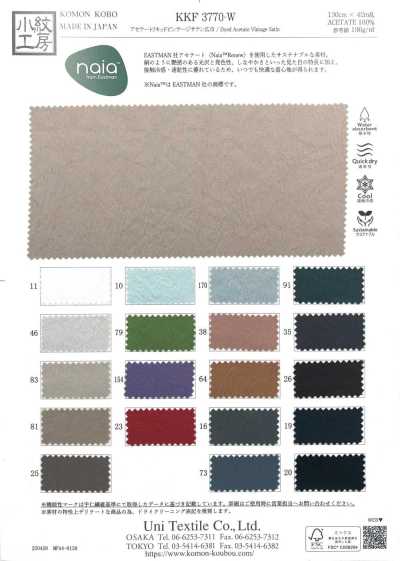
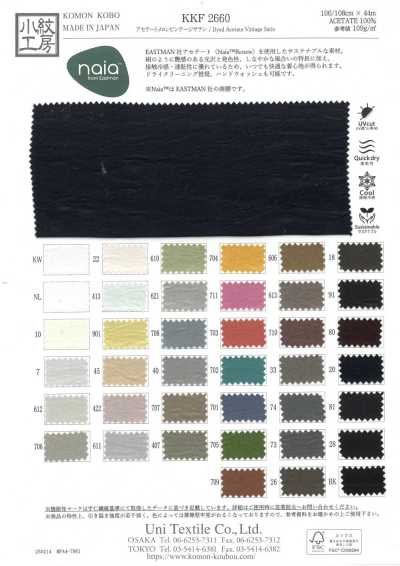
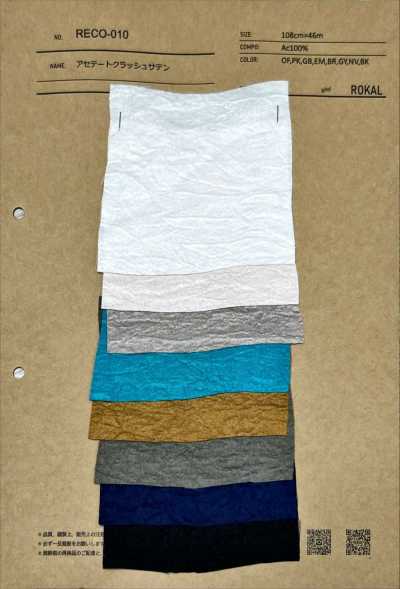
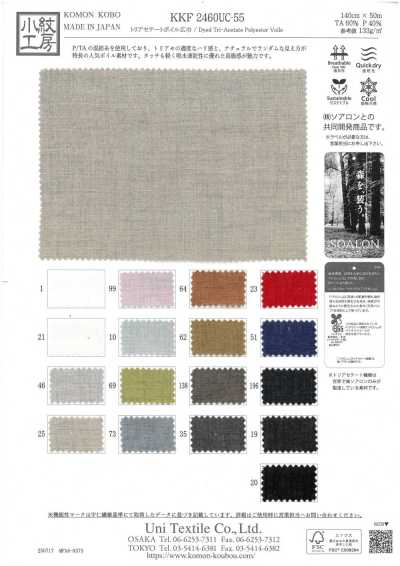
Contents6 sections
Definition and Overview
Acetate is a semi-synthetic fiber made by chemically treating plant-derived cellulose with acetic acid. It is often used as long fiber, and depending on the weave and finishing, it can create a wide range of looks from lining to dress fabric.
Acetate is the name of the material, not the name of the fabric structure. By combining it with weaves such as satin and Georgette, the appearance changes in terms of luster, drape, and sheerness.
Texture and Function
It is characterized by a smooth hand, elegant luster, and flowing drape. Drape refers to the property of fabric to hang naturally along gravity. It has good color development and is a material that makes deep shades easy to express.
It has moisture absorption, but the wearing feel varies depending on the material composition and fabric design. Because it may be affected by friction, heat, and chemicals, check the blend ratio and test results for applications that prioritize strength and durability.
Main Applications
Its luster and drape are used in blouses, skirts, dresses, and formal wear. Lightweight fabrics are used for spring and summer clothing, while firmer fabrics are used in year-round items.
Taking advantage of its smoothness, it is also used for lining in jackets and coats. For both outer fabric and lining, it may be blended with polyester and other fibers to supplement strength, ease of handling, and stretch.
- Blouses and shirts
- Skirts and dresses
- Dresses and formal wear
- Lining for jackets and more
Selection and Handling Notes
When selecting, check not only the level of luster, sheerness, fabric weight, and drape, but also the blend ratio and care label. Even with the same acetate, thickness, sewability, and suitability for home laundering vary greatly depending on the weave structure and finishing.
When wet, strength tends to decrease easily, and dimensional change or changes in texture may occur due to washing. Whether home laundering is possible depends on the product or fabric care label. Even if machine washing is allowed, avoid strong rubbing and long soaking.
Because it tends to be weak against heat, test ironing at low temperature with a pressing cloth. In sewing, some fabrics show needle holes and seam puckering easily, so do a test stitch in advance with the needle, thread, and sewing tension, and avoid excessive presser foot pressure or thread tension.
Differences from Similar Terms
Triacetate is also a semi-synthetic fiber made from cellulose, but its degree of chemical treatment differs from acetate. In general, triacetate tends to offer better dimensional stability and heat resistance than acetate, but actual performance must be checked including the fabric design and processing conditions.
Rayon and Cupro are also regenerated cellulose fibers and have smoothness and drape. Acetate, on the other hand, is classified as a semi-synthetic fiber. It is sometimes described as having a silk-like luster, but the raw materials, fiber structure, and care methods are different.
Frequently Asked Questions
Can acetate be washed at home?
Whether home laundering is possible cannot be determined by the material name acetate alone. Because water washing may cause reduced strength, shrinkage, or changes in texture, always follow the care label on the product. Even if washing is allowed, handle gently for a short time and check the label before using a dryer.
What is the difference between acetate and triacetate?
Both are semi-synthetic fibers made from cellulose, but their degree of chemical treatment differs. In general, triacetate is considered easier to obtain stability against heat and wrinkles than acetate. However, performance changes depending on the blend ratio, structure, and finishing, so check the specification values and care label.