Bandana Pattern
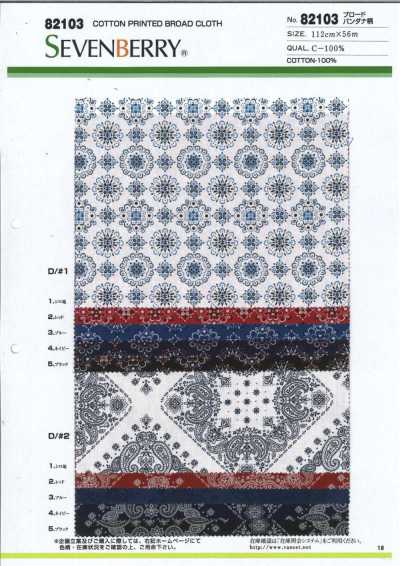
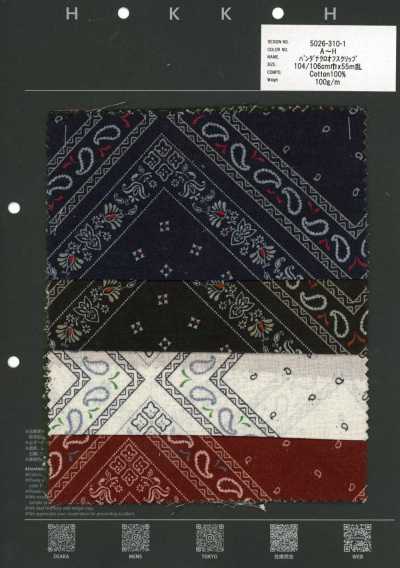
A bandana pattern is a decorative print pattern that combines paisley, flowers and plants, and curving motifs, evoking the border and central composition of a bandana.
Contents5 sections
Definition and Overview
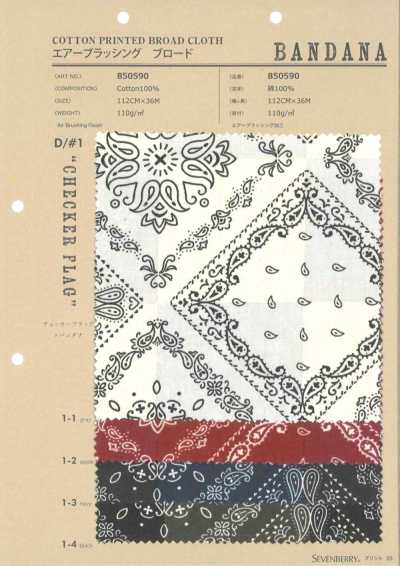
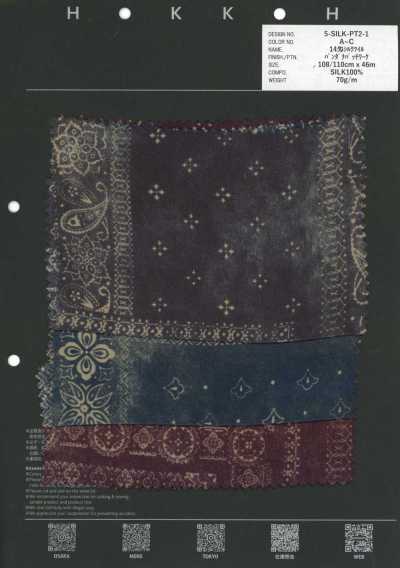
Bandana pattern is a pattern that uses the decorative motifs seen on bandanas as a design. It typically features a large motif in the center surrounded by a border-like continuous pattern, but designs with motifs scattered across the entire surface are also called bandana patterns.
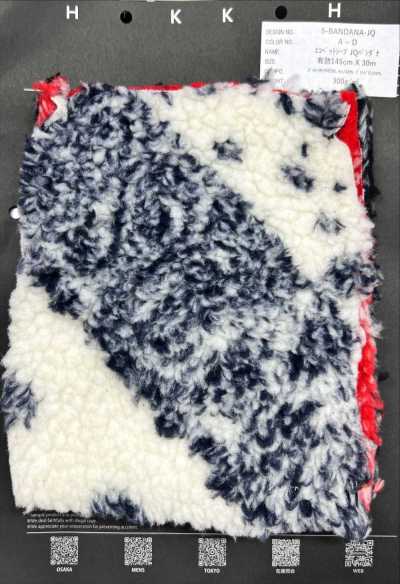
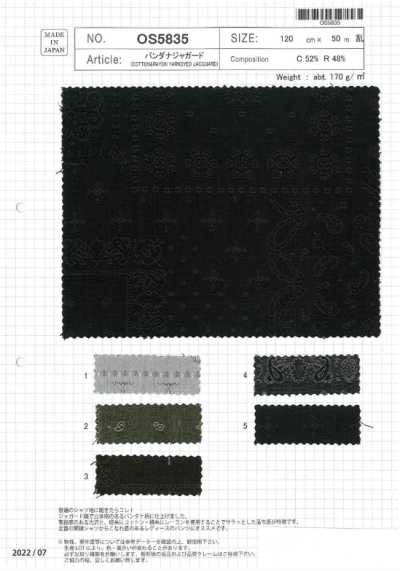
It is mostly expressed as a print, but the term refers to the pattern name, not to a weave structure or material name. For that reason, it is used on a variety of textiles suited to different applications, such as cotton plain weave, lawn, twill, and polyester fabric.
Origins and Naming of the Pattern
Bandana patterns combine motifs such as paisley, flowers, scrolling vine-like curves, teardrop-shaped motifs, and small geometric patterns. The contrast between the border-style pattern placed around the edge and the design in the center is a defining feature.
The term is used broadly, and patterns centered on paisley are sometimes called bandana patterns. On the other hand, all-over prints made only of repeated paisley are generally distinguished as paisley patterns if they do not have bandana-like border framing or composition.
- Type with a frame-like border surrounding all four sides
- Type with a large motif in the center
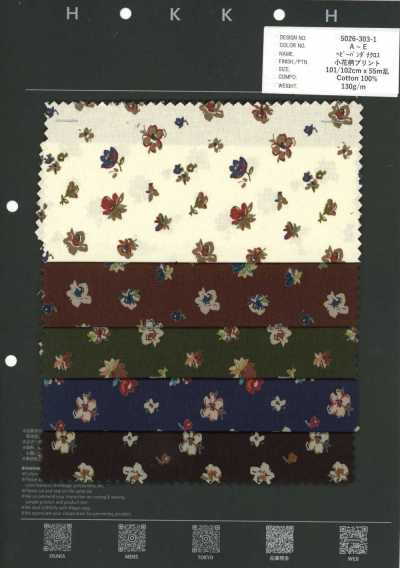
- All-over type with small motifs scattered across the entire surface
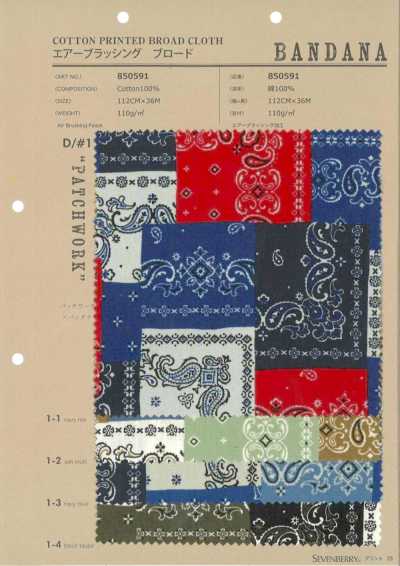
- Patchwork-style type with multiple bandana patterns switched together
Main Uses and Seasonality
In addition to handkerchiefs and scarves, it is used for shirts, blouses, dresses, skirts, pants, and bags. For accessories worn around the neck or head, the four-sided border can be shown, making this a use that makes the bandana pattern structure easy to take advantage of.
The pattern itself is not limited to any season, but prints on lightweight, breathable textiles are often seen in spring and summer apparel and fashion accessories. If you choose brushed materials, thicker woven fabrics, or calm color combinations, it can also be used for autumn and winter shirts and miscellaneous goods.
Notes on Fabric Selection and Cutting
The fabric should be selected according to the fineness of the pattern you want to express and the intended use of the product. Fine designs suit fabrics with a relatively smooth surface, while cotton plain weave and twill are also used for casual applications. Sheerness, drape, and durability are checked by the material, weave structure, and fabric weight of the textile, not by the pattern.
With panel prints that include borders, the finished appearance changes greatly depending on the cutting position. Specify the placement of the pattern on the collar, front opening, hem, and pockets, and decide at the pattern-making and marking stage whether the direction and position of the motif will be aligned on the left and right body panels and sleeves.
Motifs with a fixed direction or borders with an upper and lower orientation make layout cutting more difficult. In addition, because the repeat size of the pattern and the specified placement of the design increase waste, more fabric allowance is needed than for solid fabrics or small all-over prints.
Frequently Asked Questions
What is the difference between a bandana pattern and a paisley pattern?
A paisley pattern is a pattern centered on a curved motif resembling a teardrop shape. A bandana pattern may include paisley, but it is characterized by combining flowers, small repeating motifs, borders, and other elements to create an overall composition like a bandana. Not all paisley patterns are bandana patterns.
Why does the required fabric increase with bandana-patterned fabric?
With large patterns, frame-like borders, or motifs with an up-and-down direction, each part cannot be placed in any orientation or position. Even when matching the pattern across the left and right body panels or pockets, the freedom in cutting is reduced. Plan the fabric allowance after checking the repeat size, pattern placement, and extent of pattern matching.
Which fabrics can bandana patterns be printed on?
Because bandana pattern is a pattern name, it can be applied to materials such as cotton, polyester, and rayon, as well as weaves such as plain weave and twill. It is important to check the reproducibility of the fine pattern, the strength needed for the intended use, sheerness, and dimensional change after washing, and then choose a textile suitable for the product.