Gassed Yarn
Gas yarn is mainly a cotton spun yarn that has been passed through a gas flame to singe off surface fuzz, resulting in a smooth hand and a clean-looking appearance.
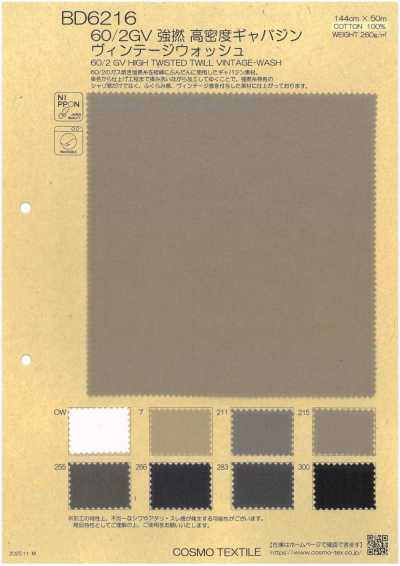
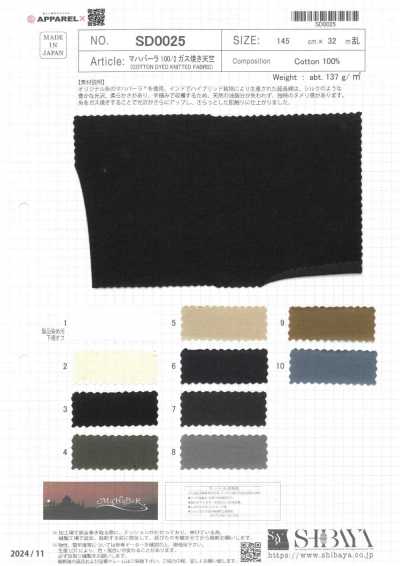
Contents6 sections
Definition and Overview
Gas yarn is yarn that has undergone gas singeing, a process that burns off the fine fuzz protruding from the surface of spun yarn with a gas flame. It is the name of a yarn finishing process aimed at reducing fuzz, and it is not the name of a weave or knit structure, nor a specific textile.
In general, it is used most often for cotton yarn. Depending on whether it is single yarn or double yarn, the count, twist, knitting or weaving method, dyeing, and finishing, the thickness, firmness, and elasticity of the finished textile will differ.
Texture and Appearance Characteristics
By suppressing fuzz, the surface becomes relatively smooth, giving a clean sheen and vivid color appearance. It has little roughness when it touches the skin, making it suitable for textiles that are meant to look refined and clean.
On the other hand, sheen and durability are not determined only by whether it has been singed. The texture and appearance vary greatly depending on the fiber length of the raw material, yarn twist, density, and after-finishing such as mercerization.
Main Uses and Seasonality
Its low-fuzz surface makes it suitable for shirts, blouses, cut-and-sew items, polo shirts, underwear, socks, and similar products. Fine-count gas yarn is used for thin, neat textiles, while coarser-count yarn is used for tightly knit cut-and-sew items with a smooth surface.
It is often used for spring and summer items because of its clean appearance, but gas yarn itself is not limited to any season. Warmth and thickness are judged by the blending ratio of the materials, yarn count, textile structure, and fabric weight.
How to Choose and Handling Notes
When selecting a textile, do not judge it by the term gas yarn alone; check the composition, weave or knit structure, fabric weight, thickness, elasticity, and sheerness on the actual sample. The degree of shrinkage depends on the material such as cotton, the finishing, and whether shrink-resistant treatment has been applied, so it is important to confirm through washing tests and prototypes.
Washing methods should follow the product's care label. When the main material is cotton, dimensions may change through washing and drying, so before cutting and sewing, prewashing is performed as needed. In sewing, puckering and seam shrinkage are more noticeable when the textile is thin, so thread tension and needle size are matched to the textile.
Differences from Similar Terms
Gas yarn refers to yarn whose surface fuzz has been burned off. Combed yarn is spun yarn that has gone through a combing process to remove short fibers and impurities and align the fibers. Sometimes both processes are applied, but their purposes and steps are different.
Mercerization is a process applied mainly to cotton to improve sheen, dyeability, and dimensional stability. It may be combined with gas singeing, but gas yarn is not necessarily mercerized.
Frequently Asked Questions
Is gas yarn the same as mercerized yarn?
Does fabric made with gas yarn not shrink?
Gas singeing alone does not prevent shrinkage. Shrinkage is affected by the material, structure, dyeing and finishing, shrink-resistant treatment, and washing and drying conditions. Before mass production, confirm the shrinkage rate in the textile specifications and conduct tests or pre-shrinking as needed.