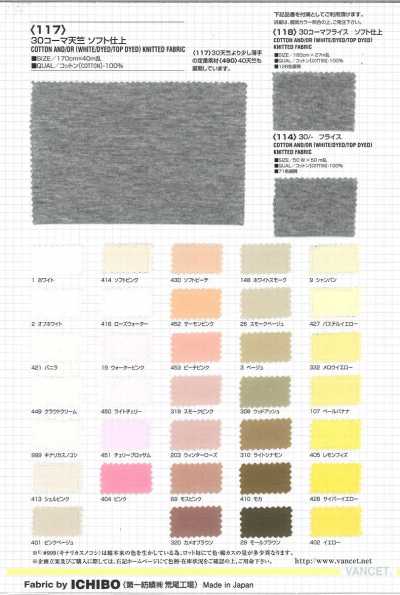
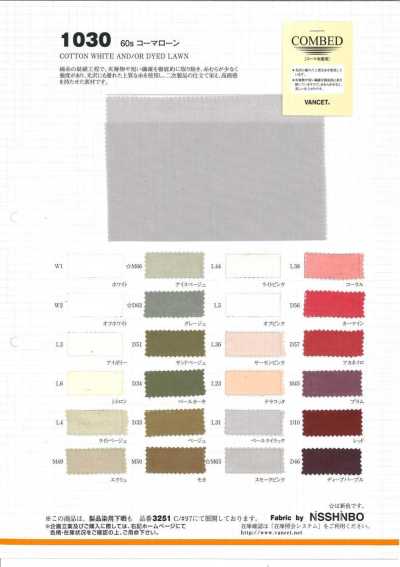
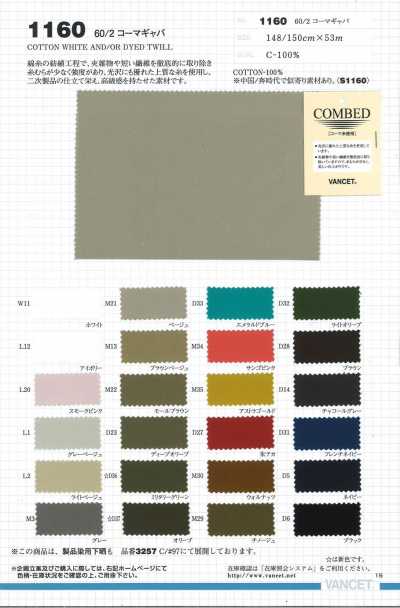
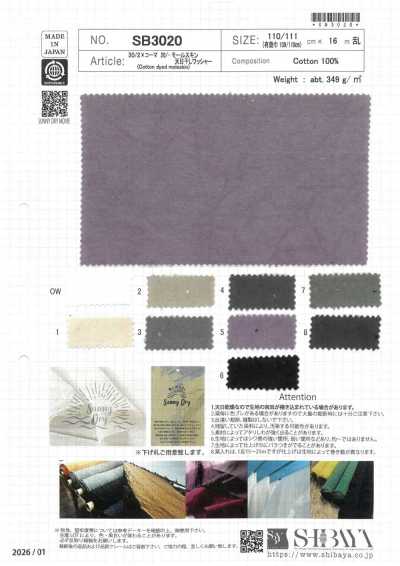
Combed Yarn
Combed yarn is a yarn spun by removing short cotton fibers and impurities in the combing process and aligning the longer fibers, resulting in a smooth, even yarn with less fuzz.
Contents6 sections
Definition and Overview
Combed yarn is yarn made by going through a combing process, in which fibers are combed with a machine called a comber when spinning short fibers such as cotton. This process reduces short fibers, neps (small clumps of fibers), and impurities, and improves fiber parallelism.
Combed yarn is a name that indicates the yarn manufacturing method, not the structure name of a woven or knitted fabric. Depending on the count, twist, knitting structure, dyeing, and finishing process, the final fabric thickness, stretch, and hand can vary greatly.
Features
Because the fiber lengths are relatively even, it is characterized by less surface fuzz and a smooth, clear appearance. It tends to feel more pleasant against the skin, and it is also used for fabrics where print and dye color development and the appearance of knit or weave patterns are important.
On the other hand, because the combing process removes short fibers, the raw material utilization efficiency and manufacturing process differ from carded yarn. However, the low fuzziness and strength are also affected by the quality of the raw cotton, count, twist, spinning method, and post-processing.
- The surface is relatively smooth and tends to have a lustrous appearance.
- Fuzz is suppressed, making it more likely to have a uniform look.
- It may be used for fine-count yarns and fabrics that call for a neat appearance.
Main Applications
Combed yarn is used for clothing that calls for a clean surface and a soft feel, such as T-shirts, cut-and-sew items, underwear, and shirt and blouse fabrics. It is also used for knits such as jersey, circular rib, and circular interlock knitting, as well as woven fabrics such as broadcloth and poplin.
It is not a material limited to a specific season; depending on the fabric weight, structure, and finish, it is developed for year-round use as well as spring/summer and autumn/winter use. Even with the same combed yarn usage, a thin knit and a high-density woven fabric will differ in applications and wearing comfort.
Selection and Handling Notes
When selecting fabric, do not judge quality by the label combed yarn alone; check the blend ratio, count, single yarn or plied yarn, fabric weight, density, and structure. On samples, it is also reassuring to check surface fuzz, sheerness, skew, shrinkage after washing, and puckering after sewing (waviness around the seam).
Shrinkage and shape distortion during washing are affected by the nature of the main material, cotton, as well as the knitting or weaving and the finishing process. Before mass production, perform washing tests as much as possible, align the grain and cut, and set needle, thread, and feeding conditions according to how easily the fabric stretches.
Differences from Similar Terms
Carded yarn is generally yarn spun through a carding process and does not necessarily undergo the combing process like combed yarn. Carded yarn may be chosen when a natural fuzziness and rustic appearance are desired, while combed yarn is chosen when a relatively clean surface is desired.
Mercerization is a chemical process applied mainly to cotton products to improve luster and dyeability. Combed yarn is a classification at the spinning stage, so the two processes are different. Mercerization can also be applied to fabrics made with combed yarn.
Frequently Asked Questions
Is combed yarn 100% cotton yarn?
Combed yarn does not refer to the fiber type itself, but is a term derived mainly from the spinning process of combing and aligning short fibers. In Japanese apparel fabrics, it often refers to cotton combed yarn, but the actual material and blend ratio should be checked in the individual specification.
Which is better, combed yarn or carded yarn?
It depends on the application and the look you want. If you value smoothness, low fuzz, and a uniform appearance, combed yarn is a candidate. If you want to make use of a natural texture and casual look, carded yarn is also suitable. It is important to compare fabric samples.