Gauze
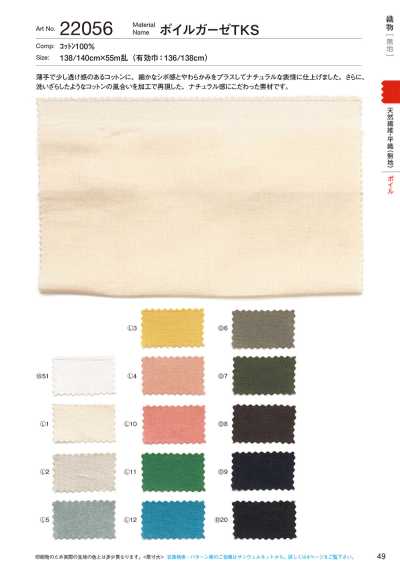
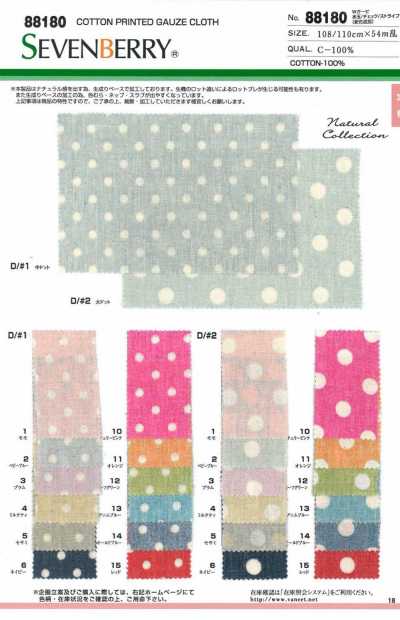
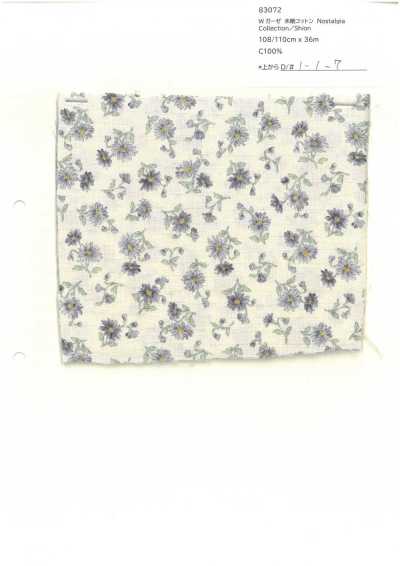
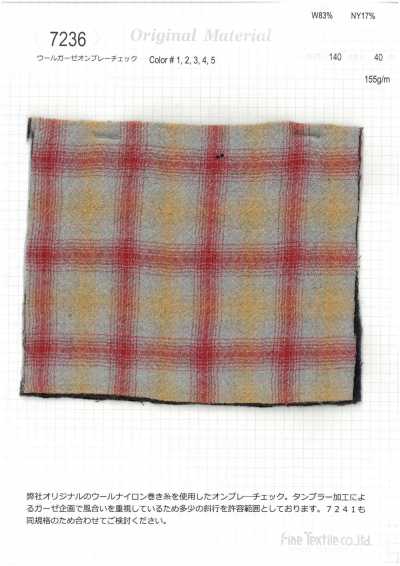
Gauze is a woven fabric characterized by a light, soft hand, made by loosely weaving threads to create moderate spaces between the threads.
Contents6 sections
Definition and Overview
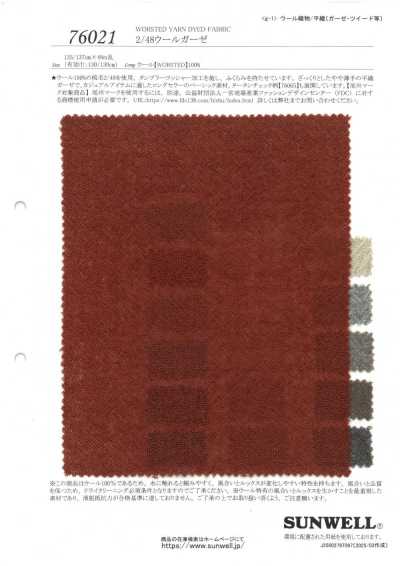
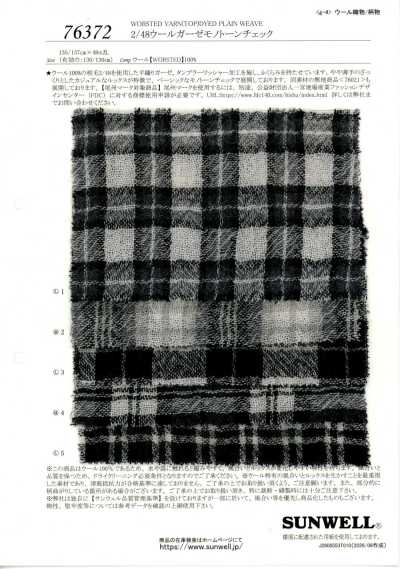
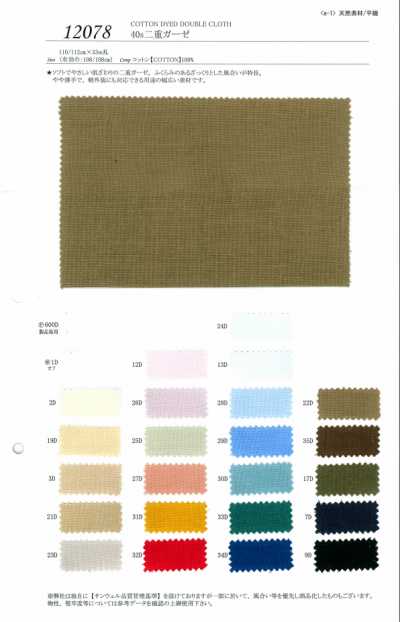
Gauze is a thin woven fabric made by weaving fine yarn at a relatively low density to create breathability and softness. It is often made from cotton, but can also be made from linen, wool, regenerated fibers, synthetic fibers, and other materials.
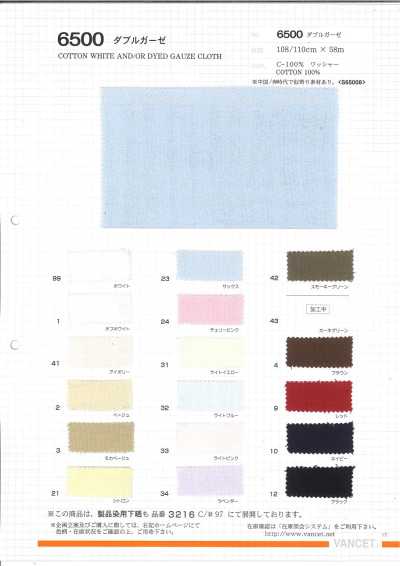
In addition to single-layer types, there are double gauze, in which two layers of fabric are partially bonded together, and multi-layer gauze with more layers. As the number of layers increases, the fabric traps more air, adding softness and a moderate thickness.
Features
The spaces between the yarns make it easy to achieve lightness, breathability, and absorbency. It is gentle against the skin, and some products become fuller in texture and more familiar to the touch after repeated washing.
On the other hand, thin fabrics with a loose structure can be prone to sheerness, and care is needed to avoid yarn slippage and tearing caused by snagging or friction. Strength, sheerness, absorbency, and warmth vary greatly depending on the material, yarn thickness, density, and finishing.
Main Applications
In apparel, it is used for shirts, blouses, dresses, pajamas, underwear, and baby and kids' clothing. Single-layer lightweight types are suitable for light spring and summer wear, while multi-layer types are also suited to underwear and bedding applications year-round by taking advantage of the air layer.
Outside apparel, it is also used for handkerchiefs, towels, masks and hygiene products, and bedding covers. However, the hygiene, durability, and functionality required for the application should be checked for each material and finish.
- Blouses and outer layers that take advantage of sheerness
- Nightwear that calls for a soft feel against the skin
- Baby and kids' clothing that makes use of the fullness of layered fabric
- Hygiene and household miscellaneous goods that use absorbency
Selection and Handling Notes
When selecting, check whether it is single-layer or multi-layer, as well as composition, fabric weight, density, sheerness, and shrinkage rate to match the intended use. For apparel, it is also reassuring to confirm in prototyping the thickness caused by overlapping areas such as seam allowances and pockets, sheerness in light colors, and how pattern matching looks.
Gauze may shrink easily in washing, and some types may have a wavy surface appearance. In principle, follow the care label and avoid friction and strong spin-drying. In sewing, the grain can shift easily, so pay attention to stabilizing the fabric before cutting, avoiding needle holes that are too fine, and preventing the fabric from being pulled in at the start of stitching.
Differences from Similar Terms
Double weave refers to the general structure in which two or more layers of woven fabric are bonded together into one. Double gauze is the term used for gauze with a two-layer structure, and it may overlap with the concept of double weave, but it is often treated as a fabric that emphasizes lightness and softness.
Lawn and voile are also thin, breathable woven fabrics, but they are denser than gauze and may have a more refined surface appearance or a different firmness. In addition, gauze for medical and hygiene use and gauze for apparel use do not necessarily require the same standards or performance.
Frequently Asked Questions
Is double gauze only used for summer?
Because double gauze traps air between the two layers, it is a fabric that tends to offer more fullness and warmth than thin single-layer gauze. For this reason, it is used not only for spring and summer clothing, but also for pajamas, baby clothing, and shirts and dresses for year-round wear. The suitable season varies depending on composition, fabric weight, and density.
Is gauze difficult to sew?
Thin, low-density gauze can stretch or shift along the grain easily, and it may get pulled into the needle plate when starting to sew. If you straighten the fabric before cutting and stabilize it with interfacing or a water-soluble auxiliary material as needed, the work becomes easier. Check the needle, thread, and stitch settings with a test seam.
How do you check gauze shrinkage?
Depending on the material and finishing, gauze differs in how it shrinks and how much it puffs up after washing. Before mass production, perform a washing test under conditions that simulate the actual care label, and check dimensional change, skew, and stitch condition. If necessary, reflect the shrinkage allowance in the cutting dimensions and pattern.